
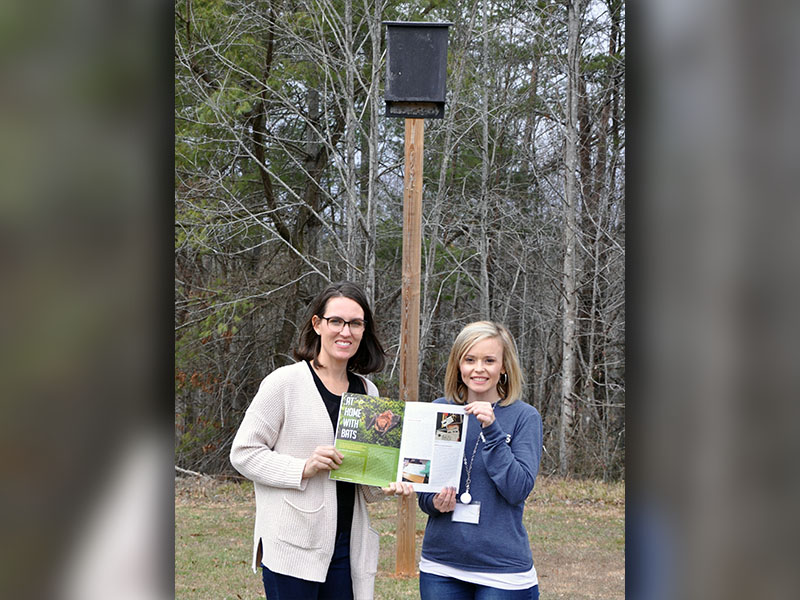
“There are things that we are doing here in little bitty Fannin County, Georgia that teachers are taking in places like San Franciso (California),” parent Jocelyn Miller said of her and West Fannin Elementary School’s (WFES) First Grade Teacher Katy Roberson’s recent accomplishment.
The pair had an article titled “At Home with Bats” published in the January 2020 issue of the award-winning, peer-reviewed practitioners’ journal “Science and Children.”
The journal goes out to 50,000 National Science Teaching Association (NSTA) members nine times a year. It also features manuscripts that provide inspiration for prekindergarten to fifth grade educators written by educators themselves.
To even be considered for publication requires the article be practical and timely in classroom ideas, demonstrate authenticity, suggest ways of managing proposed activities, and possess “all aspects of the learning experience.”
Miller and Roberson’s article provide teachers across the country with a step-by-step guide of how Roberson introduced bat conservation to first graders of WFES.
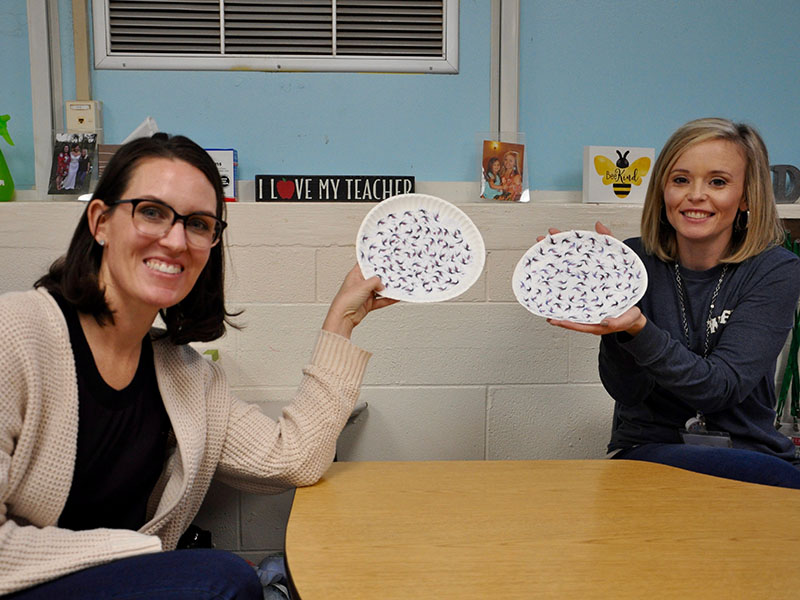
Roberson’s students created a mock study on bats in the area by researching them, observing them, measuring them (paper made bats), building a bat house for the school and presenting their research. Students also received naturalist badges and a field guide of local bats.
Roberson said the idea to use bats as the subject for classwork came after reading the book Stellaluna, a book about a young bat, and a student had said they had built a bat house at their home.
Roberson said the fact that a bat had roosted in her house also inspired her to introduce the book to students.
After hearing about the student’s experience, she then decided to reach out to Miller about bats.
Miller said, although she is a biology major and former high school biology teacher, she did not know much about the species, so she decided to attend a conference at the University of West Georgia put on by the Georgia Bat Working Group. While there, she learned that there are 12 species of bats in Georgia with one species endangered and two species threatened. After hearing this, Miller said her interest spiked.
She credited Roberson for incorporating all of the subjects into her lesson plan and said she noticed what Roberson was doing in the classroom and told her they need to share this with others.
Miller said she wanted to share “how you can take something that’s such a complex, complicated issue, something that people meet at universities and discuss and how you can bring that and make it useful and applicable to a first grade student. I think that is what really blew me away is to realize that you can take something that’s so important and so relevant to all of us, and first graders can get a grasp of it, if it’s presented to them in the right way.”
To which Roberson added, “And become excited about it. There’s just something about the bats that seem to intrigue them.”
After writing up the article then sending it in, the committee sent it back with some notes. The duo made some changes, and the rest is history.
They said their project took around three years to get everything together, but they said they are excited.
“It’s surreal. It’s exciting to see the kids excited about it,” Roberson said, “I think that’s been the best part.”
Miller said she believes there are a lot of “amazing things happening at West Fannin,” and being able to share something from there has been a “really cool opportunity.”
The two added that they would like to expand the bat habitat at WFES by incorporating a pond and anyone interested in donating can contact the school.
Anyone interested in putting up their own bat houses should refer to Bat Conservation International for guidelines, Miller said.