
Danny Drake: Navy changed his life for better
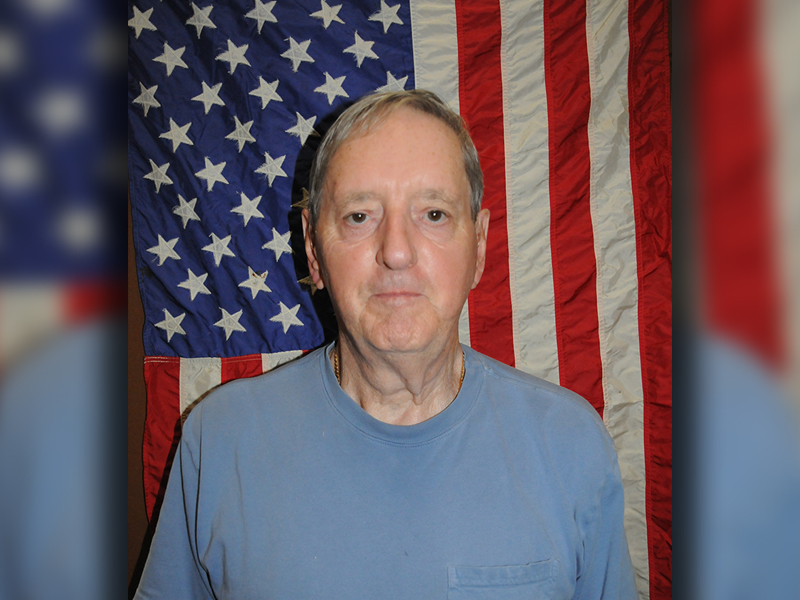
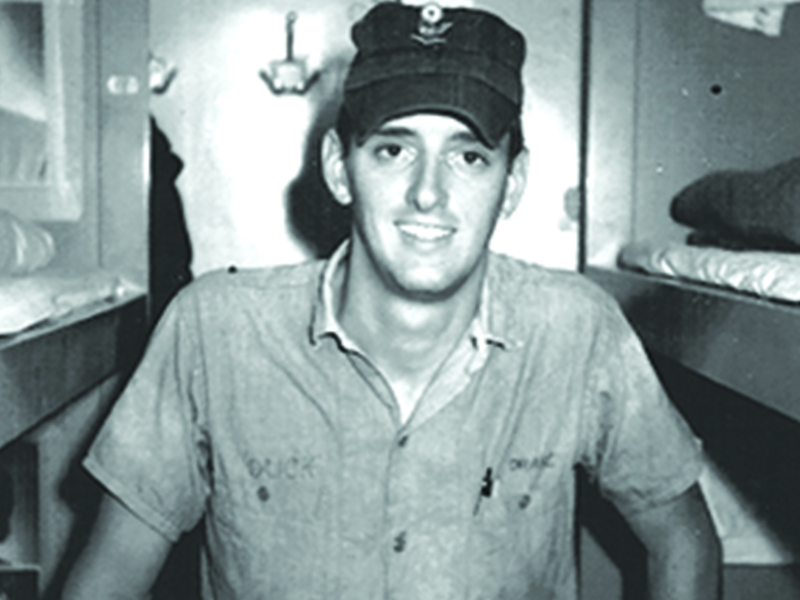
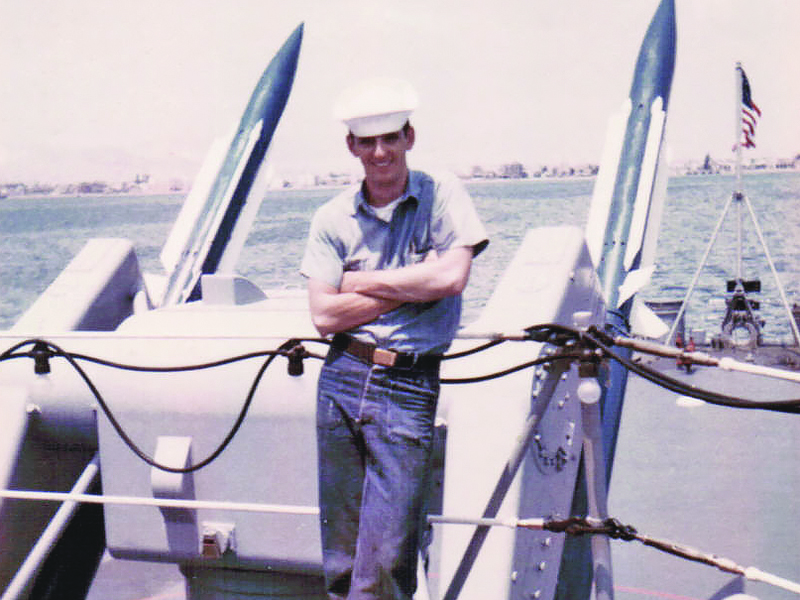
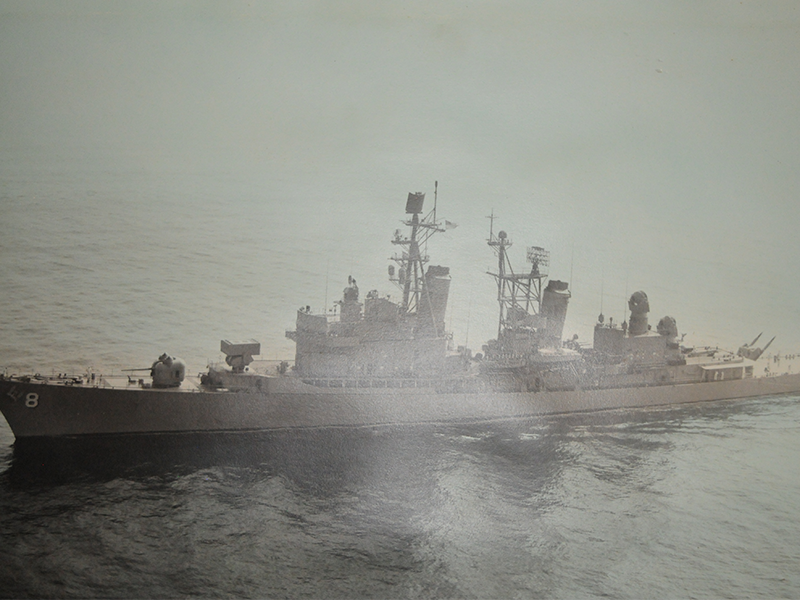
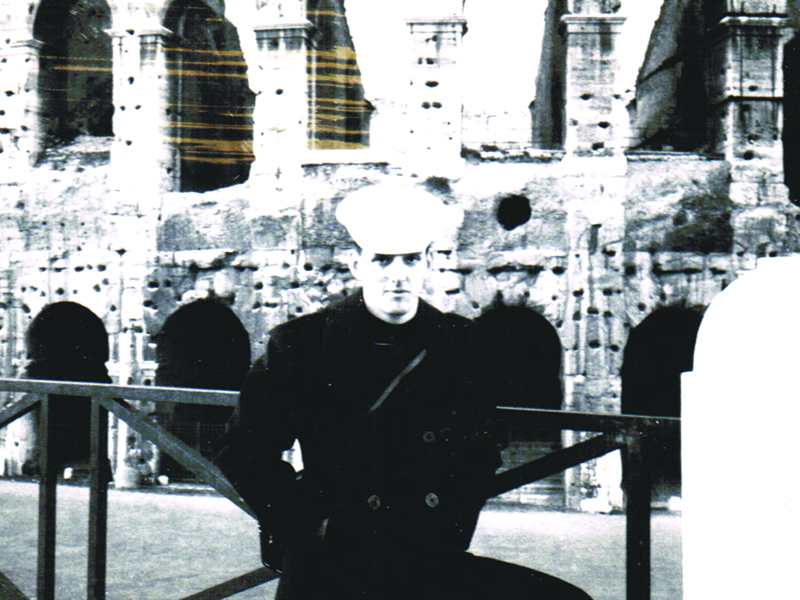
Machinist’s Mate Danny Drake was off the coast of Spain.
Above him, a thin layer of aluminum. Beside him, a few hundred fellow sailors. On the horizon, a Russian warship with weapons that could rip his vessel apart.
And somewhere far beneath the hull was a lost atomic weapon.
“The only thing you can see is sky and water, and it’s a hell of a long walk back,” he said of being on a warship.
The USS Macdonough, Drake’s frigate, was there because an American plane had lost two atomic bombs over Spain, he recalled. The first had landed in a vegetable patch. And the second had landed somewhere in the ocean.
The Macdonough’s job was to keep the Russians from accessing that particular somewhere until American diving teams could retrieve the bomb.
“We happened to be the closest and the fastest,” Drake said. “It was kind of a standoff.”
His journey to the sea began in a high school Reserve Officers’ Training Corps (ROTC) program at Fair Park High School in Louisiana.
“What I learned from that were the basic things,” Drake said. “Yes sir, no sir, doing what I was told to do.”
He spent two summer camps at Fort Polk in Louisiana.
“In summertime, it’s worse than Vietnam,” he said. “Snakes, alligators, mosquitoes, jungles.”
After long consideration, Drake decided he wanted to join America’s military in December of 1964.
He did so without telling or talking to anyone.
“I figured that was the best thing for me. And it was,” he said.
At the recruiting office in 1964, he chose the Navy.
After joining, Drake went through boot camp.
His ROTC training meant he was in charge of a group of new recruits.
Most of the men under his command had been given the choice of going into the military or going to jail, he said.
Most of them were also from cultures that were very different from his own.
“I had been raised in a lily-white world in Louisiana,” he said.
The company’s number was 013, he added.
But despite the cultural differences and mixed motivations, Drake did such a good job of leading his men that he got the American Spirit Honor Medal.
This medal represents honor, initiative, loyalty and high example to comrades in arms.
“I had no idea what it was,” Drake said.
But when his chief heard he got it, he learned it was the highest honor someone can get out of boot camp.
After graduating in April of 1965 as a machinist’s mate, the Navy assigned him to the Macdonough. It was the shore squadron commander’s flagship for the Mediterranean.
Each cruise would last five months as the ship patrolled the Mediterranean.
Frigates like the Macdonough help screen carriers, Drake said.
Sailors face danger in a different way than those who serve on land, he said.
A ship is like a miniature city, Drake said. On board, the crew must maintain all their own infrastructure, machinery and weapons.
Even these day to day tasks can be dangerous, Drake said.
The Macdonough ran on steam that passed through a turbine. If water got into this system, it could cause a catastrophic steam explosion, he said.
“If it bursts open, anybody in the engine room is immediately boiled alive,” Drake said.
One time, he was in a small motor boat standing by to rescue pilots that missed landing on an aircraft carrier.
The boat failed to properly detach from the Macdonough and almost flipped over in a swell.
Drake saved the situation by throwing a 200-pound boom back toward the ship.
Dangers like these meant that sailors always had to do their best work, he said.
“You have to get everything together,” he said. “It’s like a war.”
It simply wasn’t an option for the ship’s water purification systems, steam turbine, or other machines to fail, he said.
“The key to it is the youngest guy there that’s just out of boot camp that’s sitting there at the control panel,” he said.
Young men need to learn responsibility to make warships work, Drake said.
Working together under these difficulties helped bind sailors together, no matter their culture of origin.
Drake became friends with many people from very different cultures.
Sometimes they surprised him. One private asked for a knife, then made a small cut on Drake’s finger and his own so they could be “blood brothers.”
“You could have just told me,” Drake said.
The man wasn’t from a culture with a tradition of blood brotherhood, but he was making a point.
“Our blood is mixed,” he told Drake. “Both is red.”
In combat, modern warships don’t have any armor above water, Drake said. If they’re hit, the damage will likely be enormous.
“I’ve got to outmaneuver the enemy,” Drake said.
He remembered sailing into port past Russian ships and looking over at their sailors.
“You can see them standing on the side,” Drake said. “That’s the enemy.”
The Macdonough was armed with three big guns, an anti-submarine missile a surface-to-air missile and nuclear weapons.
“We thought we were pretty hot,” he said.
Carrying those weapons meant enormous responsibility, he said.
On the mission to recover the dropped atomic bomb, Drake continued to patrol with his crewmates until American divers recovered the bomb. Even with the Russians on the horizon, the crew did their job well.
After leaving boot camp, Drake spent all four of his years in the Navy on the Macdonough. He left the Navy in January 1969 after roughly four years. His tour had ended and he received an honorable discharge.
This service gave him the chance to see incredible things, he said.
He visited Athens, Nice, Istanbul and many other places.
“You were there in port and you were looking up at the Acropolis,” Drake said of Athens.
Adventures like these changed him.
“I learned to deal with understanding so many different cultures,” he said.
Drake said that before ROTC and the Navy, he wasn’t very interested in school. But his time in service gave him the discipline and confidence he needed to pursue a degree in urban life criminal justice at Kennesaw College and Georgia State University.
“When I got out of the Navy, I was ready for anything,” he said.
Free college through the military led Drake into a career in law enforcement.
He ran sting operations for the Georgia Bureau of Investigation, fought smuggling and investigated corruption. By the time he retired after 46 years, he was a law enforcement coordinator for the U.S. Attorney’s Office.
“I’ve had a very lucky life,” he said.
Drake said the Navy changed his life for the better.
“I had a ball. I grew up in the Navy,” he said. “My attitude on life changed. I figured out that if I wanted something bad enough and worked toward it, I could get it.”