
Youngsters learn humans always get help
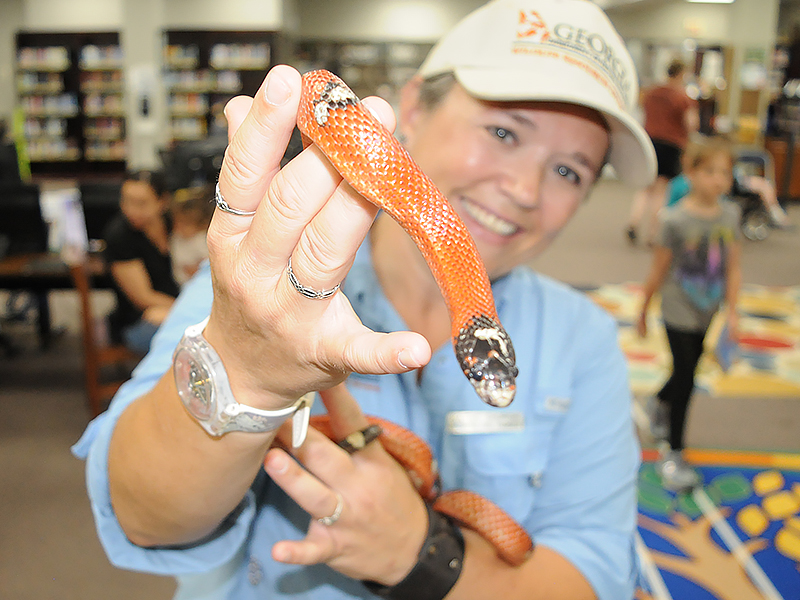
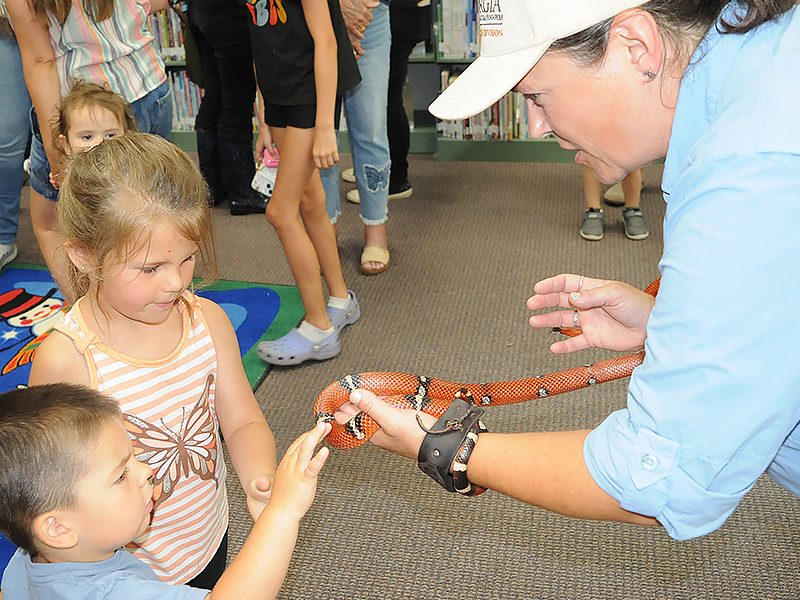
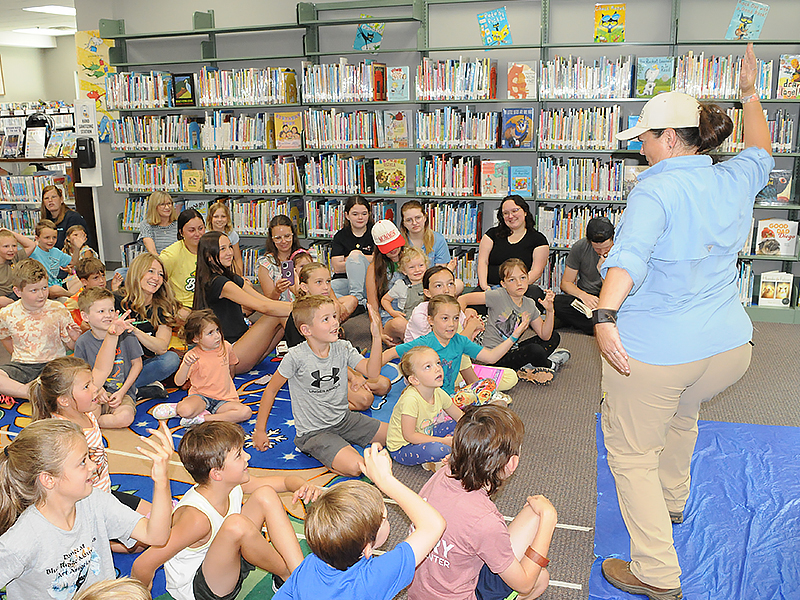
The Fannin County Public Library filled up with kids last Friday, eager to get up close with some snakes.
At the 11 a.m. June 27 event, Wildlife Interpretive Specialist Kathy Church gave kids of all ages the chance to touch, see and learn about snakes.
“Not all snakes are venomous,” she said. “The majority of them are non-venomous.
Smooth, bumpy, and much softer than they look, a snake’s scales provide it with the friction it needs to move as well as camouflage.
Their flexible ribs allow snakes to use these scales to move along a number of surfaces.
“How does a legless animal get 20 feet up in a tree to eat bats?” Church said. “It is all about the
elly scales.
Not only did those in attendance get the chance to meet several snakes she had brought, they also got to learn important facts about these fascinating creatures.
In summer, it’s important to watch out in areas with snakes, Church said. But they are active all year round.
Georgia has six kinds of venomous snakes, according to the Georgia Department of Natural Resources
As a general practice, people should never put their hand or foot somewhere without looking first, Church said. Snakes usually try to avoid people.
“If you see a snake, the snake made a mistake,” she said.
It is best to leave snakes alone, she said. There are no universal rules on how to tell a safe snake from a dangerous one.
Most snake bites happen when people try to kill venomous snakes, she said.
“When you become aggressive toward a wild animal, they tend to become aggressive back,” Church said.
If a snake must leave, it’s best to hire a professional to do the removing.
If a snake bites you, it’s best to stay calm, Church said. Move away from the snake, lie down and call 911.
Don’t put ice on the wound, eat or drink, use medication or apply a bandage, Church said. These methods can make the venom worse.
If the bite is life threatening, the State of Georgia has just one kind of antivenom, Church said.
“We’re gonna do everything we can not to give it to anybody, because you may be allergic and you don’t want to find out the hard way.”
Many kinds of snakes are helpful to people and eat pests. “Every living thing on this planet’s got a job,” Church told the children in attendance.
The rat snake and the milk snake eat farm pests like rats or poisonous snakes.
“All snakes are always helping humans in some way, shape or fashion,” she said.