
Georgia DNR says yes, warns of disease; TWRA says no
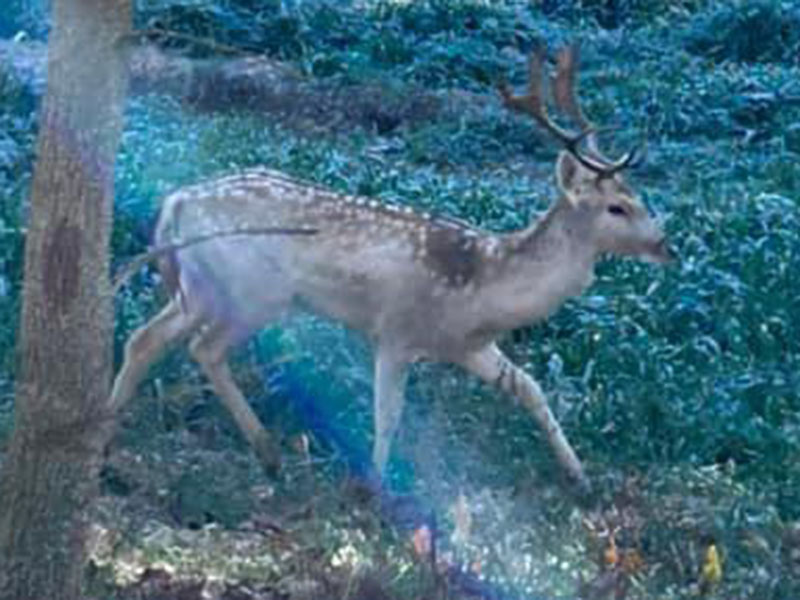
“Shoot on site.” Georgia’s Department of Natural Resources (DNR) has called for the eradication of exotic deer that escaped from Copperhill Industries property in East Polk County. The situation is drawing a different reaction from the Tennessee Wildlife Resource Agency (TWRA.)
The deer are called Fallow Deer and they have been seen running loose in East Polk County and into areas of Fannin County, which means two different states’ approaches on to how to handle their presence have to be considered.
These Fallow Deer were brought in by Copperhill Industries owner Buddy Haynes. When asked about any plan to recapture the deer, Haynes responded with, “Fallow Deer and other exotics are considered livestock by the Tennessee Department of Agriculture and are not regulated by Tennessee Wildlife Resource Agency. I have followed agriculture’s guidelines on the deer. My gates were left open by a contractor and some escaped. We have a tranquilizer gun and have captured several. Hopefully we get the 2-3 remaining.”
Georgia Department of Natural Resources (DNR) Administrative Sergeant Adam Loudermilk said that the animals are unregulated and DNR wants them gone. He urges private property owners in Georgia to “shoot on site,” if the animals are spotted on private or state property.
This reaction is due to the unknown factor of diseases and sicknesses the deer may carry. Although the Fallow Deer biologically cannot breed with the native whitetail deer population, they can still transmit diseases.
The Tennessee Wildlife Resource Agency (TWRA) does not endorse this statement from Georgia DNR, saying “[There is] nothing we can do about them... [They are] essentially property,” TWRA’s District 32 law enforcement officer, Captain Jeff Bishop, said. TWRA said that the regulation of these fallow deer falls under the Tennessee Department of Agriculture (TDA).
“The TDA’s Agricultural Crime Unit is working with the owner in Polk County as a case of livestock at large and we are unable to comment on a pending case.” This statement comes from Kim Doddridge, TDA public information officer.
When asked about the animal’s testing records and where the animals were brought in from, Doddridge said that animal health traceability records are not released.