
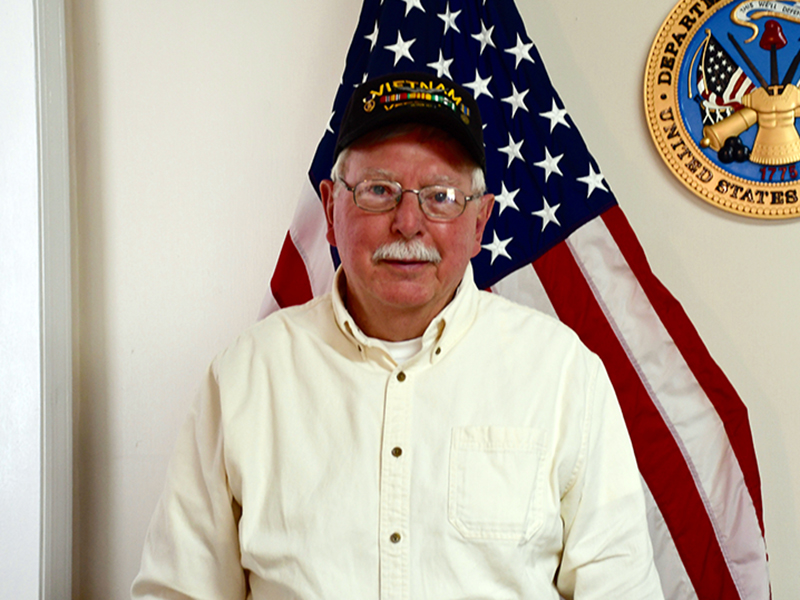
West Virginia native, and now Fannin County local, Rod McIntyre had not intended to join the military, but due to difficulty finding a job while people were being drafted into service, he found his way to Vietnam.
While searching for jobs in the Space Program in 1963, he discovered his likelihood of being hired was slim.
“I went over and started interviewing for jobs, but they always came back and said, ‘Well, we’re not hiring anybody right now, but we’ll get in touch with you,’ but yet in Orlando they had all kinds of ads in the paper for draftsman and engineers, so I couldn’t figure out why I couldn’t get a job,” McIntyre said. “I went back to school and talked to my instructor. He said, ‘Well, what’s your draft class location?’ I said, “I guess 1A,’ and he said, ‘That’s why you can’t get a job. You’re about to be drafted into the Army.’”
His instructor explained that the situation in Vietnam was getting bad, and many employers realized that men were about to be drafted. Due to this, they chose not to hire someone they may have to save a job for later on down the road.
“He said, ‘My suggestion is you go ahead and go in, because you’re about to get drafted,’” McIntyre said. “It wasn’t a week, maybe two weeks later, and I got my notice to come down to the station and take my physical.”
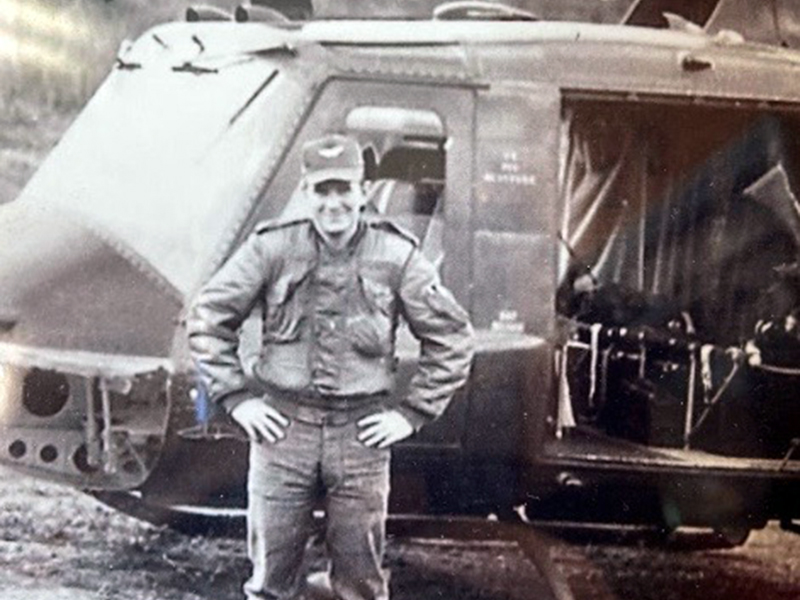
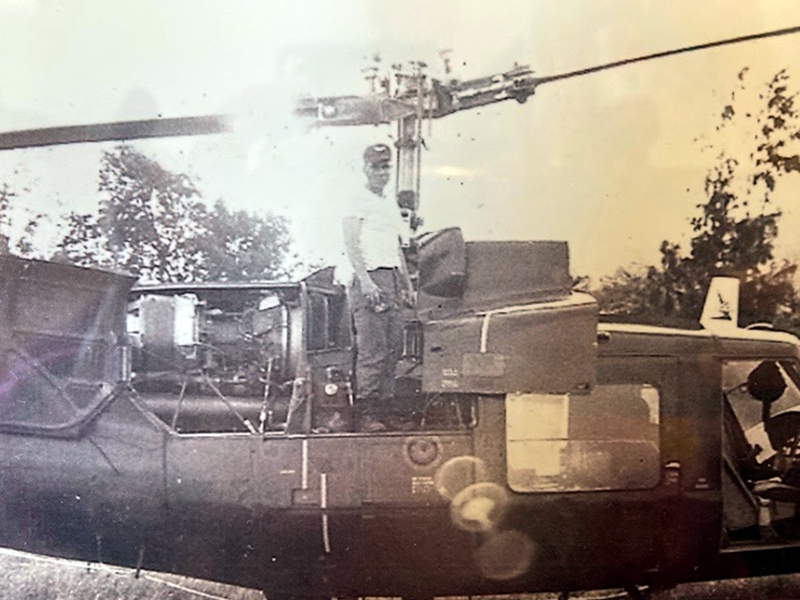
Recognizing that he was going, he chose to work on helicopters. He served in the Vietnam War from 1964 to 1967.
While he finds it difficult to talk about his time in Vietnam, McIntyre thinks it is important for people to hear about some of what happened during the war.
One particular event is still on his mind to this day.
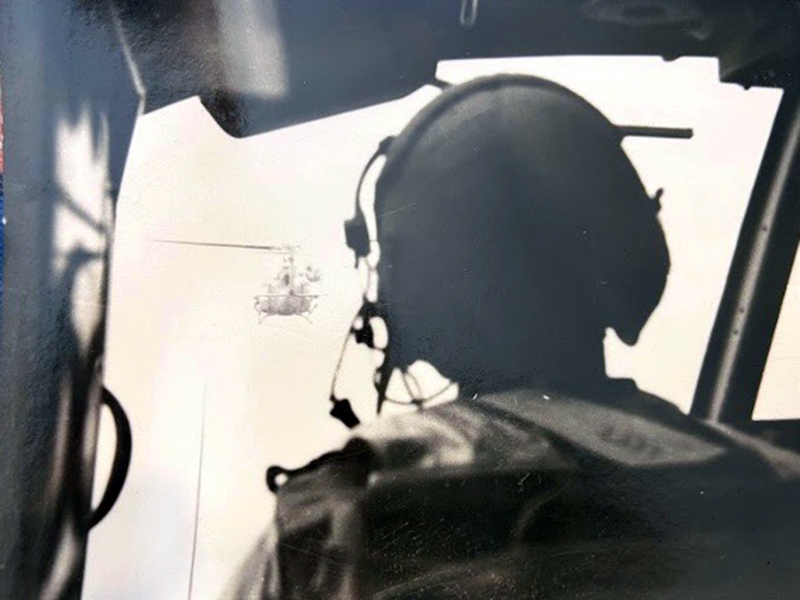
While he and other members of his unit were running supplies from Camp Holloway one day, they received a call to divert and search for a B57 crash in the Dak To region of Vietnam.
“They wanted us to go look to see if we could find the crew,” he said. “So we went over to where the crash site was at. It was on a ridge. He made a bomb run, and he got shot up pretty bad. He was losing his engine, so he was trying to get over this ridge to get into where the Special Forces camp was. Well, he didn’t make it. He just lost his power, and they bailed out.
“We start searching because we could follow his flight path up through this little valley. We start flying low and tracing the ground up to where he crashed. I was hanging outside the door, and my gunner was hanging outside the door on his side. We see two chutes hanging in the trees so we start circling the area. We descend, and all of the sudden we start getting heavy fire. I mean really heavy fire. A lot of bad guys down there. We had to break off to get away from there, so we did a couple of orbits at a higher altitude where they couldn’t hit us, but we couldn’t return fire because we didn’t know whether our guys were out.”
McIntyre and his crew realized they were getting low on fuel and made the decision to return to Camp Holloway to gas up. However, when they returned they experienced the same heavy fire.
“The next day, we went back up with little pamphlets offering a reward if the guys with the Vietnamese would turn these guys in to the camp there,” he said. “We went back up there, and this time took a gun ship with us, and we start circling the area. The chutes were gone. We never did see them. We never did find those guys. We dumped all those pamphlets out and everything, but we never got nothing or anything out of it.
“Later on, we heard that Special Forces sent a team in to see if they could find him. They didn’t find anything. We don’t know whatever happened to those two guys. They were just captured, and I don’t know what ever happened to them. Man, that really made us feel bad. We tried to do everything we could to get in there, but we just couldn’t do it. That was it, and we just moved on to the next job.”
A separate event, a night were enemy forces hit his camp, still rings clear in his memory.
“They got through our perimeter and got on the flight line, and they put satchel charges on a bunch of our birds and blew a bunch of our helicopters up,” he said solemnly. “While that was going on, they were dropping mortar rounds on us, 81mm mortar rounds, and we, me and the other guys, were running towards our bunkers and one of them hit right beside my buddy who was beside me. It killed him, and that’s when I got hit. I got shrapnel all through me and everything.
“We had a lot of guys get hit that night. They put us outside on the road out by the building. They got me all patched up. They came in later in the morning, and they loaded all of us guys up and took us down to Saigon to put us in the Navy hospital. I spent about a week or so down there getting all patched up and everything. I went back to Holloway, and went back in the hanger. That really messed me up.”
Following the event, McIntyre’s mother received a telegram from the Army alerting his family to the fact that he was injured, but very little information was given. It wasn’t until a neighbor suggest ed they contact the American Red Cross that they learned more.
Since leaving the military, McIntyre has enjoyed several jobs in drafting and aviation, including multiple stints working for the Space Program in Cape Canaveral, Florida, before settling in Fannin.
He has been married to his wife, Jill, since 1967, and the two have two sons, Trevor and Scott.
He and Trevor have worked hard to maintain the Huey Helicopter on display at the Veterans Memorial Park.
While he said his own experience in the military can be described as “bad,” he still believes people can pull good experiences from military service.
“When I was in, it was bad,” he said. “I’ll be honest with you. It was bad. About all the guys in my units were draftees. Now, it’s all volunteers, and the guys are sharp. They’re really some good guys. If you want a good education and to get to see the world, not Vietnam, go into the military. You’ll get a good education, and you’ll get to see a lot of stuff.”
He is currently a member of the Veterans of Foreign Wars (VFW) and the Disabled American Veterans (DAV), and he encourages any veteran member of the community to consider joining one of the many veterans organizations in the community.
“These guys are all great,” he said. “I mean we all work together, and we try to help people. When I came back, I was really screwed up. After living for a year, in a combat situation, I just really had a hard time adjusting to civilian life. These guys are the same way here. I’ve met some guys, who were in Afghanistan, and some of them really have PTSD bad. We’re trying to help them out, and get them into the programs. We didn’t have anything like that when I came back.”
Those interested in the organizations can email Ray Arthur at fanninveterans@yahoo.com or learn more on the Fannin County Veterans Organizations Facebook page.