
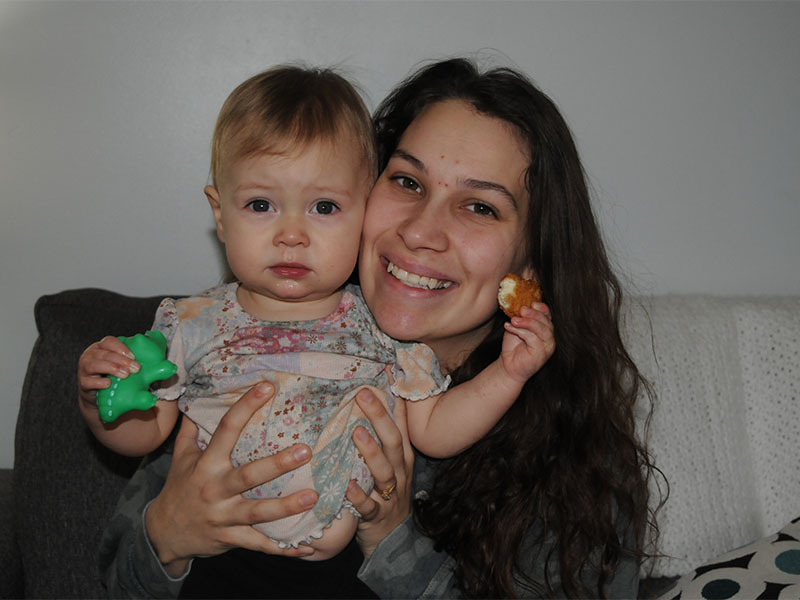
New mom Kailee McCue would never have guessed that her daughter Paisley was able to learn about math at just six months old.
“My first thought was, ‘That’s crazy. My daughter’s six months old. Why do I need to prepare her for kindergarten?’” said McCue.
But she and her husband soon discovered that even infants are capable of more that many people would expect.
McCue is one of roughly a dozen women participating in “Smart Babies,” a course provided by The Craddock Center, a nonprofit.
The free course, hosted by Her Hope Pregnancy Center, teaches families how to give children a good start in life, starting even before birth.
“ We encourage parents to read to the children before they’re born, Bev Cook, the program coordinator for Smart Babies said.
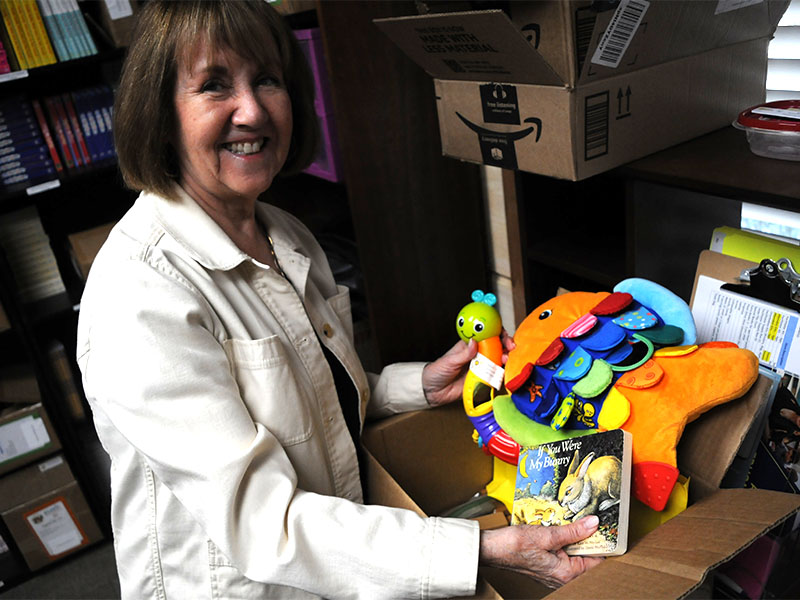
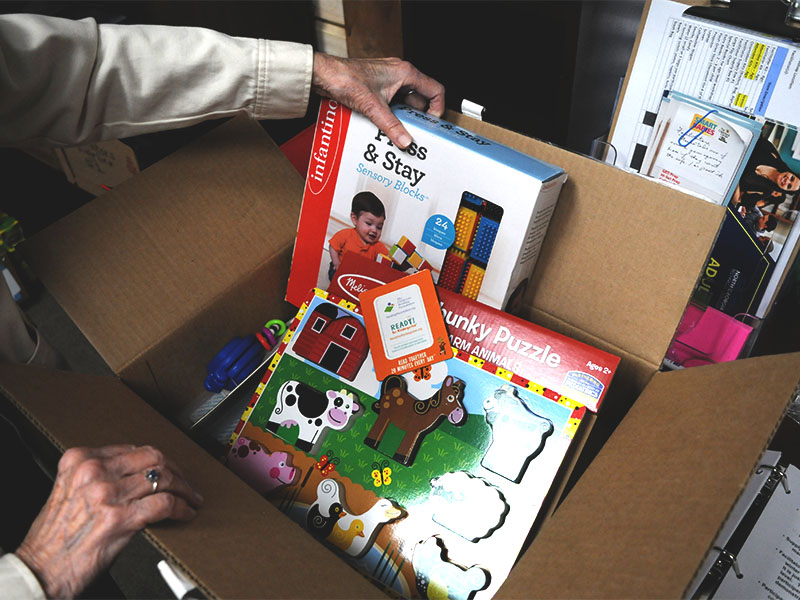
Each course session includes three classes, toys, books, and other tools to help children.
Her Hope hasn’t yet announced when the next round of classes will take place.
In the first three years of life, children’s’ brains develop at a faster rate than any other time, At birth, babies can’t even see in color, Cook said.
But in just a few months, they can learn sign language, start to remember words, and more.
“There’s never another period in a person’s life where so much growth goes on in the brain,” she said. “And if the stimulation doesn’t happen, that growth doesn’t happen.”
At this stage of life, it’s extremely important to teach children as much as possible, she said.
By three years old, a child should have heard at least 30 million words, Cook said.
Although this number sounds intimidating, it’s easy to reach just by talking to kids consistently, she said.
With parental love and care, children learn quickly.
Today, at just under one year old, McCue’s daughter Paisley can do simple puzzles, identify animals, recognize colors, and more. Even more amazing, she can do all this without knowing how to talk.
McCue said she already has a favorite puzzle.
“Her favorite animal is a duck,” she said. “She has a puzzle that has a little piece that’s a duck, and she puts the duck where the duck goes.”
Although children have these amazing abilities, parents don’t interact enough with their babies, Cook said.
Children who are two years behind in preparation for kindergarten have a 45 percent dropout rate in high school, she said. Children one year behind have a 26 percent high school dropout rate.
“We’re trying to tell parents that they are their child’s first teacher, before they ever step foot anywhere else,” Cook said.
And in an increasingly screen-dominated world, parents are often too enthralled by technology to interact with their babies, she said.
While Smart Babies isn’t against age-inappropriate screen use, using screens as a babysitter doesn’t work well, Cook said.
“It really does affect their attention span,” Cook said. “As the technology has increased and screen time has increased, we’re finding that more parents are not interacting and talking to children enough.”
In response to these needs, the Craddock Center created “Smart Babies” classes to educate parents on what their very young children can achieve.
The center now serves nine counties including Fannin. With its programs for children three and under, the group meets an important need, its executive director Kirk Cameron said.
“There was nothing going on about teaching parents how to teach their children.,” Cameron said.
Although any parent can take the classes, most participants are mothers of all ages and all levels of experience, Her Hope executive director Lori Kantner said.
Just because teaching children is educational doesn’t mean it’s difficult, she said.
“Even though you’re playing with them, it’s actually developing those brains.”
Often, the class is just the beginning, Kantner said. The women in the classes can learn from each other to improve their parenting methods.
The program can serve so many families because of a generous grant from an anonymous foundation, Cameron said. Currently, the Craddock Center has enough money to provide the classes for the next three years.
“I don’t think Paisley would be where she is today if I didn’t have the knowledge that I was able to gain from that class,” McCue said.