
Hometown Heroes
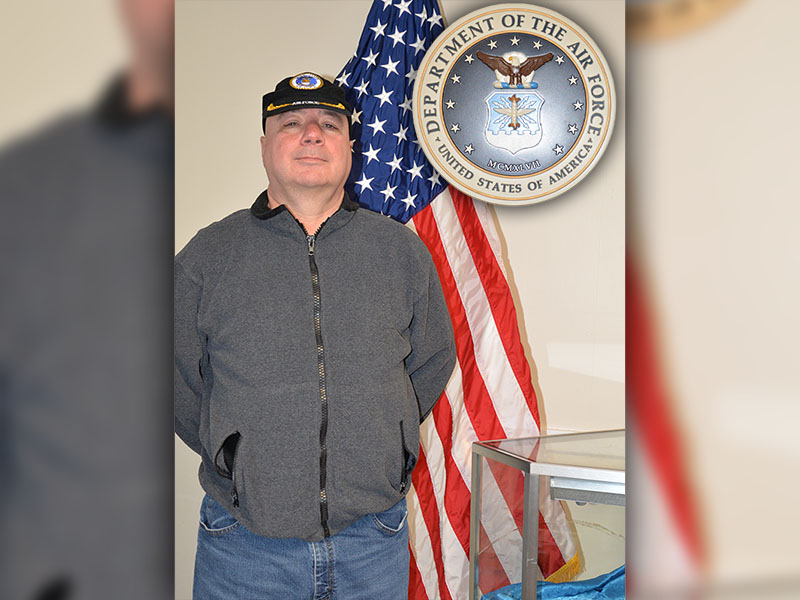
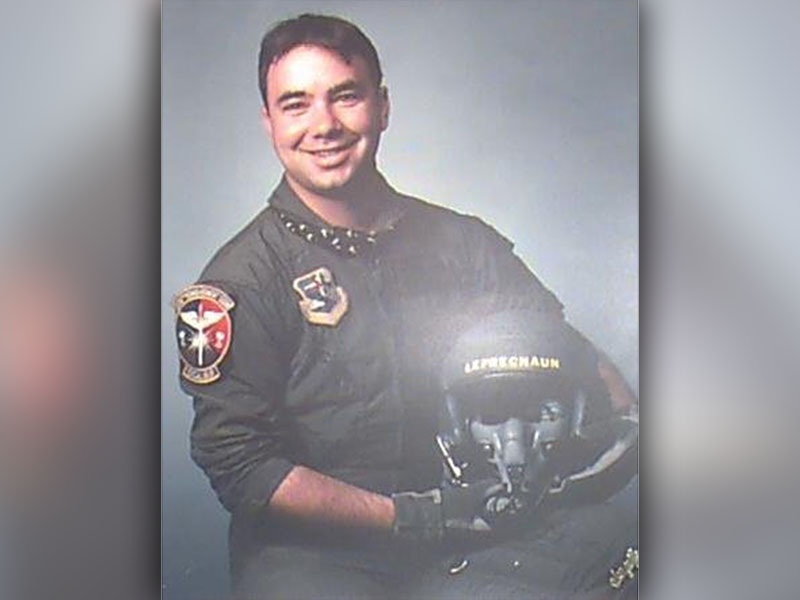
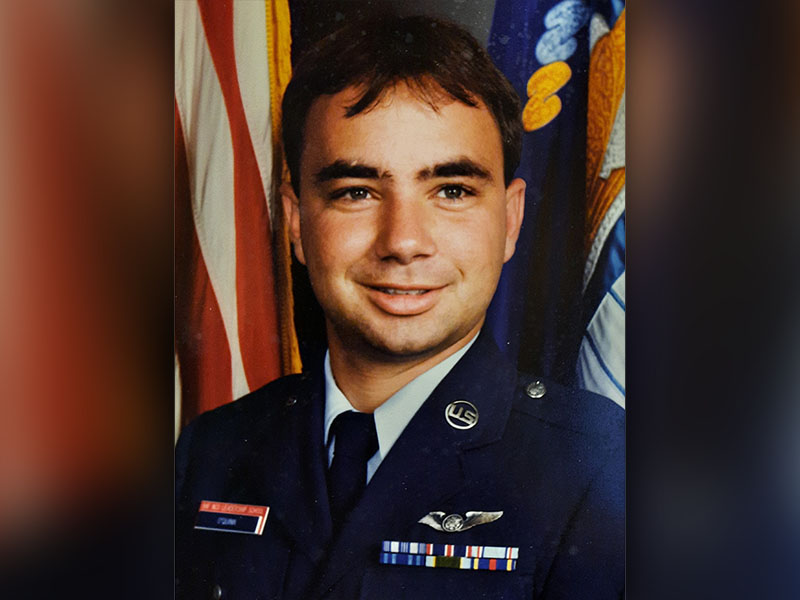
Kevin O’Quinn found himself in what he described as “an interesting place to put a 19-year-old kid,” a member of a four person crew who could be called on at any moment to enter the United States into World War III.
That was where the boy who grew up on farm in Patterson, Georgia, not far from Waycross, found himself.
O’Quinn joined the Air Force right out of high school, in part because recruiters came calling after seeing his high scores on the Armed Services Vocational Aptitude Battery (ASVAB) test.
He graduated from Basic Training in July 1982 and was told he would be trained as a Ballistic Missile Analyst Technician (BMAT). He did not realize that meant his duty would involve Intercontinental Ballistic Missiles (ICBMs). “I was in charge of the missile itself,” O’Quinn said.
After nine months of intensive training, he was assigned to the 533rd Strategic Missile Squadron, part of the Strategic Air Command, at McConnell Air Force Base near Witchita, Kansas.
He became part of a four person Titan II launch crew who were nicknamed the Smurfs. “We were all short,” and dressed in our blue camouflage clothing people said “we looked like Smurfs,” O’Quinn said.
The base was home to 18 ICBM silos located within an irregular radius of 20 to 50 miles.
O’Quinn said the drive from the base to some of the silos would take two hours. His trip was usually about 45 minutes.
He recalls the first time walking down into one of the silos was “like walking onto the set of a James Bond movie...the technology was overwhelming.”
The silos went nine stories deep underground. Each housed a missile capable of delivering a 9 megaton warhead to a target 5,000 miles away with the destructive power 600 times that of the atomic bomb dropped on Hiroshima to end World War II.
“We could launch within 60 seconds,” O’Quinn said of the team’s ability to strike with the ICBM if ordered.
That’s what the crew did, for 30 hours at a time, they would “listen for the real message” to launch the missile, O’Quinn said. “Fortunately, we never heard that.” But there were some moments “that really got tense.”
Training had prepared the crew to do their job. “They prepared us to launch,” O’Quinn said. “You were intensely trained so you wouldn’t think about what you were doing.”
But the 30 hours spent in the silo involved much more than just sitting, waiting and listening for launch orders.
There were drills to keep crew members alert.
There were also numerous safety checks that had to be performed constantly because the missile propellant used by the Titans was highly volatile. The chemicals mixed together to create the thrust to send the missile into the atmosphere and carry it to its target. No spark was needed.
The imminent danger from the propellant had become evident in September 1980 when a missile complex in rural Arkansas experienced a liquid fuel explosion inside its silo.
The Damascus Titan missile explosion all started when an eight-pound socket fell off a ratchet and dropped approximately 80 feet before bouncing off a thrust mount and piercing the missile’s skin over its first-stage fuel tank, causing it to leak a cloud of its aerozine 50 fuel. Hours later there was an explosion so powerful the silo’s 740-ton door was catapulted away from the site. The second stage of the rocket and warhead were ejected from the silo. Once clear of the silo, the second stage exploded and the warhead was located about 100 feet from the launch complex’s entry gate.
The thermonuclear warhead’s safety features prevented any loss of radioactive material or nuclear detonation.
There is “never any danger of a nuclear explosion” from such an incident O’Quinn said.
Safely maintained, the propellant could stay on the missile for years, O’Quinn said.
But if a missile was launched, there was no “oops” switch. “Once you pull the trigger on an ICBM, that’s it,” O’Quinn said. “There’s no self-destruct mechanism.” If there was one, then the enemy would be able to figure it out and use it against us, he explained.
While O’Quinn’s time working with the ICBMs was “one of the happier times of my life,” the time ended with the Strategic Arms Limitation Treaty (SALT).
In typical military fashion, he was given a choice. He could spend the last months of his enlistment cutting grass and shoveling snow or, if he extended his enlistment for two more years, the Air Force would retrain him. He took the second option.
Still under the umbrella of the Strategic Air Command (SAC), he was trained as a tail gunner on a B-52 Stratofortress, a long-range, subsonic, jet powered strategic bomber.
He was assigned to the 596th Bomb Squadron based at Barksdale Air Force Base near Shreveport, Louisiana.
O’Quinn had never left the United States as part of his enlistment until he got into the Bomb Wing.
Then he was part of the crew that took the first B-52 to land on the European continent – not England he points out.
They landed in Belgium in 1987 to be part of an air show. The B-52 was to be on static display for the two-day event, allowing show-goers to see the aircraft up close.
About two-thirds of the way through the day, O’Quinn remembered the crew was “basking in the glory of the aircraft,” talking with visitors, taking pictures and enjoying the moment.
It was then a “nervous looking” colonel walked up and asked, “Please tell me you didn’t bring an ALCM (air launch cruise missile) modified bomber?”
Crew members just, innocently, looked around at each other. “We had inadvertently violated the SALT II treaty,” O’Quinn remembers.
But nothing was said, the show went on, and the crew and bomber came home.
Just like his time watching over the Titan II missiles, O’Quinn was on alert with nuclear weapons.
His B-52 was sitting at the end of a runway, in a Christmas tree formation with eight other, similar aircraft, each armed with 24 nuclear missiles.
Crews would spend seven days at a time waiting for orders to “go.”
“The birds were ready 24/7,” O’Quinn said. “I’m standing here within 20 feet of 24 nukes, and it’s just another day at work.”
As a tail gunner, along with the Electronic Warefare Officer (EWO), “Our job was to get the plane to the target,” O’Quinn said.
“If the enemy got past the EWO, the gunner was the only thing left to stop them,” O’Quinn said.
They were a defensive team. The EWO would jam radar and directional signals or drop chaff and flares to throw missiles off course. If anything got through, it was the tail gunners job to shoot it down.
O’Quinn points to Vietnam where B-52s were credited with shooting down two MIGs while none of the massive aircraft were ever shot down by a MIG.
Then one day, as the end of his extended enlistment was ending, O’Quinn returned from leave and was greeted with the news RIF (Reduction in Force) was underway.
He was given two choices. He could serve out the three months he had remaining and his service would end, or he could re-up and the Air Force would cross-train him.
O’Quinn asked what his options for cross-training were, only to be told he had “no options.”
Still young, and remembering the grass cutting, snow shoveling he had faced back in Kansas, he chose to leave the military. But he left with fond memories.
“The friends I’ve made in the Air Force are the ones I’ve stayed in touch with,” he said. He described SAC as “a world of it’s own.”
“It helped me grow up when I needed to,” he said.
He encourages all young people to serve in the military. “It’s an experience worth having,” O’Quinn said.
After leaving the military, he earned two Bachelor’s degrees from Valdosta State University, one in astronomy and one in physics. He soon began work in radio engineering working on building cellular networks.
One day he was in Atlanta and was called to work in Knoxville. Told he had to be there in four days, he decided to take the scenic route, and that’s how he found Fannin County.
He talks of coming around a curve and spotting Rich Mountain in all its glory – quite a sight for a South Georgia boy – and deciding, “That’s where I’m going to live.”
He built his house in Dial and lives there with his wife and two sons, Corey, 12, and Shawn, 9.
He’s active in local Veterans organizations and is a member of the North Georgia Honor Guard.