
Three Heroes from World War II; Hatch Hatchell, Bill Langford, and John Lindsay
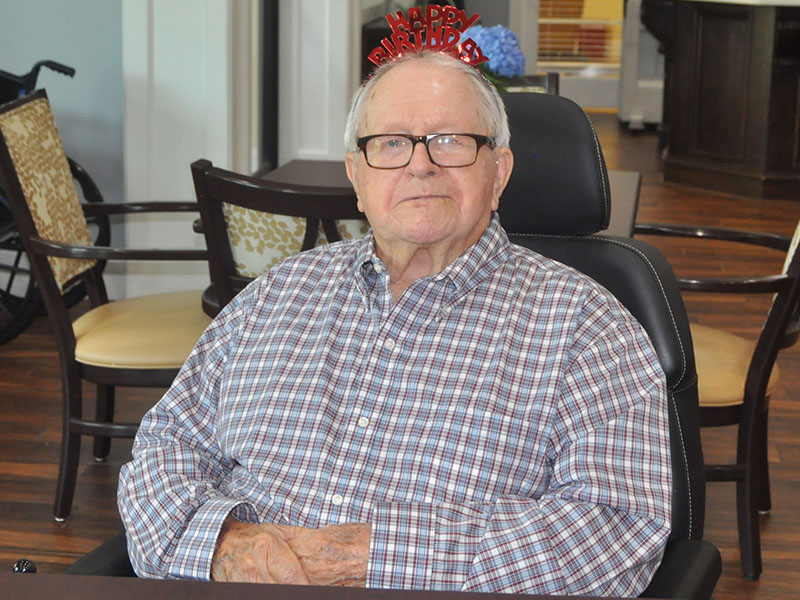
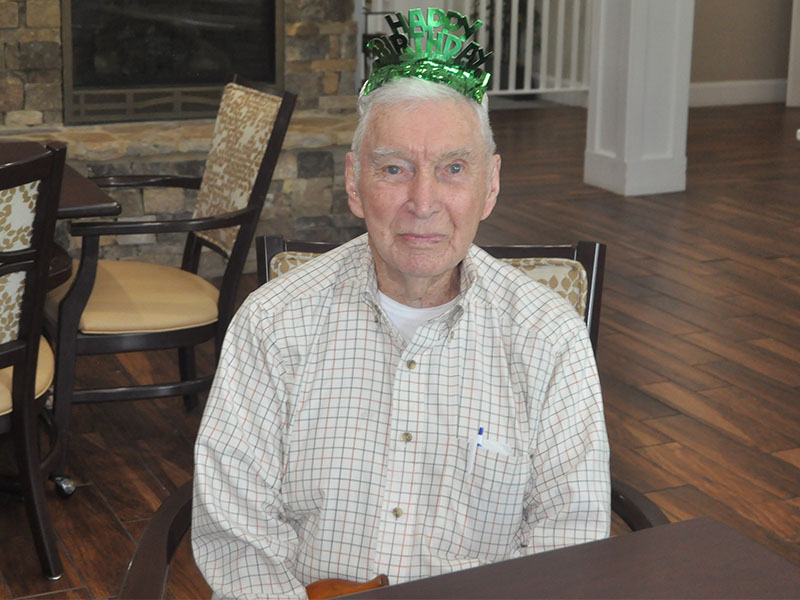
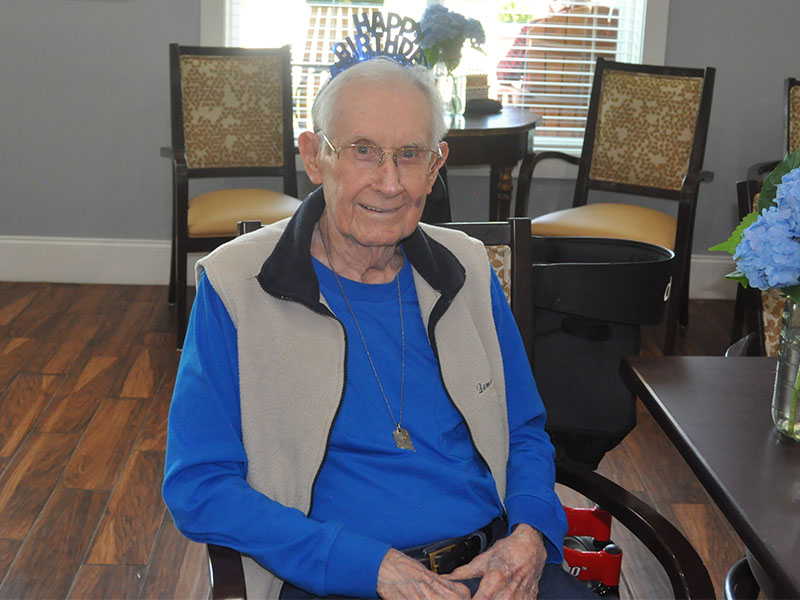
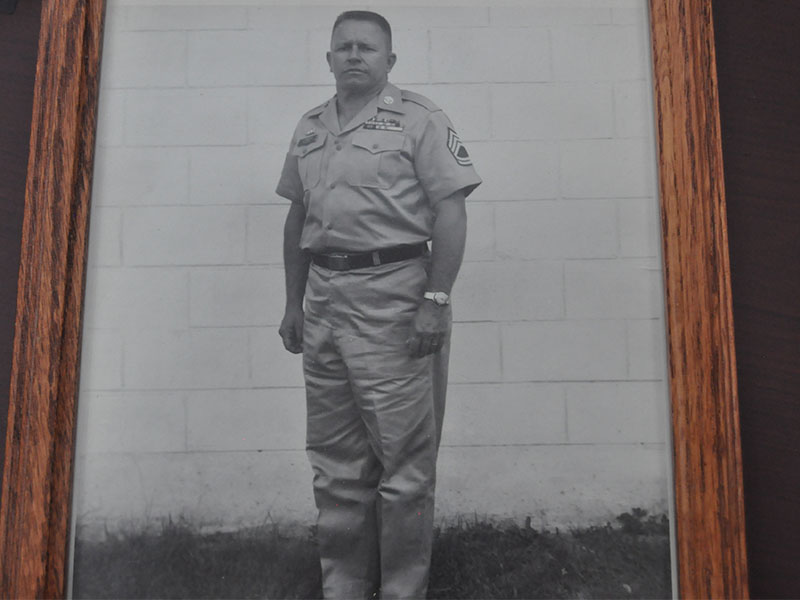
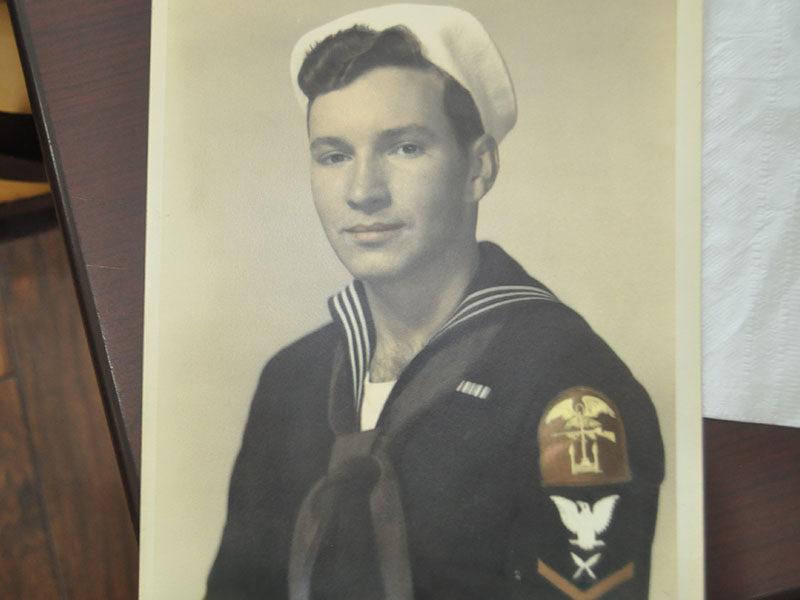
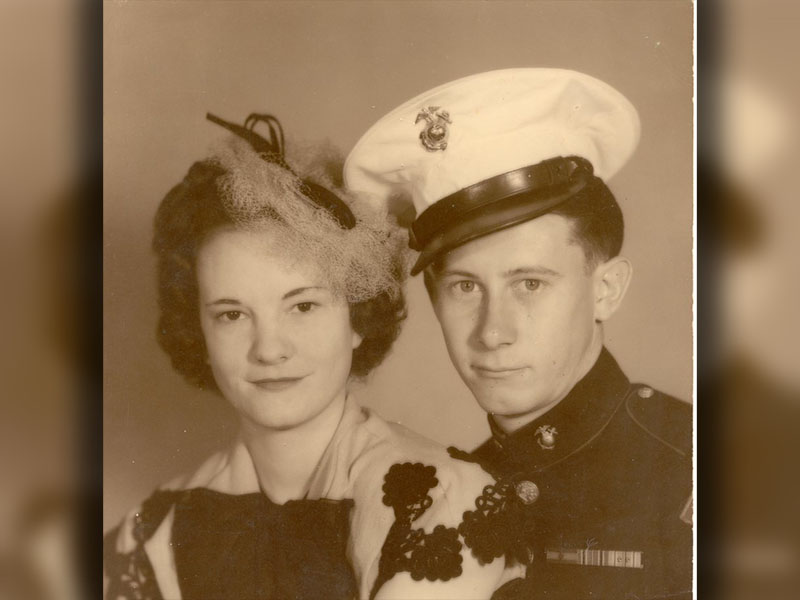
Three men living in Blue Ridge shared a 99th birthday party June 17 at Blue Ridge Assisted Living, but that’s not all they share with each other. Amongst them are bravery, strength, and resilience. Joel (Hatch) Hatchell, Bill Langford, and John Lindsay all fought for our country in World War II. One of them continued his military career into the fighting in both Korea and Vietnam.
Hatchell, Langford and Lindsay sat together at their birthday party discussing their time in the military. With two in the Navy and one in the Marine Corps during WWII, there were plenty of experiences to be shared.
Hatchell was the Marine of the bunch. On December 7, 1941, the Japanese attack on Pearl Harbor occurred, inspiring many young men to put their lives behind to fight for our country. Young men like Hatchell who, at the time, was studying at Louisiana State University went to war.
Hatchell joined the Marine Corps in January of 1942. He had initially showed up to join the Navy, but instead was prompted to join the Marine Corps when an old high school friend was there that day who was joining the Marine Corps.
Hatchell was assigned to a bombing squadron, but was delayed in getting to his assigned squad. When he got there, they had shipped out. Hatchell was transferred to a fighter squadron and sent to Oahu Island. That is where he received his training to conduct various roles as a fighter pilot.
In March of 1943, he was shipped to the Russell Islands. That’s when the Japanese were on New Georgia Island, one of the Islands in the Solomons. When Hatchell was not flying missions or training he was assigned to an ambulance or a fire truck beside the runway.
This is where Hatchell was stationed until the end of the war, getting shipped back to California in 1945 and being discharged in 1946. Hatchell stated, “God was with us.”
Bill Langford was drafted fresh out of high school. He went to Fort McPherson in Atlanta, Georgia, for his physical evaluation. While he was there, three officers stood before him at a table, one Army, one Marine Corps, and one Navy.
The Marine Corps officer looked at his paperwork, looked at Langford, and handed his paperwork over to the Navy officer. Langford had but only one question, “Do I have to wear a tie?” The Navy officer told him “No.” Langford then let the officer know, “I’m your man”.
Langford was assigned to an “LSM” (landing ship medium). These ships were used to land troops and equipment directly on to shore. Langford was at the battle of Iwo Jima, one of the costliest battles of the Pacific theater. He was in the fifth wave of the attack.
Later in the war, while dry docked in Saipan, Langford had trucks with radio stations built onto them aboard his LSM. These radio trucks were to guide planes onto the islands where they were docked.
Langford laughed as he reminisced their time listening to the “Tokyo Rose,” a Japanese propaganda station. The men would listen to these stations as a form of entertainment during their downtime. While a radio station seems so simple, it was an escape from the harsh reality these men faced. For some men, the 7 p.m. radio broadcast was the happiest part of the day. Langford said that it would usually tell them where they were going before they even knew it. While Langford was stationed in Saipan, the Japanese offered their surrender.
John Lindsay began his 21-year military career with the Navy aboard the USS Wadleigh during World War II.
One of his jobs was to go in and “pepper” the islands before the Marines landed. He was a part of the escort of President Franklin D. Roosevelt, who was aboard the USS Iowa on the way back from the Cairo Conferences.
Lindsay served on the USS Wadleigh for the duration of the war, serving all the way up to the surrender of Japan on September 2, 1945. The USS Wadleigh was present for the signing of the treaty.
After the war and serving three years in the Navy, Lindsay left the military. He laughed saying, “I got out and couldn’t find a job so I joined the Army.” Lindsey continued to serve our nation in the Korean War and Vietnam War.
During his time in the Army during the Korean War, Lindsay became a part of the “Chosin Frozen” in December of 1950. This is a name given to the survivors of the Chosin Reservoir campaign.
The men present fought in weather that was around negative 30 degrees. This well below freezing temperature took the lives of many soldiers, and impacted the health of many more.
During this, Langford was on the outskirts up on a hill of the Marine holdup. He went down to set up air defense to protect all Americans from aircraft while they were coming and going from an LST ship. Of the seven men with him, nobody was killed or injured.
All three of these men sacrificed so much for our country. They have seen so much change and growth in our world. They had just begun their adulthood and went straight out to fight for our country and deserve thanks every single day. With World War II being around 80 years ago, there are not many left who are able to share first hand experiences. Time is of the essence to ensure these stories don’t go untold.