

Family traditions don’t always consist of holidays and get togethers, but sometimes continue a legacy set by parents or ancestors. For Thom Potito, the tradition was joining the military and following in the footsteps of his father and uncles who served in World War II.
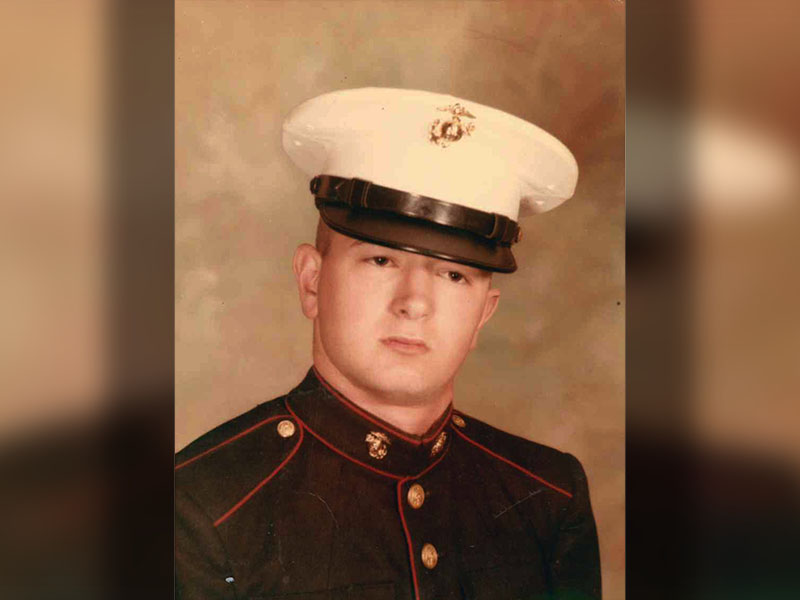
Potito says,”I’d always wanted to go into the military,” so on his 17th birthday in January 1969, his dream of serving his country became a reality when he enlisted in the Marine Corps. He says because he joined so young “you kinda feel that invincibility level...that nothing could happen to you.”
Eight years later as a staff sergeant and father, Potito started to feel less of the invincibility and more of the sacrifice. Potito shared a moment he will never forget saying, “What really hits you in the gut is my four year old daughter looked at me and said, is that my daddy?
“Those are the things you sacrifice to serve your country, but you don’t realize the impact given on your family,” he said.
His journey began at Parris Island, South Carolina, in boot camp. His next stop was infantry training at Camp Lejeune, North Carolina, and then on to Advanced Individual Training (AIT) in Memphis, Tennessee, at the Naval Air Station (NAS) to train to be a hydraulic mechanic performing aircraft maintenance.
Potito’s next stop was in El Toro, California, for three months as a brig guard (prison guard), then it was on to Camp Pendleton, California, for advanced infantry training.
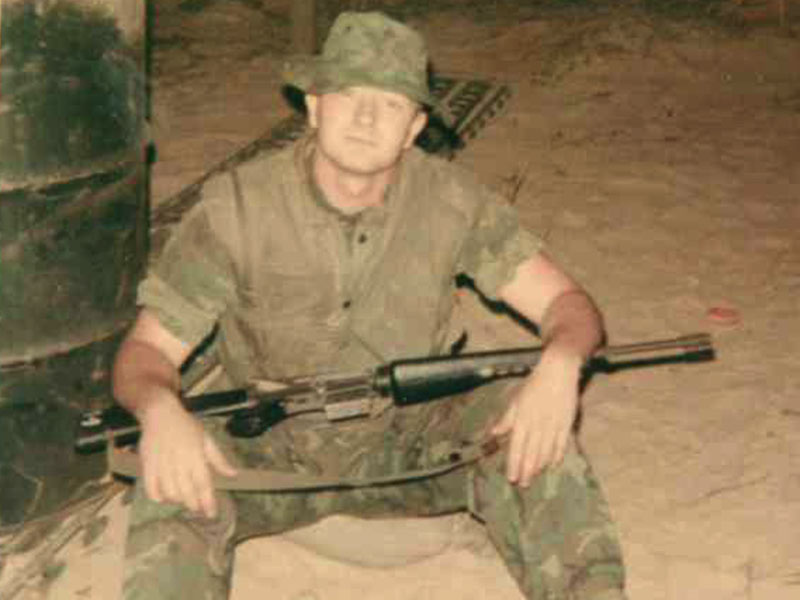
At the end of 1969, he was sent to South Vietnam. Moving to Marble Mountain, the Republic of Vietnam, he ended up on a perimeter defense platoon as a radio man, instead of working in his own field, for six months.
At the end of his time in South Vietnam, Potito was assigned to Marine Air Group (MAG) 16 where he worked in various jobs.
Potito extended his Marine Corps contract at the end of Vietnam and was stationed in Japan at the Marine Corp Air Station (MCAS) Iwakuni as an instructor for water survival.
After Japan, Potito went to Cherry Point, North Carolina, and worked at Reconnaissance Squadron VMCJ2 where he was promoted to sergeant.
Shortly after, in 1973, he was given orders to report to drill instructor school at Parris Island, South Carolina. He would then work as a drill instructor and water survivor instructor.
In 1975, after he completed his time as an instructor at Parris Island, he was transferred to New River Air Station in North Carolina next to Camp Lejeune. His duties included being the NCOIS (non-commissioned officer in charge), helicopter maintenance, and a Quality Insurance Inspector.
Camp Lejeune brought a loss to Potito and his family, due this time period being the worst water contamination case in the U.S. history. This base was a frequent pollution spot where oil, industrial wastewater, and toxic chemicals used as degreasers were known to be dumped between the years 1952 and 1987. Potito’s brother, who also served as a Marine at Camp Lejeune, lost his life from the poisoned water.
During this time in 1977, Potito did a six month deployment with 24 MEU Marine and Expeditionary Unit (MEU), Helicopter Marine Medium (HMM) 362 in the Mediterranean.
In 1979 when he returned to New River, he was transferred back to NAS in Memphis as an instructor for Ground Support Equipment AIT school.
He returned to MCAS in Iwakuni, Japan, the same year, as the 3rd Marine Air Wing IMRL chief, then to Cherry Point, North Carolina, in 1980 with MAG 32. From there he became a Support Equipment Chief for the 2nd Air Wing for a year at the same Marine base.
He was transferred to the Naval Aviation Depot and worked for the plans procedures, and systems branch while still at Cherry Point. This was in conjunction with new programs and systems having to do with AV8A Carrier aircraft and the Osprey MV22 aircraft. Besides working with the aircraft systems, he was also a crew chief on reworked CH46 helicopters.
Reworking the aircraft meant tearing it apart, rebuilding it completely including putting in all new engines, transmissions, and hydraulics, and then sending it back out to the fleet as a new unit.
While he was helping rebuild aircraft he was in charge of the flight test department, which consisted of scheduling flights, air crews, and transfers of all naval aircraft.
In 1983, Potito was promoted to First Sergeant and was transferred to the inspector and instructor staff of 2nd Battalion, Fox Company, 25th Marines as an Infantry 1SGT. Included in his duties was teaching classes at the United States Military Academy at West Point, New York, on Amphibious Warfare (AW) tactics.
Potito’s schooling in teh Marine Corps included drill instructor school, AW Officer school, and Basic Course (Becoming an Officer) school. Although he didn’t request becoming a commissioned officer, he said, “he just wanted to take the course.’
Potito retired from the Marine Corps in February 1990 have received a total of 13 ribbons and honor badges including; the Meritorious Service Medal, Naval Corps Achievement Medal, Combat Action Ribbon, Presidential Unit Citation, Naval Unit Commendation Medal, Meritorious Unit Commendation Medal, National Defense Service Medal, Service deployment Ribbon with 3 stars, Vietnam service with 3 stars, Republic of Vietnam/Campaign Medal with three stars, Vietnamese Cross of Gallantry with Palm, Vietnamese Civil Action Award First Class, and Drill Instructor Ribbon.
After leaving the Corps, Potito went back to school, taking advantage of his GI Bill. He took a Cad/Cam Course in Clearwater, Florida, and then took a two year program for Air Conditioning and Electrical.
After completing school and completing a trade, he got a job with Bay Pines Veterans Hospital, dealing with Industrial Chillers, a big air conditioner system that controls all the A/C in the operating rooms, and is done with computers and pneumatic controls.
Then in 1999 he applied to the sheriff’s office in Pinellas County, in Largo, Florida. He spent two years in their corrections department and then worked patrol operations from 2002-2007.
In 2007 he went to the community policing program. There he worked with the City of Oldsmar as a community deputy, working with the city council and the mayor, and city manager. The area included 1500 acres of wetland.
He retired from the sheriff’s department in 2014, and now says, “And here I am!”
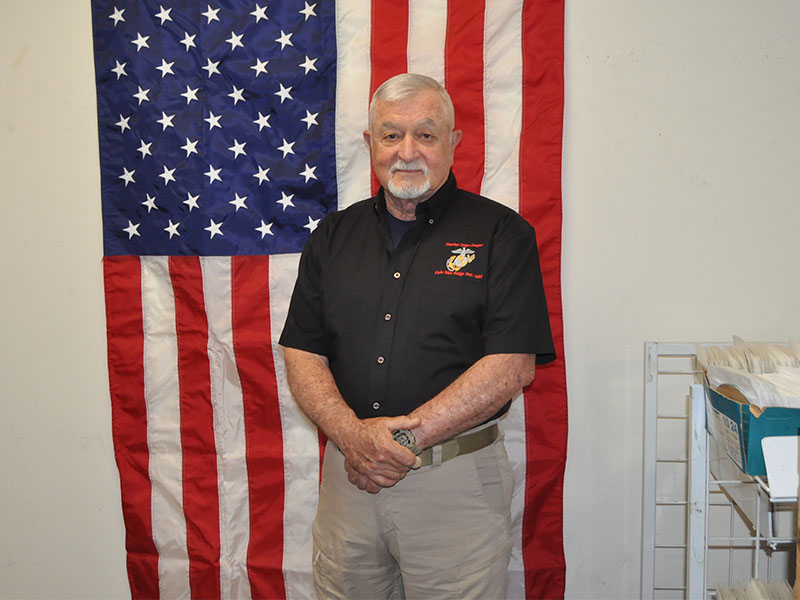
Potito is an active member of Marine Corps league 1438 here in Blue Ridge, which is dedicated to serving the community and other veterans. Potito says “The military in you, especially being in the Marine Corps…it stays with you,” describing how the league and the services they provide keep that Marine fire burning.
He expressed his love for the Marine Corps league here in Blue Ridge saying, “The service to the community is the most important thing they do.”
Potito says, “Marines are a tight knit community,” described by his wife who he quotes as saying, “You guys walk into a building and if there are two of you in there you will find each other.”