
Lucas Roof told Fannin County Board of Education members, “We all say that we want our students to have real world experience.”
It was such an experience that brought the importance of immediate care for stroke victims, and a Fannin County High School (FCHS)student’s involvement in that care, to the forefront recently.
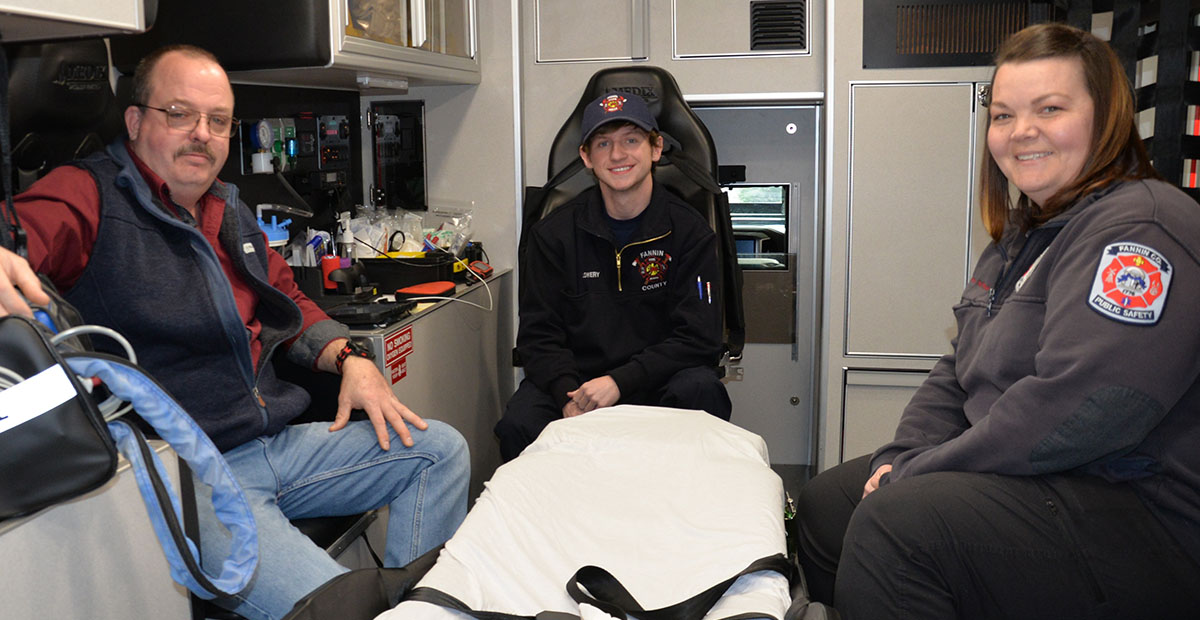
Trent Lowery, a junior at FCHS, was riding with a Fannin County Emergency Medical Services (EMS) ambulance crew that responded to help an 88-year-old female who had suffered a massive stroke.
Because of the EMS care she received, a quick Lifeforce transport, and the technology available at Kennestone Hospital, the victim experienced a full recovery and was sent home in two days.
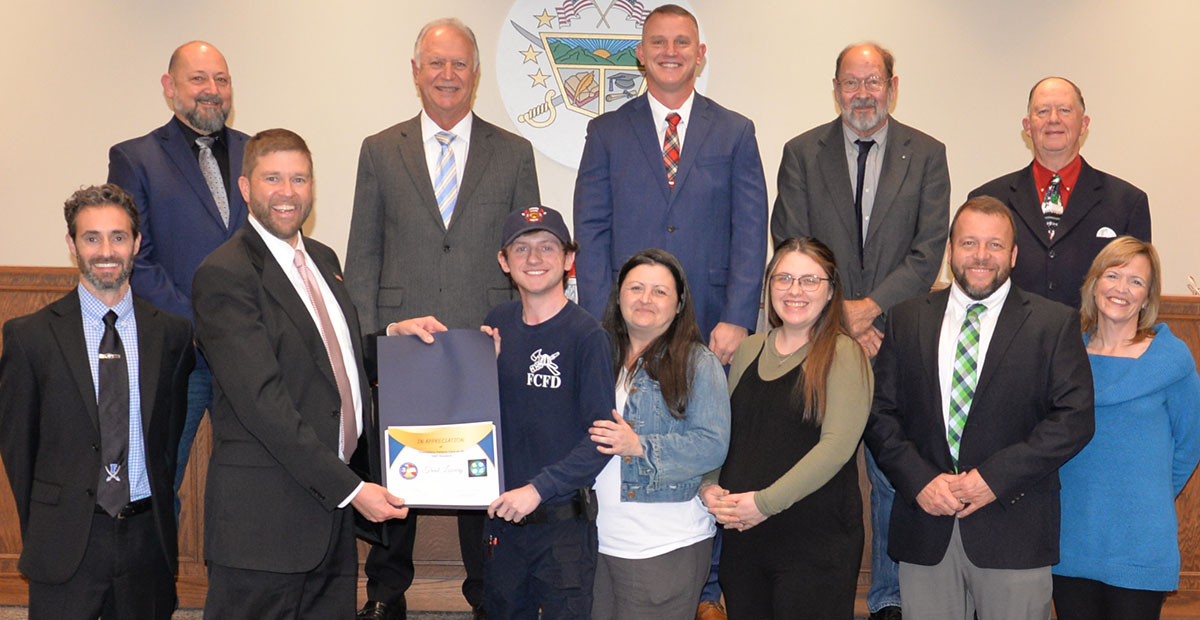
Roof talked about the incident at the December 15 school board meeting when Lowery was presented a certificate from the board.
Lowery is part of a new program at FCHS that partners with the Fannin County Emergency Management Agency (EMA).
The program allows students to earn their Emergency Medical Technician certification, high school credit, and become CTAE pathway completers all at the same time.
Roof said everyone involved, “had to think outside the box to get this thing going.”
Lowery admits he stumbled into the program that he said has become “the most fulfilling thing I’ve done.”
He now has his sights set on becoming an emergency medicine doctor while he works to earn his basic and advanced EMT certifications before he graduates high school.
Lowery will have all the knowledge he needs for both certifications by succesfully completing the partnership program, but will have to wait until he reaches his 18th birthday to take the test for his Georgia license.
Lowery had signed up for the EMT class offered through the high school and Fannin County EMA, and had applied for a scholarship to pay for the class.
As a condition of the scholarship application, he had to do a ride-along with EMS.
He did one, then another and then another. He was hooked.
Lowery was awarded the David Curtis Memorial Scholarship that will pay for his basic and advanced EMT classes.
About the same time, Patti DuBois, who heads CTAE’s work based lerning program, approached EMS Director Becky Huffman about the possibility of an intern for the ambulance service.
It was a completely new idea, but Huffman and EMA Director Robert Graham agreed to give it a try.
Huffman is now a fan of the program.
“It’s nice to have people who are excited again,” she said of Lowery’s internship and also a ride-along program offered through the General Medicine class at FCHS.
“You’ve got to have fresh, new blood coming in” to emergency medical services, Huffman said. “It takes a special kind of person.”
The partnership between the schools and EMA is working to find that person, she said.
Young people get to see EMS as a medical field, “A little different than any other profession,” Huffman said.
The partnership, “gets them excited (and) get some experience,” Huffman said of the students..
Lowery has become the prime example of the how the program works.
“I’ve learned something new every day. I’ve got to learn a lot,” Lowery said.
On the stroke call, Lowery “helped us with just about everything that wasn’t outside his skill set,” Huffman said, which included taking the patient’s vital signs.
He has been able to perform other tasks in real life situations that count toward completing his clinical requirements to earn his EMT certification.
Lowery said he is constantly learning that, “I can do that” when it comes to patient care in emergency situations.
Lowery attends five-hour classes two nights a week. His basic EMT program will end in February, then the advanced program will start in March and end in June.
The program is not easy and Lowery said it has been helpful toward learning time management. But he enjoys coming to work, even on days he just volunteers. “People are supporting me here,” he said.
Lowery will “come out of high school with a career,” Huffman said.
Huffman said she wants to see the internship program continue. The EMS director sees high school age young people as “the future of EMS.”