
Hearing: Citizens didn’t understand “yes” vote

Officials hold first HB 581 opt out hearing
Dawn Cochran opened the “Intent to Opt Out of Homestead Exemption” hearing with a detailed explanation of Fannin County’s property tax system and concluded with the likely impact on the system by Georgia House Bill (HB) 581.
Cochran, Fannin County’s chief tax appraiser, spoke in front a packed jury assembly room in the Fannin County Courthouse Tuesday night, January 15.
Elected officials from the county, school system and cities of Blue Ridge, McCaysville and Morganton hosted the combined public hearing.
Those officials listened to citizens for almost two hours, hearing supporters, opponents and questions as they wrestle with their decisions of whether or not to opt out of HB 581.
HB 581 made its way through the state House and Senate, proclaimed as a way to stop enormous, back door tax increases in some Georgia counties.
Georgia voters then approved the bill in November under the guise of a Constitutional Amendment promising a statewide freeze on Homestead Property tax exemptions.
Opinions at the Wednesday, January 15, hearing ranged from the plan hurting Fannin County by actually raising taxes to the “will of the people” expressed by the votes in favor of the amendment indicating it should become law anyway.
Cochran said, “Fannin County has some of the best (tax) exemptions in the state,” which result in the second or third lowest millage rate in Georgia.
“We’ve got to consider the other factors going on in Fannin County” when talking about staying in or opting out of HB 581, Cochran said. For example, the exemption under HB 581 “will never” help long time Fannin County homeowners who are already locked in under the local assessment freeze.
Speakers at the hearing included Julian Black who said it was “ridiculous” to go against the will of the people, referencing the November vote. He said a decision to opt out would represent “treason.” His argument was echoed by others during the meeting.
That “will of the people” was a majority in the statewide election. In Fannin County, 9,762 people voted “yes” to Amendment 1; 66.08 percent of the votes cast. 5,010 voted against the amendment; 24.4 percent.
School Board Chairman Mike Cole challenged this as being the true “will of the people.”
He said the total number of registered voters should be considered and not just the number that voted when calculating a majority.
Secretary of State records show 20,513 registered voters in Fannin County at the time of the election. The 9,762 cast in favor of Amendment 1 would represent 47.6 percent of those people.
Charles Donaldson, who volunteers regularly in the election office, also countered Black’s position, saying voters did not know what they voted for when voting “yes” to Proposed Constitutional Amendment 1.
He said poll workers were asked “over and over again” what the amendment question meant, but weren’t allowed to explain.
County Attorney Lynn Doss said all such ballot questions are designed to produce a “yes” vote.
Blue Ridge Mayor Pro Tempore Bill Whaley, speaking as a citizen, said “we had zero” education about Amendment 1 prior to the election. “The fact the voters voted for this, to me, means nothing.”
Whaley said he confirmed the lack of education on the amendment and the bill itself with many other officials statewide. “I can find nobody who had thorough knowledge of what this bill meant,” Whaley said.
Ginger Rogers said she voted “yes” and still feels “confident” in her decision.
Addressing property assessments, she said Fannin County should assess property based on actual selling prices. She used an example of a house that sold for $2.2 million in 2021 being assessed for $1.6 million in 2024, asking why tax assessors didn’t fix such a value.
Cochran addressed that concern, telling Rogers, “Your suggestion is called sales chasing which is illegal in the State of Georgia.”
Cochran also explained, “those sales have to be investigated thoroughly” to determine everything that might be included. For example, if a boat was part of the sale, that would not affect the property value.
Although sales chasing would be “so nice” in that it would make assessments easier, the tax assessors’ number one rule is uniformity, Cochran said.
Aaron Seabolt asked, “Who does this help, who does this hurt,” answering his own question, “This hurts the low income homeowners in this area.”
He urged elected officials to remember, “Our system is working well.”
Josh Curtis said the “state knew this was going to leave us at a deficit,” since it would require holding another election to add a tax. “I voted for it and didn’t even realize it,” he said.
Post 1 Commissioner Johnny Scearce said, “This is like a nightmare,” as elected officials decide between the foreseen damage of HB 581 to Fannin County versus the November vote.
He admitted, “I didn’t understand what I was voting for.”
Scearce added the legislature “wouldn’t have given you an option out...if it (HB 581) was so great.”
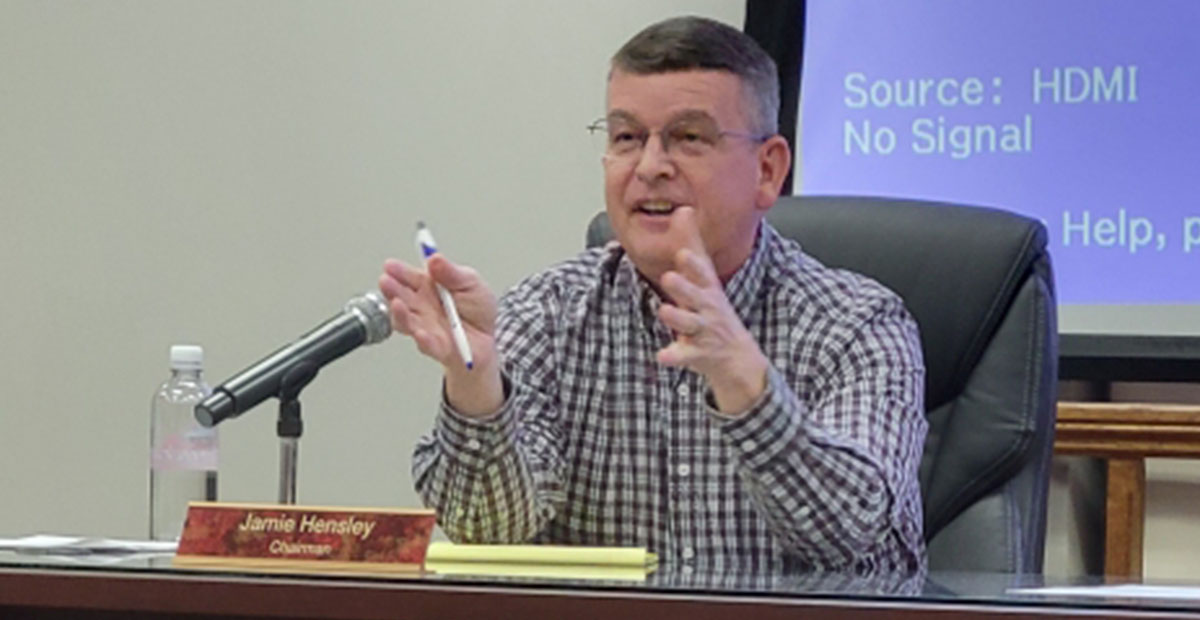
Commission Chairman Jamie Hensley raised the concern that he has received no answers when he has asked questions about HB 581.
Cochran said she cannot even provide the dollar amount effect of what the bill might do because of the same problem – state officials cannot answer questions.
Sonia Smith, a long time member of the county Board of Elections, agreed people did not know what they were voting for and she would “rely” on local elected leaders to make the best decision for local residents.
“Why would we fix what doesn’t need fixin’?” she asked, warning, “All that glitters is not gold.”