
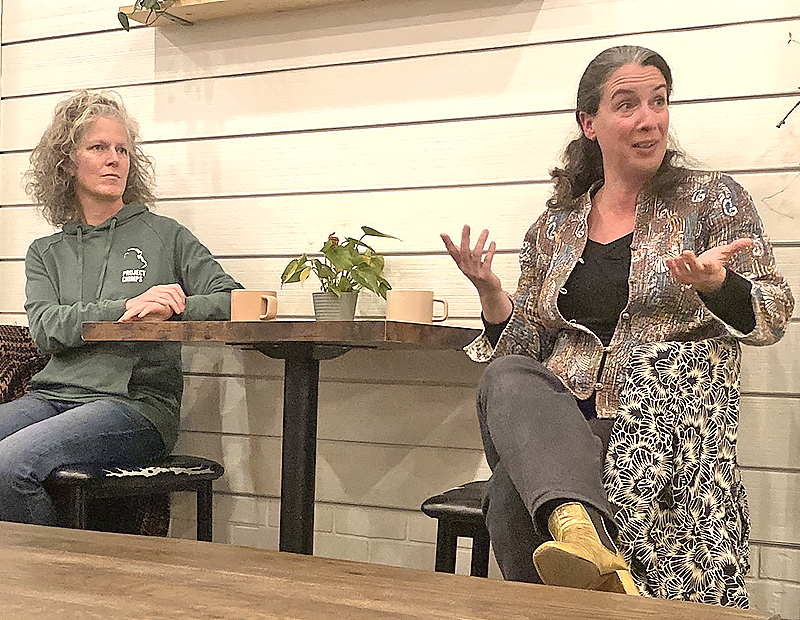
Project Chimps, a 230-acre chimpanzee sanctuary in the Blue Ridge, held a question and answer session for the public January 20 at Mountain Mama’s Coffee Lounge in downtown Blue Ridge.
Project Chimps Executive Director Ali Crumpacker and lead veterinarian Dr. Jenny Jaffe were on hand to answer the questions and provide information about the sanctuary.
Crumpacker said the sanctuary is not a zoo, but is open for tours at certain times. She said the sanctuary is 100 percent operated by donations. No government subsides are given. All the chimpanzees are cared for by staff and volunteers, including professionals in such fields as dentistry, plastic surgery, urology, cardiology and gynecology.
Crumpacker said the 99 retired laboratory chimpanzees, which come from the University of Louisiana’s New Iberia Research Center, have medical examinations routinely every couple of years.
During the talk, Jaffe discussed testing procedures. At Project Chimps, for example, a chimpanzee named Precious is trained to pee in a cup. “You put the cup there and you hold a walnut and say you will get a walnut Precious.” She added that not all of them are that well trained.
Each female chimp is on birth control. They take medication every morning with fruit juice. Crumpacker said they are preventing births because baby chimps take space away from adult laboratory chimps who need the care. It also disrupts the social interactions and integration of the chimpanzees. Crumpacker added that the cost of birth control is cheaper than the 1.6 million dollars it takes for lifetime care of a baby chimp.
When asked about the chimps diet, Jaffe said it’s impossible to recreate the wild diet because they are eating termites and mushrooms. “They hunt wild monkeys. I don’t think we are going to source wild monkeys for our chimps. They eat hundreds of different leaves, flowers and fruits. In the wild, it varies wildly seasonally as well. We just try to recreate as well as we can.”
Jaffe said one challenge is getting enough fiber in their diet because foods in stores are processed differently. She also said there are very few obese chimps in the wild. In captivity, there are. Heart disease is common, but it’s a fibrosis of the heart. At project chimps, they do full cardiac exams by licensed professionals.
A person asked if the sanctuary knows what tests were done to the chimps in the labs. Jaffe said they get a redacted history. It doesn’t tell the biometric tests that were done. It tells the chimps weight history for example. Crumpacker said the chimps are tattooed with numbers and some medical histories are published in journals.
One question dealt with socializing the new chimps with the current residents. Jaffe said in labs, they are often in same sex groups “The cheapest and most secure form of birth control is no contact with opposite sex,” Jaffe said.
Jaffe added that some chimps were raised in laboratories and not by mothers, so they are not the best in social interactions. Most of the chimps get along from the beginning.
“If we want them to social interact with an existing group, we have them in the small group next to the large group so they can see, smell and hear the other chimps for at least a month. Then, we start to do howdy’s or play dates where we introduce them to one or two chimps,” Jaffe said. Then, they build small groups and then large ones.
When asked if the chimps take vitamins, Jaffe said they give them chimp chow, which has vitamins and supplements in it. “It’s a pelleted diet that they do like.” They also feed them fruits and vegetables which are high in vitamins and minerals. She said their older and slower moving chimps, mostly 30 years old or older, do take joint supplements for arthritis. She said some of the chimps were in small cages while at the laboratories and their bone health is progressed a bit more than normal chimps. “We do provide them with medications to keep them comfortable,” Jaffe said.