

Visitors come to the Morganton Mountaintown Baptist Association’s (MMBA) food bank for many reasons.
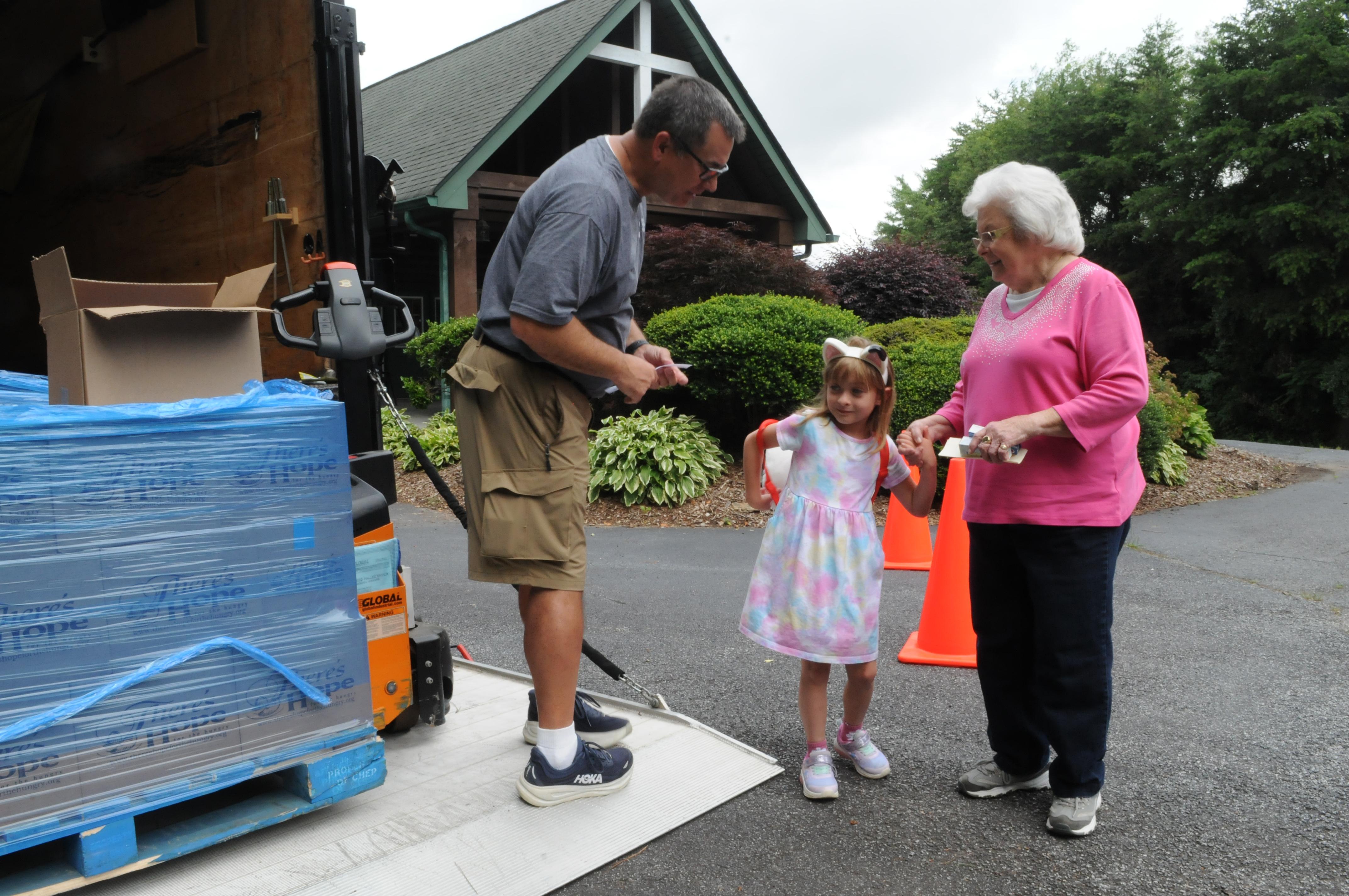
Seven-year-old Ocean Forte wants to be a good mom to her Hello Kitty.
Already, she is working on teaching her how to walk, speak English and speak Spanish.
And to be a good mom, she needs good food.
Her grandmother, Sandy Payne, took her to get that food.
“It always helps because it’s always something different,” Payne said. “They’re very kind, very good.”
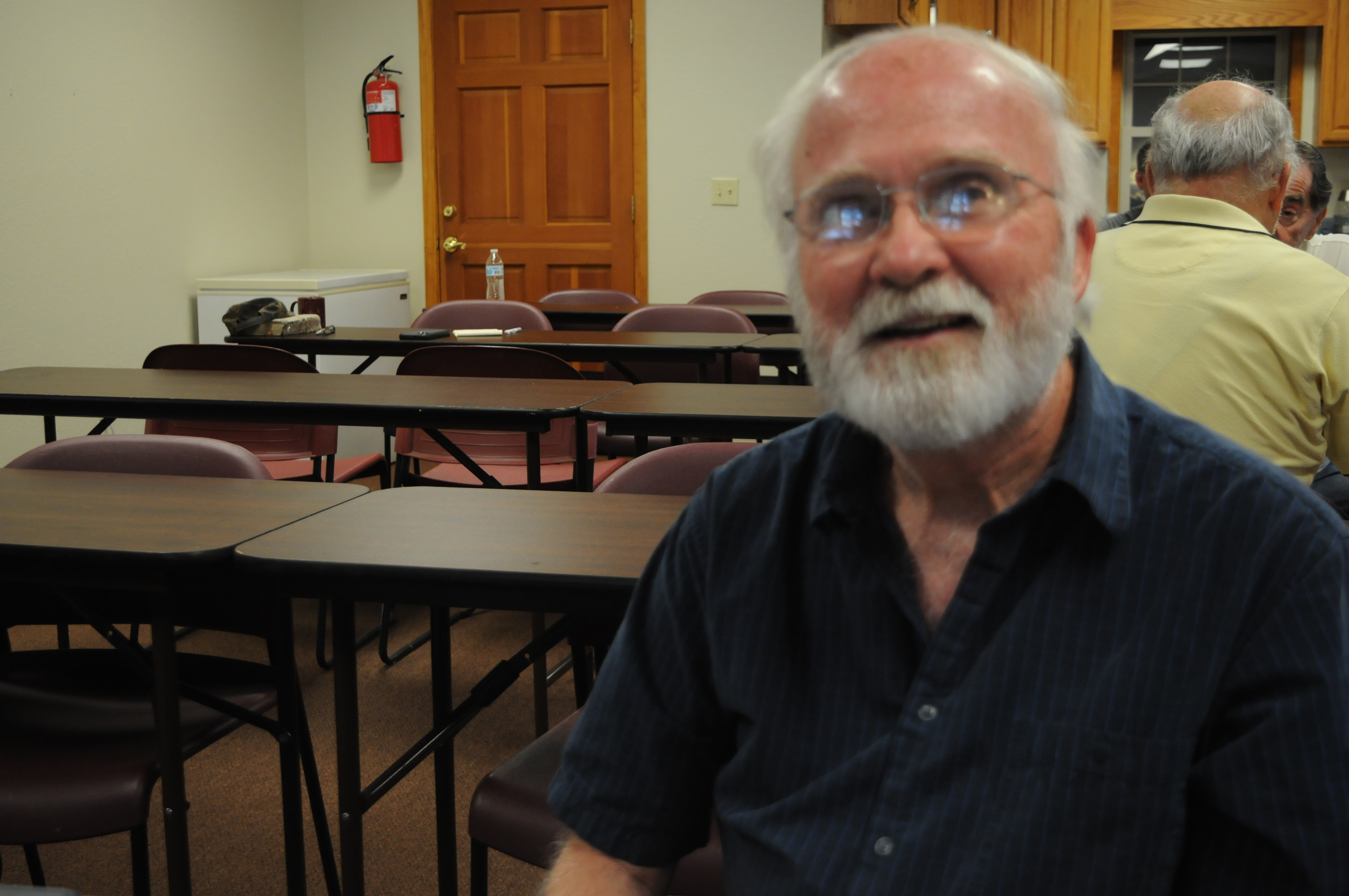
Other people come for help because of health issues, family issues, recent deaths, and many other difficulties that happen to all of us sometimes, volunteer Victor Clark said.
“The food lasts a couple days,” he said. “But talking helps a little bit longer.”
Whatever their reasons for coming, they receive food and respect from the MMBA.
“Spiritual life is what keeps you going,” Clark said. “Most everybody that comes in, they have
prayer needs.”
People can get food from 10 a.m to 1 p.m. on the third Wednesday of each month at 64 Tammen Drive in Blue Ridge.
They can also get food from 2 p.m. to 4 p.m. on every other Wednesday of the month at the Morganton Baptist Church Food Bank at 9511 Old Highway 76 in Morganton.
Anyone can visit and receive a box of food weighing between 20 and 25 pounds, said Dr. Tom Neville, one of nonprofit Hope for the Hungry’s four directors.
Hope for the Hungry is a volunteer based Georgia nonprofit that gives food to MMBA for distribution.
“We see a lot of people who are in genuine need and are, for many different reasons, going through a hard time in life,” Neville said.
The boxes may include canned meats, canned vegetables, canned fruits, dried potatoes, dried beans or other foods, he said.
“Because of the large scale of what we do, we have to focus on non-perishable goods,” he said.
Hope for the Hungry distributes 25,000 boxes of food each year to people across northern Georgia.
Hope for the Hungry and MMBA are about more than just giving food to people, Neville said.
“It’s really letting them know that people care about them personally, and most importantly, that God cares about them personally, he said.
Clark agreed.
“That’s just as important, or even more important than the food” he said.
Often, people will talk with volunteers for many minutes at a time, receive prayer, and find comfort at the food drive.
“They look forward to coming in for more than just the food,” Clark said. “They can come in and talk with an old friend.”