
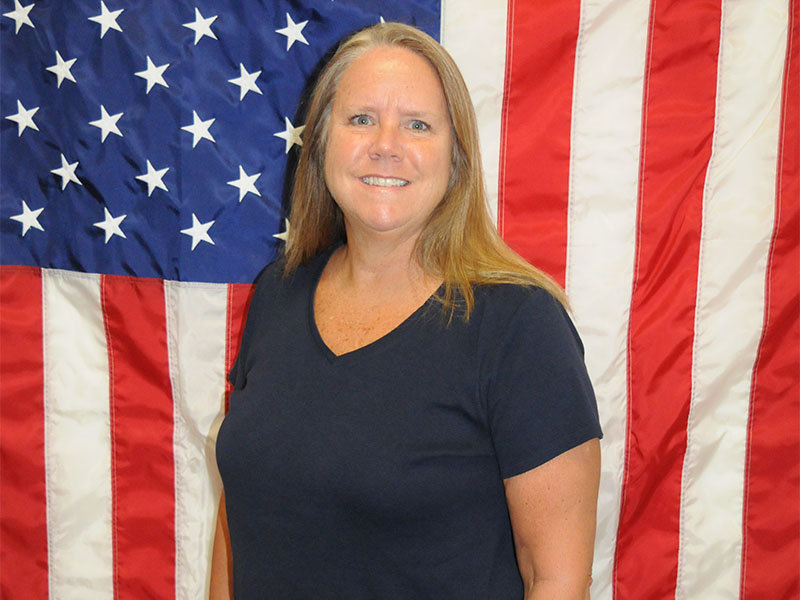
Lori Walden: Building the Air Force

Every time an F-22 breaks the sound barrier, it’s because of a vast network of on-the-ground mechanics, crew and air traffic control airmen.
And these airmen in turn need places to live and work.
Retired Colonel Lori Walden started serving her country as an architect to build homes for them.
“Integrity first, service before self, excellence in all we do,” Walden said, quoting the Air Force Values.
While in college at Virginia Tech for an architecture degree, Walden thought about joining the military through her school’s Reserve Officers’ Training Corps (ROTC).
“They offered me a four-year scholarship if I would go in the Air Force afterwards,” she said. “And my favorite color was blue.”
The Air Force made her an offer to join as an officer.
She decided to join in 1987.
Although her mom was nervous about her joining, Walden’s whole family supported her decision.
“She knew that was what I wanted to do,” she said. “And she’s always supported me.”
During college, she took a six-week field training course with ROTC.
This experience taught her much about what it meant to serve in the Air Force.
Once, “they dropped us in the woods, and you have to figure out how to find food and shelter,” Walden said.
At one point, she, along with her fellow trainees, had to scale a high wall together.
“I was terrified of heights,” Walden said.
Although she was afraid, Walden knew she had to do it.
“Somehow, we all made it,” she said.
And together with her fellow trainees, she got over it.
This experience was the first of many that engrained two life-changing ideas, Walden said.
The first was that no matter the obstacle, the mission had to succeed.
The second was that a team can do almost anything.
“Pretty much everything you do in the military, you’re doing as a team,” Walden said.
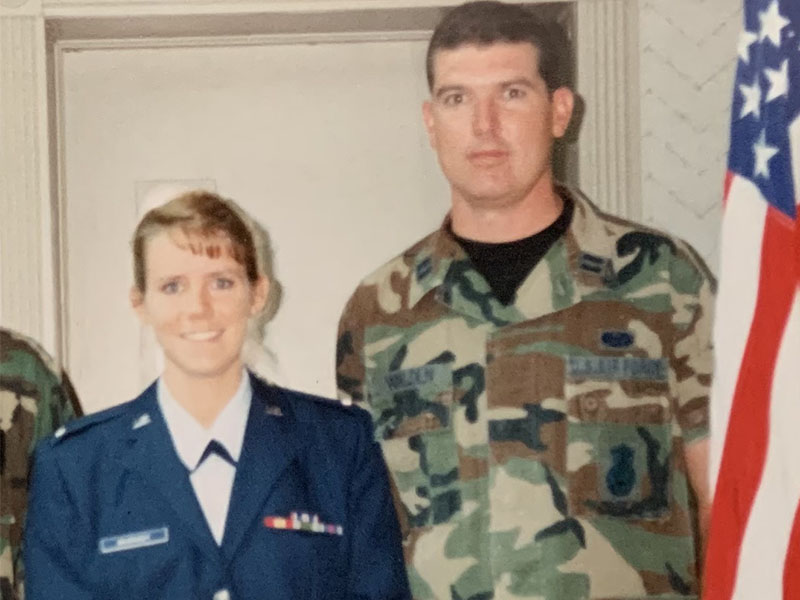
After college, Walden went into her first command as a second lieutenant as a civil engineer officer.
“I had a handful of airmen that I was responsible for,” Walden said.
Her mission was to build housing on Air Force bases.
“You’re very restrictive in what you can design in that area,” Walden said.
The work was very different from architecture in the civilian world, Walden said.
While her friends from college entered internships where they shadowed experienced architects, Walden was immediately in charge of handling a $1 million project.
“As soon as I set foot on base, I was the only officer that had a degree in architecture,” Walden said.
But failure wasn’t an option, Walden said.
To learn how to do her job, Walden depended on Chuck Warnock, a senior non-commissioned officer with years of experience.
“I was like, ‘Teach me what I need to know,’” Walden said.
Even if she had been tasked with challenging work, Walden fulfilled her responsibilities.
“If you can’t fail, you’ve got to figure out how to make it happen,” she said.
Walden estimated that around 40,000 soldiers have lived in the houses she worked on.
By the end of her time in architecture, Walden was managing a $10 million construction project.
Whatever the task, military jobs have a sense of purpose that isn’t often found in civilian work, Walden said.
“In the Air Force, everything you do is tied to the bigger mission,” Walden said.
Architecture, plumbing, road building and more are all part of keeping the Air Force ready to defend America, Walden said.
“Civil engineers sometimes joke that they may be able to fly a plane, but they can’t fly a plane without us because you’ve got to have a runway,” she said.
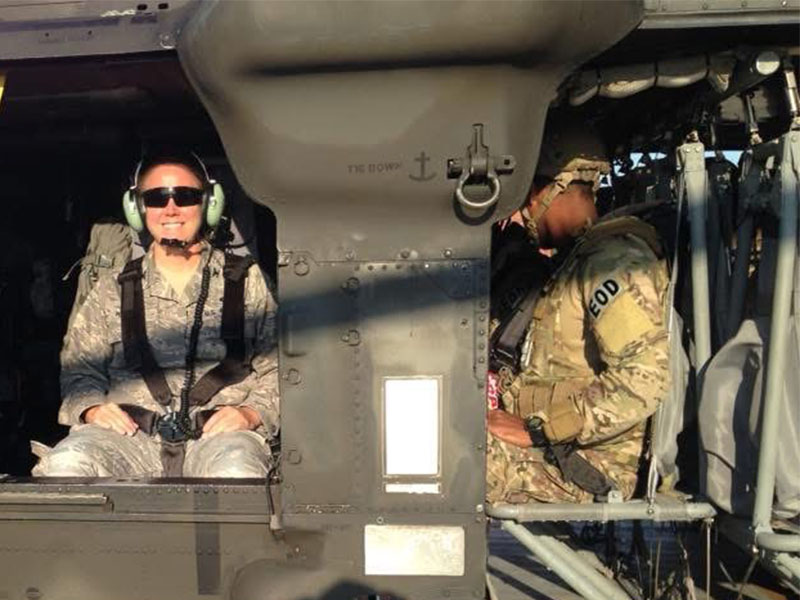
After her time doing architecture for base housing, Walden served at Headquarters Mobility Command at Scott Air Force Base in Illinois. There, she was an operations branch chief.
She also helped rebuild Tyndall Air Force Base, worked for the secretary of the Air Force during COVID-19, served as a reserve advisor for the Air Force Civil Engineer and more.
“I’ve seen or I’ve met with and known so many different people from all over the world,” she said.
Knowing all these American airmen was a “phenomenal experience.”
“We managed the recycling for all the air mobility bases,” she said.
Walden also worked on partnership programs that encouraged cooperation between Air Force bases and local governments.
Over the course of her 32 years in the Air Force, Walden served at seven Air Force bases as well as the Pentagon. The Air Force’s impact on her life went beyond career. She also met her future husband, Chuck Walden, in the Air Force. Her 11 different jobs ranged from architect at the Seymour Johnson Air Force Base to the COVID team chief for the secretary of the Air Force at the Pentagon.
Her favorite position was when she was a squadron commander over 150 airmen.
“Squadron commander is where I feel like I was able to make and see the most difference for the airmen,” Walden said.
After that, she led a group of about 1,200 airmen as a group commander.
“If you take care of the airmen, they will take care of the mission,” she said.
Commanding troops isn’t as much about telling people what to do as it is about setting up systems that help them succeed.
“When I was in command, I observed people. I would listen and watch a lot,” Walden said. “And then you just empower them.”
She trusted the officers under her command, and made decisions after watching them interact.
“I loved their moments of being proud and understanding that even though they had a very small role in the overall mission, that it really did help achieve that mission,” she said.
Another way she led was by meeting her own standards. If she expected airmen to meet fitness, training and medical standards, she needed to meet them herself.
“I always passed,” Walden said.
At 30 years in the Air Force, she reached high-year tenure. But the Air Force asked her to serve two more years before retirement.
“I’m not a hero. I’m just a veteran,” Walden said. “There are so many people out there that have done so many phenomenal things.”