
CHI Memorial doctor tells of Johnny Scearce's battle
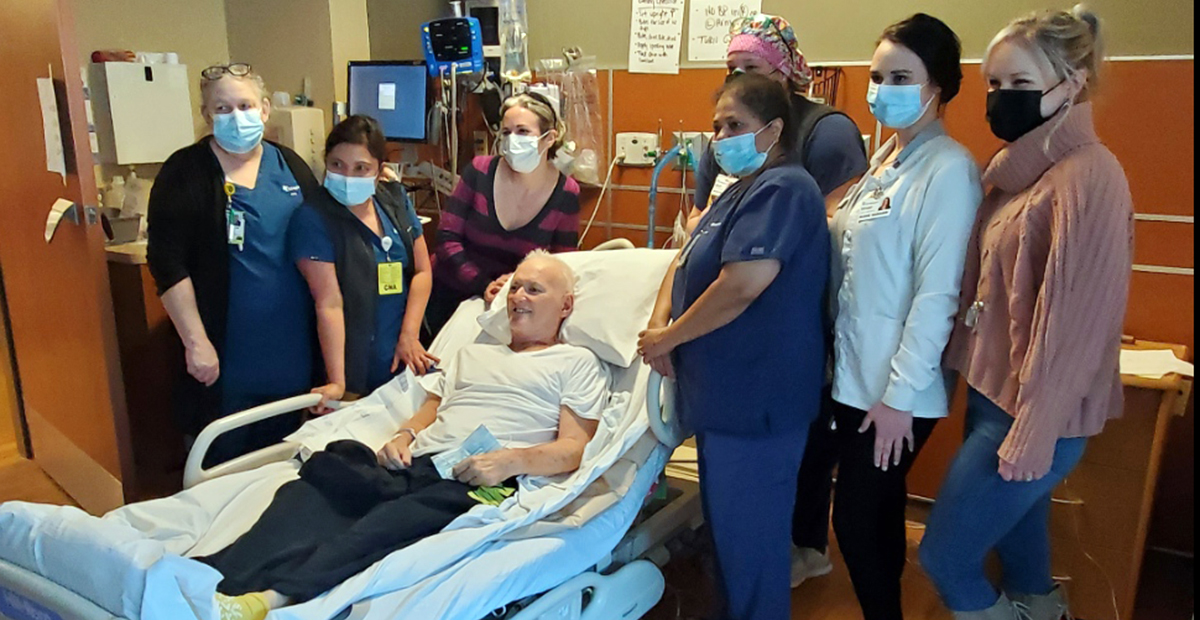
"With an enormous amount of dedication from the nurses and the respiratory therapists and the intensive care doctors here and an enormous amount of patience and trust on the part of the chief’s family, the almost impossible happened, and his lungs started to recover, and he made a very miraculous recovery,” Dr. Jesse Tucker, CHI Memorial Hospital medical director of ECMO, said of Blue Ridge Chief of Police and Fannin County Post One Commissioner-Elect Johnny Scearce.
After nearly 94 days in CHI Memorial Hospital, and over 70 of those days in the intensive care unit (ICU), Scearce was released to an acute rehabilitation facility Thursday, January 14.
“Thank y’all,” Scearce said while leaving the hospital. “God bless, and what a great hospital and staff.”
Tucker took over care of Scearce shortly after his coming to the hospital, Tucker said, and once involved, he tended to Scearce every day.
Additionally, Tucker will be Scearce’s lung doctor following his stay in rehab.
“For him to recover, not only enough lung function to leave the hospital, but also not requiring any supplemental oxygen after leaving, and he had some other issues that happened while he was here too ... He’s made a phenomenal recovery, and his functional status leaving us was as good as I could ever have hoped, and I am beyond gratified to know that and to see his family watch him through this recovery.”
Early in October, Scearce was admitted to CHI Memorial with COVID-19 pneumonia, according to Tucker.
“Chief Scearce had COVID-19 pneumonia before he came to our hospital,” Tucker said. “I think that that was managed at Fannin (Regional Hospital), and he went home, but unfortunately he had a bacterial super infection, we call it, basically a viral pneumonia from COVID-19. Damages your lungs and promotes conditions for getting a bacterial pneumonia, so he had a bacterial pneumonia in his chest.
“It got him sick again very quickly after his initial infection with COVID-19, and that pneumonia was so severe that it basically ate a whole in his lung, what’s called a bronchopleural fistula.”
Additionally, when Scearce was admitted to CHI Memorial, Scearce was suffering from acute respiratory distress syndrome, which required the use of a mechanical ventilator.
He was later placed on dialysis after experiencing kidney failure, which he has overcome.
“With him being on the mechanical ventilator, we still could not support him adequately,” Tucker said. “We were not able to get him enough oxygen and remove enough carbon dioxide from his blood using a conventional ventilator, which is usually the highest form of life support that we have.”
As a result, Scearce was placed on an extracorporeal membrane oxygenation machine (ECMO), and his duration on the machine was the longest the hospital has ever seen.
“It’s similar to a heart-lung bypass machine that they use in the operating room for heart bypass surgeries,” Tucker said. “Essentially, it drains the patients blood from their body, puts it through a machine that forces oxygen into the blood and removes carbon dioxide, and then returns it to the body, so that the brain and the kidneys and the liver and all the other vital organs can get adequate oxygen.
“It is very resource and labor and expertise extensive. Not all patients with respiratory failure even qualify to be on it because there are a lot of complications that can occur being on ECMO.
“I’ll be honest in saying that his lung disease was so severe that we thought it might not be survivable short of a lung transplant operation.”
To much dismay, Scearce was essentially “too sick” and could not qualify for the procedure.
“In the long run, everything that needed to happen for him, happened because we ended up avoiding the need for a double lung transplant altogether, and him having recovered like this means he will live a longer and higher quality life than if he had gotten the transplant,” Tucker said.
Although interaction was limited until Scearce was moved to a part of the ICU where visitors were permitted, Tucker said of Scearce’s wife, Brenda, and sons, “They demonstrated enormous grace and presence and trust in what we were doing for Johnny.”
Around mid-November, Scearce was taken off of mechanical ventilators and became more conscious.
“As he continued to improve, and eventually got off of ECMO, he was able to communicate with us a lot more. He was showing us a sense of humor even while he still had a tracheotomy tube in his neck,” Tucker said. “I really enjoyed getting to know him and his family a lot better as he continued to convalesce in the later parts of his hospital course, and we talked a lot about his family and the history of Blue Ridge and our shared enjoyment of that region.”
The battle is not over just yet, however, as Scearce will take a couple of weeks in a rehab facility to regain his strength.
“For such a long hospital course, it’s extremely common, almost universal, that a patient is gonna lose significant muscle mass and become very deconditioned,” Tucker said.
He explained that the difference in these types of rehab facilities, versus a nursing home, is that patients are woken in the morning and made to do physical therapy for several hours each day.
“It’s sort of like a fast track to getting a lot of exercise and regaining your functional mobility, and he’ll do that for a couple weeks, and Chief Scearce is a really, really motivated person, and he is going to just attack his physical health in every way possible after he gets out of rehab,” Tucker said. “I’m very confident. He’s really into strength training, and I have every confidence he’s gonna have a really good functional recovery.”