
Twinkling lights on a tree and presents beneath are sometimes absent for children in less than typical homes during Christmas time.
While these children may really wish for a more “normal” home life, Fostering Fannin exists to make that wish more of a possibility. Whether it be purchasing the gift a child has been dreaming of or helping their parents meet their potential, the folks of Fostering Fannin do everything they can to lift spirits.
“We try not to say no,” Vice President Sally Masters said in explaining that they strive to give the
children they serve “as normal a childhood they can have outside of living with their parents.”
Of their mission, Masters said they aim “to bridge the gap” for what the families themselves and the state is able to provide.
For the families they’ve served, they’ve provided about anything you could think of such as furniture, clothes, bill payment, extracurricular fees and tutoring. Swan McKnight, executive director, said much of the time, the needs are immediate and every day is different.
The main goal, she said, is to make the families feel as “unburdened” as possible by the children. Every birthday, they provide the client children a $150 gift card and they do the same for the kinship families around Thanksgiving.
During Christmas, they work with the Department of Family and Children Services to provide the children gifts, also with the help of Faith Presbyterian Church.
Masters said Fannin County has 16 foster children, and they are placed in homes as far away as Marietta, Georgia. Nine of those children are living outside the county in either a foster or group home. Foster families receive a $390 clothing allowance from the state annually. This is one reason why Fostering Fannin exists.
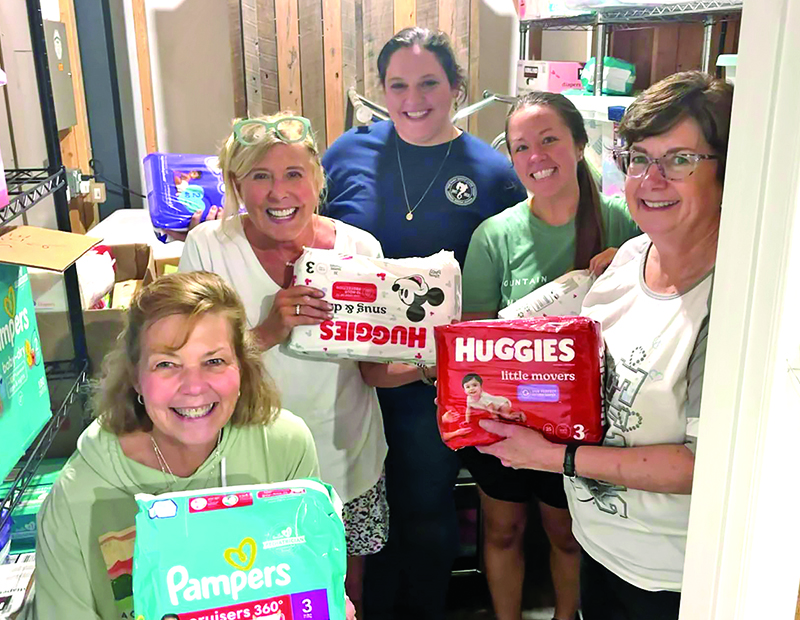
The smiling faces of Fostering Fannin include Masters, McKnight, Stacie Hamlin, secretary, McKenzi Farris, administrator, and board members Sally Pfeiffer and Jan Wheeler.
Each of these ladies previously served children as Court Appointed Special Advocates (CASA). In this role, the women acted as case managers for children in foster care, providing emotional and court support.
Through that role, the women saw needs beyond what the state can provide, so they decided to take matters into their own hands by forming Fannin Foster Families, now called Fostering Fannin.
This year, the organization underwent the name change as they felt it didn’t capture their full vision. Also, they desired to reach the homes of those beyond foster care, such as those in kinship care or in need of family preservation.
Kinship care typically involves grandparents raising grandchildren but can include other family members or even close friends. Masters explained that these grandparents are typically on fixed incomes and the majority, if not all, of the children have some sort of special need.
McKnight explained family preservation involves just that, helping parents learn to be their best for their children. This typically involves families on the brink of separation. In these cases, they teach the parents how to budget, choose low-cost nutritious food, cook and help with homework.
The organization has no office as they “try to spend every penny we have on the children,” McKnight said. As a registered non-profit organization, they rely on donors to support their efforts.
Anyone interested in bringing light into the lives of these children and their families can visit the website, fosteringfannin.org, to learn more and make a donation. Checks can be addressed to P.O. Box 141 Blue Ridge, Georgia, 30513. They also encourage those capable to consider becoming a foster parent. Anyone in need of assistance can fill out a request form on the website.