
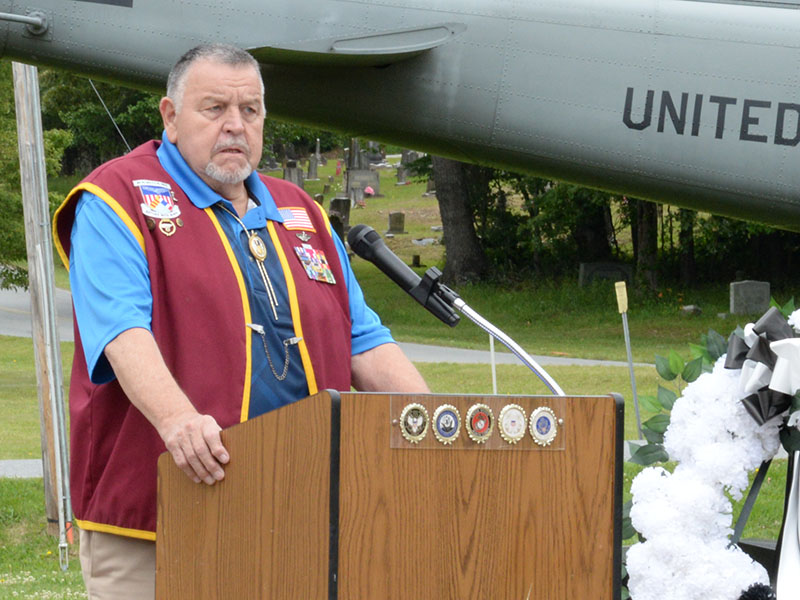
Willaim A. “Bill” Robinson’s experience with the Vietnam War was up close and personal, leaving him with vivid memories.
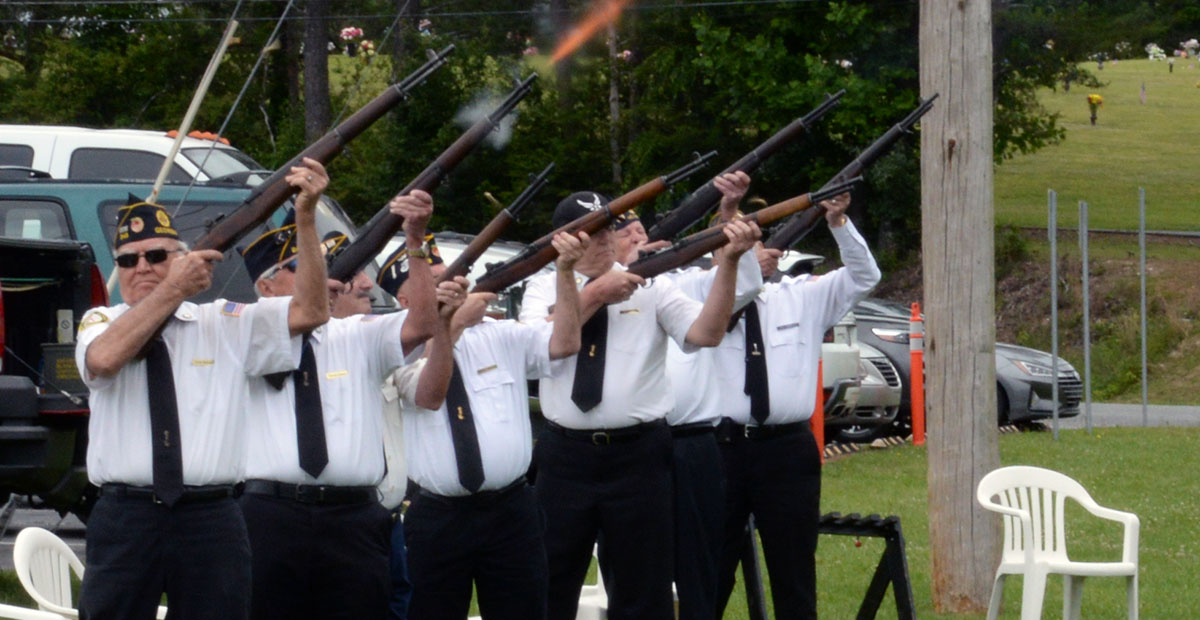
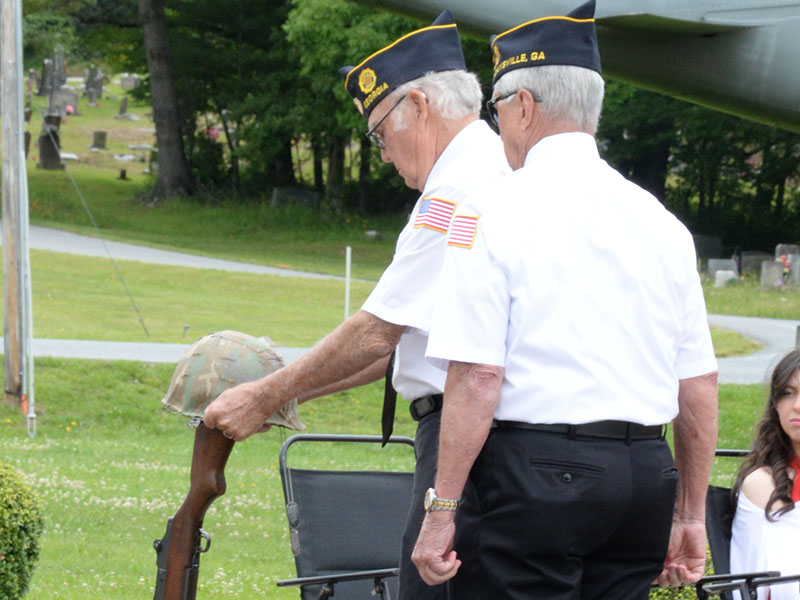
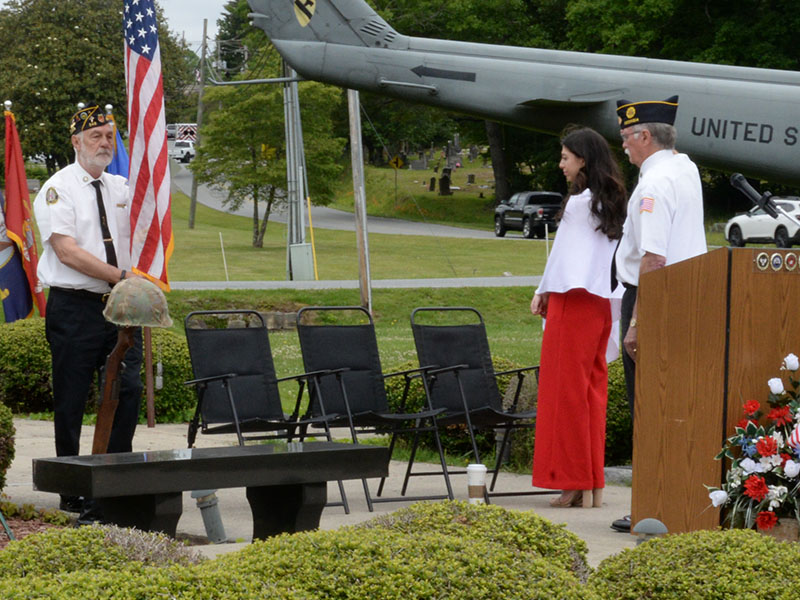
He shared some of those memories during the annual Memorial Day service at the Veterans Memorial Park in Blue Ridge. His words reminded some of their own memories while bringing home the true meaning of sacrifice to others.
Robinson was captured September 20, 1965, and spent the next seven-and-a-half years in a North Vietnamese prison camp. He, along with Neal Black, are listed as the longest held enlisted prisoners of war in American history.
“I will never forget that I am an American,” Robinson told the Memorial Day crowd as he recounted part of the U.S. Armed Forces Code of Conduct. He talked of holding true to that code during his entire time in captivity.
He spoke of the price of freedom, remembering the 58,000 who lost their lives during the Vietnam War. 36,000 of those individual were 19 years old and under. “They were on their senior trip,” Robinson told the crowd.
In one sense, Robinson’s military career began with his grandfather taking him to the mill when he was young. Behind a plexiglass wall were many names.
His grandfather told how those were the names of the mill workers who had served their country.
Robinson remembered seeing stars by some of the names and asking why they were there. His grandfather explained those were the ones who did not come home.
It would not be too many more years before Robinson enlisted in the Air Force in 1961 after graduating high school.
After assignments stateside and in Korea, he was assigned to an Air Rescue and Recovery unit in Thailand. He was a crew member on a rescue helicopter when it was shot down over North Vietnam.
Robinson said he held no ill will against his captors for his treatment, but will never forgive them for the “hell” they put his family through. For the first two-and-a-half years of his captivity, he was listed as Missing in Action.
Robinson told of Duane Martin, a fellow crew member. They were separated and captured by different groups.
Martin was taken to a prison camp in Laos. He tasted freedom for two weeks after escaping, before he was captured and executed. His story is told in Rescue Dawn.
John Frederick, described as a Marine’s Marine, saw combat in World War II, Korea and Vietnam. He died in captivity after 2,417 days of torture and poor health.
There was Walter Ferguson, someone Robinson never met personally although they were stationed on the same base.
Ferguson was a tail gunner on a B-52.
He died December 18, 1972, during part of Linebacker II. Sometimes referred to as the Christmas bombings, it was a strategic bombing campaign conducted by the United States against targets in North Vietnam from December 18 to December 29, 1972. More than 20,000 tons of ordnance was dropped on military and industrial areas in Hanoi and Haiphong with the goal of obtaining the release of all American POWs. The operation was the final major military operation carried out by the U.S. during the conflict, and the largest bombing campaign involving heavy bombers since World War II.
The United States acknowledged 16 B-52 bombers were lost during the operation.
Robinson remembered a neighbor, Darrell Johnson. Their families lived about 40 miles apart. They played together, prayed together and cried together waiting for Robinson and Johnson to come home from Vietnam. They believed their sons were looking after each other.
The night before POWs names were released, the Johnson family was told Darrell would not be coming home.
Speaking to Duane, John, Walter and Darrell, Robinson said, “You taught us duty, honor, country. But the biggest lesson was freedom is not free.”
He concluded, “Without veterans, there would be no United States of America.
“Some people dream the dream, some people live the dream, our Armed Forces defend the dream. God bless the defenders of the dream.”