
“People have no idea what’s on the other side of the world.” - Bob Renneke
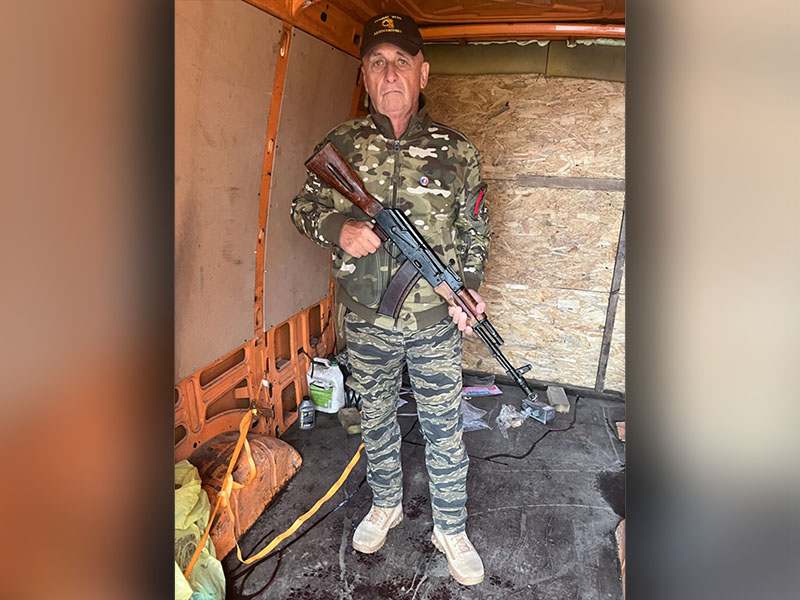

Bob Renneke worked to hold back his emotions as he told how nothing could have prepared him for what he saw in war torn Ukraine.
Renneke, a Vietnam veteran, returned from Ukraine April 12 after four weeks in the country that is being invaded by the Russian army.
His story began with watching television news reports of the invasion. He remembers thinking, “It wasn’t right,” and soon couldn’t shake his feeling that “it’s important for people to help each other.”
So he signed up with International Legion Defence of Ukraine. This force, also called the Ukrainian Foreign Legion, was created February 27, 2022, at the request of Ukranian President Volodymyr Zelensky. As of March 6, more than 20,000 volunteers from 52 countries had joined.
Renneke left his Fannin County home April 19 and began a flight in Atlanta that would eventually take him to Warsaw, Poland.
At the Ukranian Embassy in Warsaw, he would be given his assignment, an AK-47 rifle, and sent toward an experience he would never forget.
He would be part of a three-man team, joined by Macjic from the Ukraine and Andrew from England. Their job was to shuttle refugees from deep inside Ukraine to the Polish border.
Macjic, who Renneke and Andrew pronounced Magic, would drive. Renneke would sit up front, “because I was the oldest,” he said, and Andrew would ride in the back with the refugees.
The trio was originally to board a train for Lviv, some 50 miles inside the Ukranian border from Poland, but the Russians blew up the train station there with missles fired from Belarus.
The three traveled in a cargo van designed to hide the refugees. There were two seats up front for the driver and passenger. Directly behind them was a small bench seat. Behind that seat, plywood was placed to completely separate the cargo area from the driver and up-front passengers.
No one could see into the back of the van that was marked “Humanitarian Aid.”
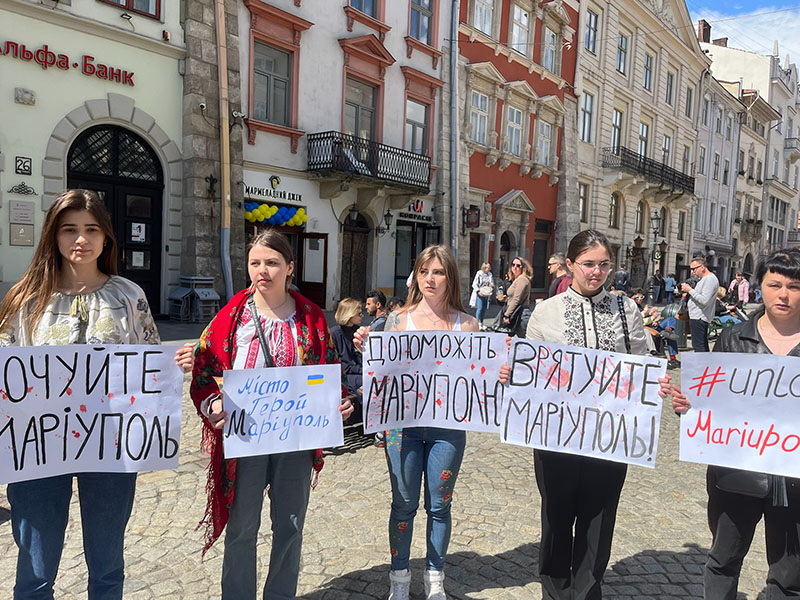
The trio’s normal route would carry them between Lviv and Mariupol. The entire route, which they only traveled twice, would take nine-and-a-half hours.
Along the way the trio would connect with Red Cross buses and pass off their refugees for the rest of the trip to the border.
“They flew,” as Renneke described the buses that didn’t stop for anything but to pick up refugees.
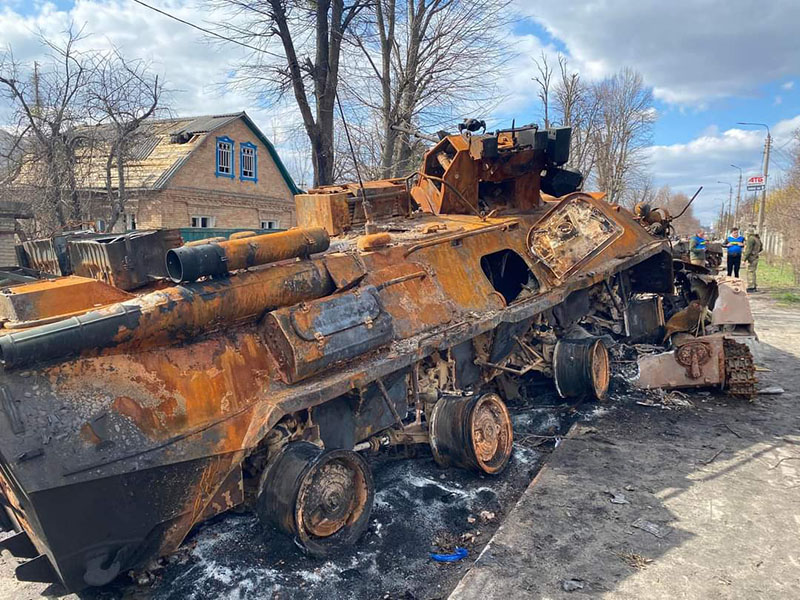
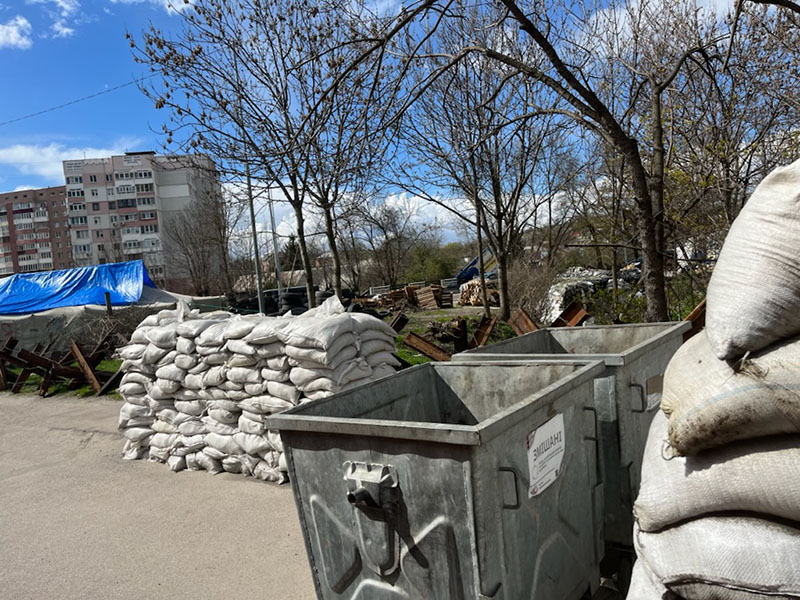
The van carrying the refugees would go through checkpoints and have designated areas for comfort breaks. It was along their route Renneke would see and hear the atrocities of the Russian attack.
At one point, they stopped for a comfort break in an area supposed to be safe.
Macjic walked around a tree and spotted it – a trip wire attached to a Russian grenade placed in a can on the tree. It was meant for the van.
There was the refugee woman who was picked up in Mariupol. “She cried and sobbed for 200 miles,” Renneke said. He told how no one could comfort her, not Andrew or any of the other refugees.
The woman, her daughter, and her daughter’s children lived together in an apartment.
One day, the daughter took the children to daycare and went on to work as usual. She later picked them up, can home and made dinner. As they sat down, they were blown up by a Russian missile.
The daughter was 26 years old. Her husband was away in the Ukranian army fighting the Russians.
There were the holes along the van’s route – holes filled with the bodies of men, women and children.
“There are a lot more of those holes with bodies in them than you’ll ever see on TV,” Renneke said.
He remembers being given 15 body bags by Red Cross workers. He, Andrew and Macjic used them all in no time. Countless bodies remained in the open.
Renneke remembers counting as many as 26 mangled bodies in one hole.
There were the refugees’ stories of Russian intimidation. Soldiers would go into apartment buildings, rip out the toilets and air conditions from their foundations and throw them into the streets while others sexually assaulted the Ukranian women and young girls.
So Renneke, Andrew and Jacjic helped refugees to leave, usually 12 to 17 at a time, sometimes sitting on each other, crammed into the back of the van. They carried shopping bags with handles as their luggage.
Trips were made during the day, and the trio slept in an underground bunker at night.
Then one day a bomb blew the front end out from under their van. Renneke and Andrew jumped out of the van and fired their weapons toward the tree lines. A group of Ukranian soldiers, who were about a half mile behind, arrived and rushed the tree lines. There were no Russians in sight.
Without a van, Renneke and Andrew were told to go home.
“People have no idea what’s on the other side of the world,” Renneke says now. “We just think of ourselves.”
Since Renneke left Ukraine, Mariupol has been shut down and Lviv has come under constant Russian missile attacks.
Refugees are still tryiing to escape.