
Jerry Williams: He can still see the face
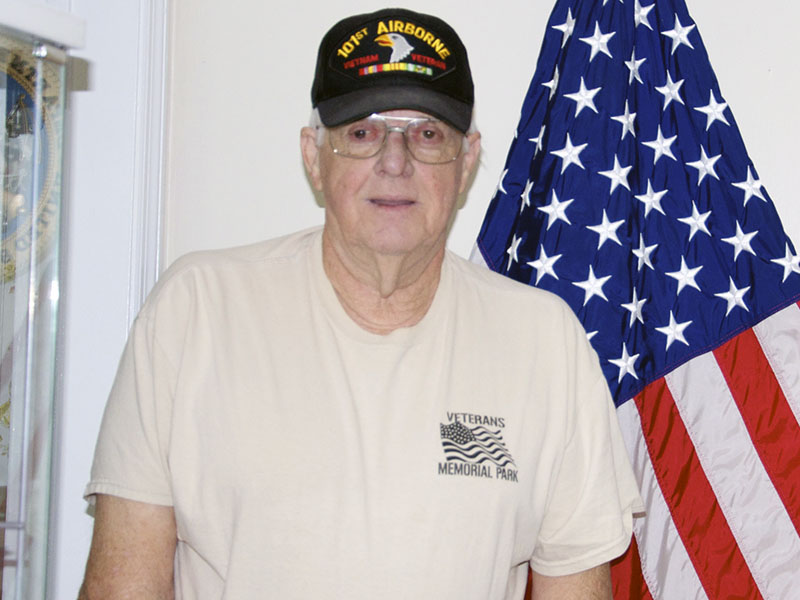
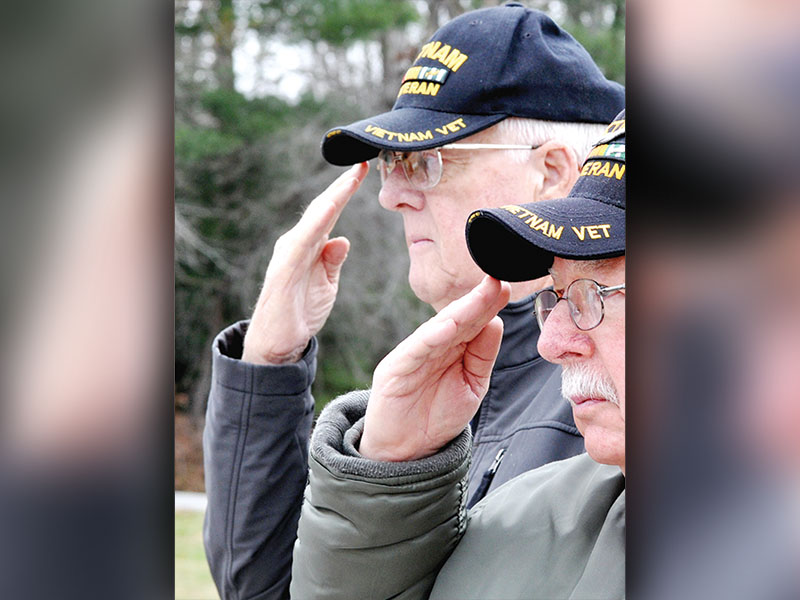
This year marks 53 years since the first time Fannin County native and U.S. Army veteran Jerry Williams took his first shot at a human being.
“I do believe I could put six or seven Vietnamese out there and pick him out of a line up, just for that facial expression,” he said. “You know, they didn’t wear uniforms. He had on one of these blue, striped T-shirt, red shorts and a pair of Ho Chi Minh sandals.”
Of that incident itself, Williams said, “We were in an ambush sitting on the side of a, well they called it a river, I call it a creek, but there was a sandbar. And, there were three Viet Cong come walkin’ down this sandbar.”
The day was July 17, 1969, and he can remember because it was two days after his twenty-first birthday.
“That was the first time I had ever fired a weapon at a human being,” he said. “The crack of that M-16, I don’t know who fired the first round, but to this day, I honestly believe I could pick that man out of a line up. ... The expression on his face, you know, it’s like, this is it.”
Fresh out of the West Fannin High School graduating class of 1966, Williams began vocational school at North Georgia Technical College. While enrolled, he received the notice to go get a physical evaluation.
About six weeks after he had his physical, he received a notification that he was now considered Class I-A, meaning he was available to be drafted.
He remembered that upon receiving it, he went to the local draft board and explained that he is enrolled in vocational school and should have deferment to which he was informed that the vocational deferment was no more.
“I stood there, you know, not really knowing what to say, but I stood there, and I looked at her, and I said, ‘Where am I on the draft list,’” he recalled before telling that he was number three on the list.
At the time, three or four men a month were being drafted out of Fannin County, he said.
With the news on his mind, Williams went ahead and dropped out of college, got “a little ol’ job” to keep some spending money in his pocket and basically took some time for himself before being drafted.
During that time, he reconnected with his high school sweetheart, Shirley, and they married December 1, 1968.
That following February, however, the time had come, and Williams was sent to basic training at Fort Benning, Georgia.
“It was the largest draft call that had ever been out of Fannin County with this group of men that I went in with,” he said. “I know that morning that when we left over here in Blue Ridge, there was almost a Trailways bus load of us guys that went down.”
Following basic, he went to Fort Polk, Louisiana, for Advanced Individual Training, then got a 30-day leave to go home before being sent to Vietnam.
July 1, 1969, Williams arrived in the mountainous region of Vietnam and had been assigned to the 101st Airborne Division.
“I bought a (military) hat, not realizing that we couldn’t wear it,” Williams recalled before telling of his platoon sergeant, an E-7 Sergeant First Class, scolding him for wearing it.
“I had never had anybody talk to me like he did over that hat. ... When he got through chewing me out, he looked at me, and he said, ‘Williams, where you from?’”
Come to find out, the platoon sergeant, Jack Godfrey, was from Talking Rock, Georgia, just beside Jasper.
“We just made a click, he and I, right there,” Williams said telling of the beginning of what became a long-lasting friendship. “I grew to love that man as much as I do believe that I could love a family member.”
Williams said he believes one reason he was able to “make it home” was because whenever his unit was in a movement, he was either in front of or behind Godfrey. Whenever Godfrey “suspected something was going to happen, he would reach up and get a hold of my rucksack, and he would shake me twice,” telling him to keep alert, or if Williams was behind Godfrey, he would simply tell him to “keep your eyes open.”
“Nine times out of ten, when he told you that, we would make contact with some kind of conflict, you know, with the Viet Cong, NVA (North Vietnamese Army), whoever it was,” Williams said.
As a Sergeant E-5, Williams said he was sections sergeant of the 81 mm Mortar Platoon.
“We were there as what they would call a Stand Down,” he said. “We would spend anywhere from 25 to 28 days out in the field, and then we would come in for four or five days for security around one of these (four) fire bases.”
On one assignment, Williams told of being struck on the inside of his thigh by a Minigun casing, causing a large blister.
“Then, it started raining, and they couldn’t come back and pick us up, so we stayed out there three days with nothing to eat, nothing to drink, you know, nothing until it, the weather, finally broke,” he said.
The worst times were during the monsoon season, he said, adding that he still has trouble with his feet as a result of being wet all the time.
“They got to where they were swollen so bad that I’d have to take the laces all the way out of my boots to get them on and off,” he said. “Of 12 months I was over there, I probably had socks to wear three weeks. The rest of the time you wore jungle boots without any.”
After serving a year in Vietnam, Williams was sent back to the United States, but before being honorably discharged in February of 1971, he spent six months at Fort Riley, Kansas.
Williams said he thinks when children graduate high school, they should have to go into the military for at least six months, but “I would not want to see any young man have to go into a combat zone.”
For his service, he was awarded the Vietnam Commendation Medal, Combat Infantryman Badge and Bronze Star Medal.
“There’s not a day that goes by that I don’t really think about something, whether it was good or bad,” Williams said of his service.
He added that the South Vietnamese smoked marijuana “like Americans smoked cigarettes,” and while he and three others were training the South Vietnamese in a Quanset Hut, he got to the point where he couldn’t stand up, not realizing he had caught a contact high from their smoking.
“I looked over at this staff sergeant that was standing over there beside of me, and I said, ‘I don’t know what’s wrong with me, but I can’t stand up,’ and he just started rolling, and he said, ‘You’re high as a kite.’ ... He said, ‘Go over there and look in that mirror. You look like you’ve been welding without a shield.’ ... I’d never had a cigarette in my mouth.”
Williams is currently a member of the Veterans of Foreign Wars Post 6570, where he serves as the judges advocate, AmVets Post 88 and the Disabled American Veterans Chapter 28.
“I would like to encourage all of our military people to come and be a part,” he said.
Anyone interested in joining a veterans organization such as the ones Williams is part of should contact retired U.S. Army veteran Ray Arthur at fanninveterans@yahoo.com.