
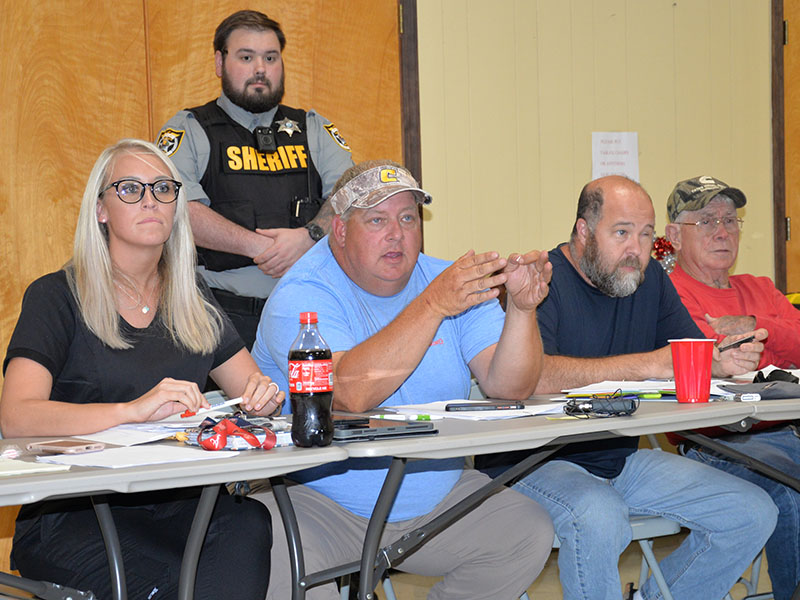
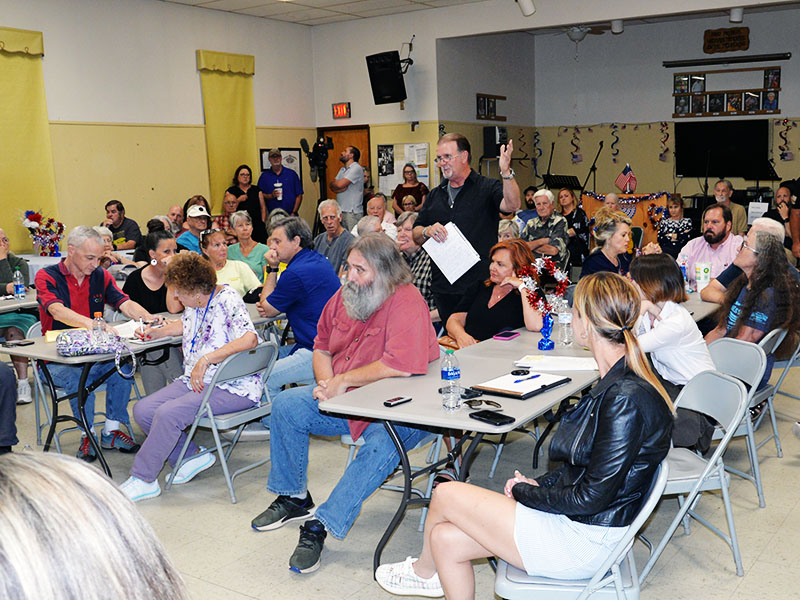
Chemical concerns, legal avenues and questions about enforcement powers over biosolids and their transport were all raised by area residents as they addressed two representatives of the Tennessee Department of Environment and Conservation (TDEC).
Meghan Plouch and Troy Keith attended the Polk County Commission meeting Tuesday, June 27, at the Copper Basin Community Center to hear from area citizens.
However, many of the concerns were either outside TDEC’s authority or neither representative was in a position to respond that night.
Commission Chairman John Pippenger asked whether or not a study had been done to determine the affects of the biosolids being applied at Copperhill Industries mixing with the numerous toxic chemicals left in the ground from mining and smelting operations that left the land a Superfund site.
Pippenger pointed specifically to the rate of cancer in the East Polk area, which he said was high compared to the rest of the county.
He noted biosolids are also know to contain cancer causing chemicals, which creates concern for mixing the two.
David Farrow addressed several portions of the Federal 503 rules that establish requirements for the final use or disposal of sewage sludge (biosolids) when they are applied to land to condition the soil or fertilize crops or other vegetation grown in the soil, placed on a surface disposal site for final disposal, or fired in a biosolids incinerator.
Specifically, he asked if the Cobb County Water Reclamation Facilities had been certified to meet EPA standards.
Farrow also pointed out to commissioners in the 503 rules that the county can impose
more stringent or additional requirements than federal guidelines, “to protect public health and the environment from any adverse effect of a pollutant in the sewage sludge.”
Farrow said the 503 rules allow the state or even local government to stop the spread of biosolids.
Dave Moran said TDEC should do an “actual testing” of wells close to the biosolids application sites to determine if any adverse effects are being created.
Commissioner Samantha Trantham raised concern over wastewater runoff from the Copperhill Industries site evaporating and what affect that had on the environment when the evaporation returned to the land.
One speaker substantiated those concerns by pointing out that no Environmental Impact Statement had been done prior to the pilot program being approved that allows the biosolids to be applied at Copperhill Industries.
Monica Farrow noted that neither was an Economic Impact Statement prepared.
The adverse affect the biosolid applications, and more importantly their transportation, could have on the tourism of the entire area was a concern expressed by many speakers.
Commissioner Greg Brooks said the biosolids and transportation and application should “stop and cease immediately,” until all concerns could be answered.
Many speakers voiced concerns over the trucks transporting biosolids to Copperhill, the smell they omit, the illegal acts for which they have been ticketed, and other allegations.
Concerns over, “What if a crash happened?,” and its potential devastating affect on tourism were raised by numerous speakers
At one point, as questions were asked of the TDEC representatives, a frustrated Keith said, “there’s so much misinformation in this room it’s ridiculous.”
To which Commissioner Kelley Morgan was quick to point the blame back at TDEC for not bringing the biosolid plan to the county and its citizens before it began and for a failure to communicate now that concerns are being raised.
Trantham promised another town hall meeting and Monica Farrow said legal avenues are still being pursued.