

“I had the best job...I love taking care of soldiers.” That’s what April King did for 25 years as a member of the Georgia Army National Guard, she took care of soldiers.
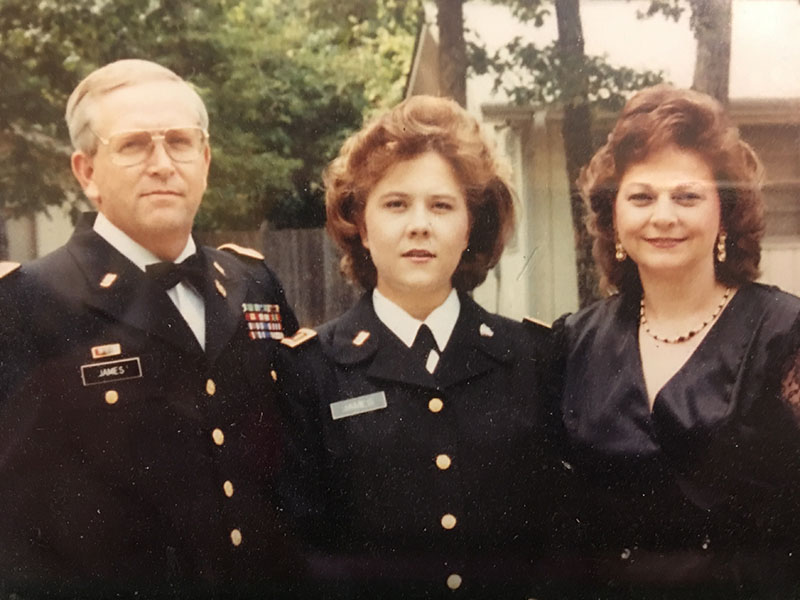
She was April Asher when she enlisted in 1987 at the age of 17, even before she had finished her high school education.
April’s plan was simple. She was going to serve eight years, finish a college education and have it paid for, and move on with her life. But plans change, and she would continue to serve her country and fellow soldiers until 2012.
Her service would include various posts in Georgia, deployments to California and Egypt, and working in Mississippi during the Hurricane Katrina rescue efforts.
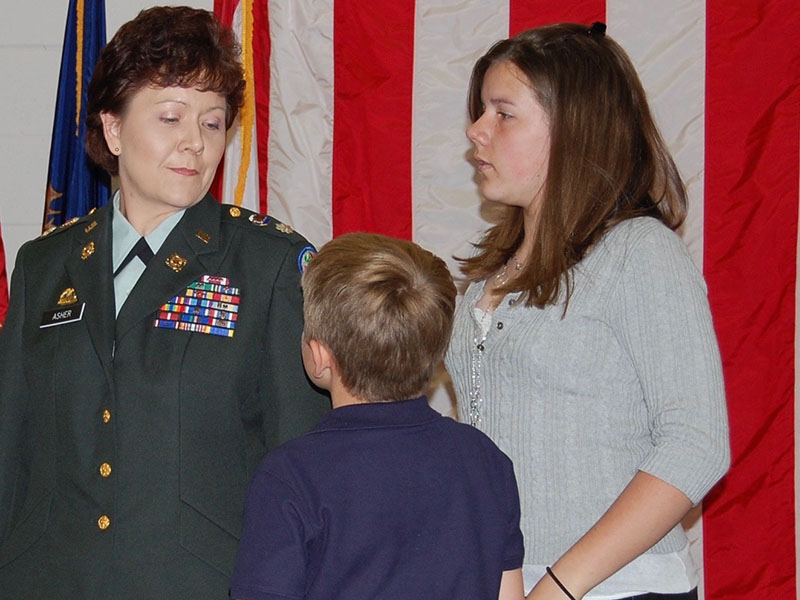
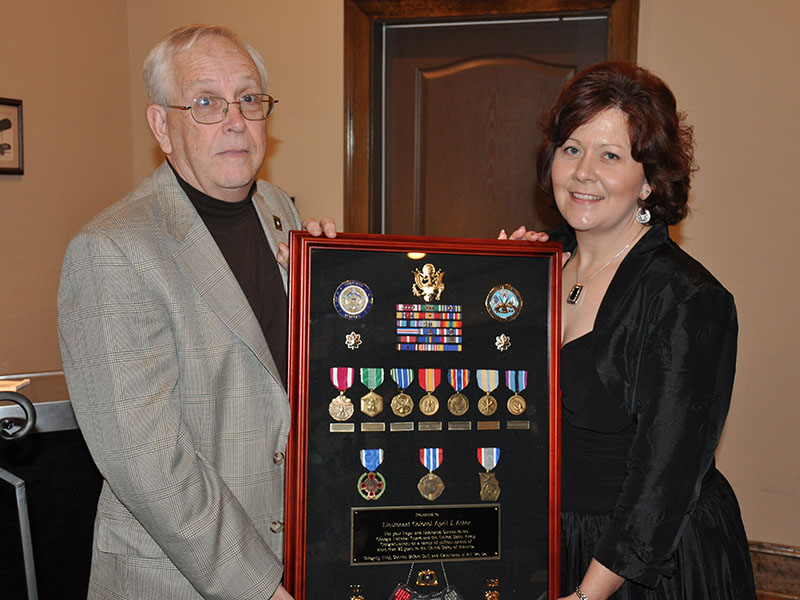
April climbed through the ranks to lieutenant colonel before she retired.
April’s desire to enlist was created by her dad, a Chief Warrant Officer 5 (retired) Robin James who served for 41 years.
He would sometimes take his daughters to work with him, which created April’s interest as the military as being “something I’d like to do.”
She originally signed on with the military police, and joined the Headquarters Military Police Battalion. It wasn’t long until she changed her mind and shifted to Personnel. Personnel is “what takes care of the person and the family...it makes stuff happen,” April said.
April got her military start at North Georgia College (NGC) on the one weekend a month, two weeks a year program. While at the Dahlonega school, she took three years of Reserve Officer Training Corps (ROTC) instruction. She also attended, and graduated from, the National Guard’s Officer Candidate School in Macon.
When she graduated from NGC in 1991, she quickly immersed in a career in which, “You have got to be able to change hats...with the National Guard, you have got to be able to change hats a lot. (You) provide whatever is needed.”
The change started in 1992. The civilian job market was slow, and everyone she and her family knew were involved in either the National Guard or civil service. So April signed up on active duty.
She was assigned to the Counterdrug Task Force as an intel analyst, where she would work for seven years.
As a supervisor, she oversaw National Guardsmen who worked in conjunction with local law enforcement agencies including the Georgia Bureau of Investigation and the Griffin/Spalding Narcotics Task Force.
In 2003, April was deployed to Fort Stewart for roughly a year as an S-1 and assistant S-3 captain. She handled personnel readiness and services as well as headquarters management. She also assisted the battalion commander in the preparation, conduct, and supervision of all training activities.
When she returned from this year-long deployment, April was called up to aid in G-8 support, a 24 hour and 7 days a week job to make sure members of the National Guard were ready to step up and assist in any situation that might occur.
In 2004, she was moved back to Columbus where she would be promoted to major.
Not long after she was promoted, April was assigned to support the 48th Brigade as they were about to deploy. At this point, she found herself at the National Training Center in San Bernadino, California – her first brush with the desert.
The training involved other units, including one from Indiana.
April remembers how the cooks from that unit were once tasked with making grits. “We had soup,” she said. April made sure the southern soldiers never had to drink their grits again.
She was in the desert for three and a half weeks before returning to Georgia.
April was deployed to Mississippi in August 2005 to aid recovery efforts after the massive Hurricane Katrina had unleashed its wrath upon the Gulf, while the rest of the country was still in the middle of a war.
Her first job was rounding up the people with the skills to help. They will go where there is no power, no communication and no support. They must “take everything we’re going to need,” April says. Theirs is a rescue mission.
“People don’t realize what it’s like when everything is wiped out,” April says.
Other troops are headed for Louisiana. Theirs is primarily recovery.
She becomes emotional as she remembers the welcome the soldiers received from the Mississippi residents. “The one thing you see is the American flag...They raised the flag to say thank you to the military.”
April and roughly 500 other soldiers were placed in Kiln High School in Mississippi, since there were few other standing structures that could house that many people.
April and the soldiers focused their efforts on reopening the Southern Regional Wastewater Management District. With the help of soldiers who worked with the National Geospatial Agency, they were able to get the water treatment facility up and running. “Those guys don’t get enough credit,” April says of the team.
April also adds a, “Thank God for the Air Force,” coming from her time in Mississippi. Without them there would have been no communications.
After Katrina, April’s next stop was the 78th Troop Command in Decatur, Georgia. Still a 90-minute drive from her home, it’s a “step in the right direction” toward a promotion.
She would be in the position for a year and a half before Tommy Garden appointed her to be Deputy G-1in 2008. April became responsible for ensuring that benefits and pay were accurate for each soldier who went home and that command manpower and administrative needs were met through managing, planning, coordinating, analyzing, and evaluating command administrative missions and operations.
“The hardest part of that job was bringing back soldiers in body bags...especially when you knew them,” April said. She made sure “everything was correct for those soldiers who went home.”
Her next stop was a deployment to Egypt for Operation Bright Star. This would bring together soldiers from the Army, Air Force, and Navy to practice working together. April was in Cairo overseeing the exercises that were taking place between the United States and Egypt’s Armed Forces. Still being deputy G1, she had a lot on her plate at the time.
When 2012 rolled around, the talk was the National Guard headquarters would be moved to Dobbins Air Reserve base in Marietta. That was when April’s 25 years rolled around and she has spent “more than half my life at the time” in the National Guard. It was time to retire.
She cherishes the memories of her job. “They’re (the soldiers) are out their fighting. They shouldn’t have to worry about their families, benefits or pay,” she says.
She would do it again and encourages young girls to do the same. “You can go out there and do it,” she tells them.
Her service to her fellow soldiers has not ended with retirement as she is now serving as the finance officer for Post 248 of the American Legion.