
Purchase will boost county system, provide independence
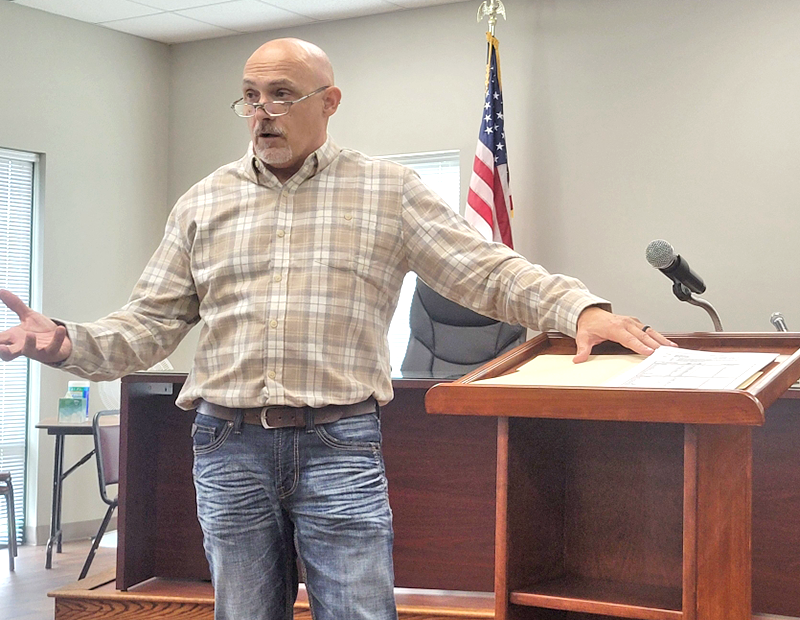
Fannin County commissioners wasted no time Wednesday afternoon, January 14, when they were presented with an opportunity they agreed would greatly enhance the county’s ability to provide water to its residents.
Commissioners Chairman Jamie Hensley, Johnny Scearce and Glenn Patterson agreed to buy the water plant off Tennis Court Road, Sugar Valley Springs, Inc., from Cline and Cedric Bowers and Tonia Ross for $4 million. The deal was scheduled to close on or before April 1.
Scearce presented the possibility for the purchase to a meeting of the county Water Authority that was attended by all three commissioners.
The commissioner explained that he had learned the plant was for sale from Cline Bowers, and believed it could eventually enable the county water authority to become independent by providing enough water for the system and its growth. Currently, the county water authority must buy its water from Blue Ridge, McCaysville and Morganton.
Scearce said Fannin County is currently one of only three counties in Georgia that “sends its water out of the county.”
Scearce said if the county purchased Bowers’ plant, much of that water could be kept here and supplied to local residents.
He also said that Bowers has sold water to both Blue Ridge and McCaysville when those systems found themselves in need. Cline Bowers, who was present at the meeting, confirmed those sales, explaining the shortages had been due to leaks in the two city systems.
Water Authority Chairwoman Anita Weaver said, after hearing Scearce’s proposal, “Water for this county (authority) would be the best thing that ever happened. If we can’t find another source, we’re going to be sitting here with a stale system.”
Commissioner Glenn Patterson expressed concern the purchase would put the county in competition with the Blue Ridge, McCaysville and Morganton water systems.
Weaver explained the Service Delivery Areas defined for those systems and the county prevent competing for customers.
County Attorney Lynn Doss said that all four systems are currently providing as much water as they can. Weaver said this includes each of the three city systems holding various amounts of water for the county. If the county had its own water, the cities could use that water to expand their own systems.
Scearce also addressed former Blue Ridge Mayor Rhonda Haight’s move to renegotiate the city’s contract to sell water to the county, which she made before leaving office. “You’re not holding me hostage,” of the anticipated attempt by the former mayor to greatly increase the water sales price to the county.
Bowers said that he started his water plant project in August 1992 and the first truck loads of water were shipped in June 1993. The maximum produced since then has been 33 billion gallons in one year and 247,000 gallons in one day.
Bowers explained there are three wells on the property, which includes 134 acres. The water is actually trapped in underground vaults by its own natural hydraulic flow. It is not being pumped from underground as so many people believe.
There is 88,000 gallons of free flowing storage at the plant in a system of tanks. Any overflow finds its way into Little Sugar Creek.
Bowers said that even in the worst drought conditions the county has experienced since 1992 he has never seen a decline in the water at the facility.
The water plant owner said he recently had a buyer for the plant, but the deal fell through at closing when one of the investors backed out. He said he had been contacted since that time by the same buyers saying they had obtained the funding, but had not made any agreement and wouldn’t until he saw their cash.
After hearing the presentations, commissioners called an Emergency Meeting for Public Safety, allowed under Georgia’s Open Meetings Laws, and voted to accept Bowers’ $4 million sales price. The purchase includes Bowers staying at the facility for an unspecified time to help with operations and current contracts, the longest of which runs out in 2028. The revenue from those contracts will go to the county. This revenue stream will help offset the purchase price.