

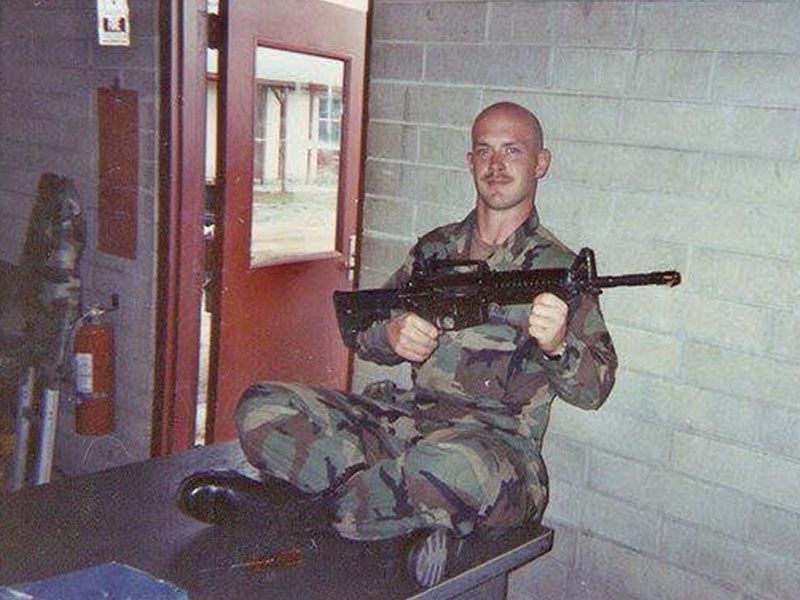
When Aaron Born joined the National Guard, he gave it his all, he said.
“It was a big step for me,” he said. “People that knew me before never expected me to do that.”
But he never expected his service to end in the way it did.
Born joined the Guard from a Canton, Georgia, recruiting office in the summer of 2002, soon after 9-11.
“I walked in there and I said, ‘You have 30 days. I don’t care where you send me.’”
When he joined, he was 24 years old. Most of the other recruits were between 18 and 21.
“I went in guns blazing,” he said. “100 percent.”
Before boot camp, he was given the choice between being a medic or a tank mechanic with the first battalion of the 108th Cavalry Regiment in Canton, Georgia.
“I chose medic, but I still had to work on the tanks. That was fun,” he said.
Born’s next step was going to boot camp.
“I had goals for myself,” he said.
Of the four drill sergeants training his boot camp class, one got fired, one transferred to another unit, and the third left because of a death in the family, Born said.
The remaining sergeant gave Born additional responsibilities because he was older than most of his platoon of 60 new recruits.
“He counted on me to be his right-hand man,” Born said.
Under this pressure, Born helped motivate and train his fellow soldiers. When some men were on the edge of quitting basic training, he encouraged them to keep going.
Helping run boot camp was a mix of camaraderie and picking the “biggest guy” and “beating” him, Born said.
If he made a mistake in his responsibilities, he knew the remaining drill sergeant would “smoke” him.
“I’d be doing push-ups for days,” he said.
He took long marches, ran, and learned how to use a rifle.
As a combat medic, he would carry between 70 and 97 pounds of supplies in addition to his weapons.
On one muck run training exercise, Born strained his back, injuring his lower back, hip and shoulder.
“It kind of went away so we just ignored it,” he said.
Boot camp made him a different person, Born said. He came back in better shape and with a discipline he says he still carries today.
“We all went in looking a certain way, acting a certain way. And we all came out looking completely different and completely different.”
The men developed a new confidence and a new sense of duty to America, Born said.
The new sense of meaning changed their body language, he said. “You walk different. We all came out ten times better.”
After 12 weeks of basic training, Born received additional training to serve as a medic.
“They put you in a scenario in a room with a body that’s got all these broken parts, and they’re bleeding out. And you’ve got to fix every part so you get to know what direction on the body to start, and when to say stop,” he said.
Even practicing these skills on a dummy was “intense,” Born said.
He mentally and physically prepared himself for work as a combat medic.
A medic isn’t just risking his own life on the battlefield, Born said.
If he dies or is injured, it means other wounded soldiers won’t get help. But if he is too cautious, it risks the lives of other soldiers too.
“It’s a lot heavier,” he said.
Some of the tankers in his unit were old enough to have gone to war before, Born said.
“They had to try to mentally prep me for all this coming,” he said. “We really didn’t joke.”
In some ways, Born found himself letting one side of himself go to become a soldier, he said. Humor would have to wait until after the war.
In combat, Born’s role would be to ride in a smaller M113A1 tracked ambulance behind advancing M1 Abrams tanks.
Tankers love the feeling of controlling their powerful machines, he said.
“They can be a little cray-cray,” he said. “Big boys, big toys.”
Born learned to drive an Abrams too.
“I got in a little trouble because I went through the woods,” he said. “But who wouldn’t if they put that power in your hands?”
Many of the men in Born’s unit were between 40 and 50 years old and not in great physical shape--“ate up” in military slang. As his unit prepared for deployment, Born did his best to train them into good physical shape, he said.
“My first sergeant actually said my job was to make sure they’re 100 percent physically ready for deployment.”
His unit was scheduled to deploy in 2005, he said.
Then, the National Guard told him that his back injury disqualified him from combat service.
They discharged him.
“That was probably one of the most emotional moments I’ve ever had,” he said. “If I was injured and tried to save somebody else, I would put them in danger.”
Born said he still struggles with that sudden change.
“I didn’t lose a leg, I didn’t lose my life. It’s not that big a deal,” he said. “I count myself on a lower rank than everyone else.”
His years of service have marked him deeply, he said.
As a civilian, he still carries military habits 21 years later, he said. He rolls up his socks and keeps his T-shirts the way the military taught him to.
“My closet is a certain way. That rolls over into your civilian life if you let it,” Born said.
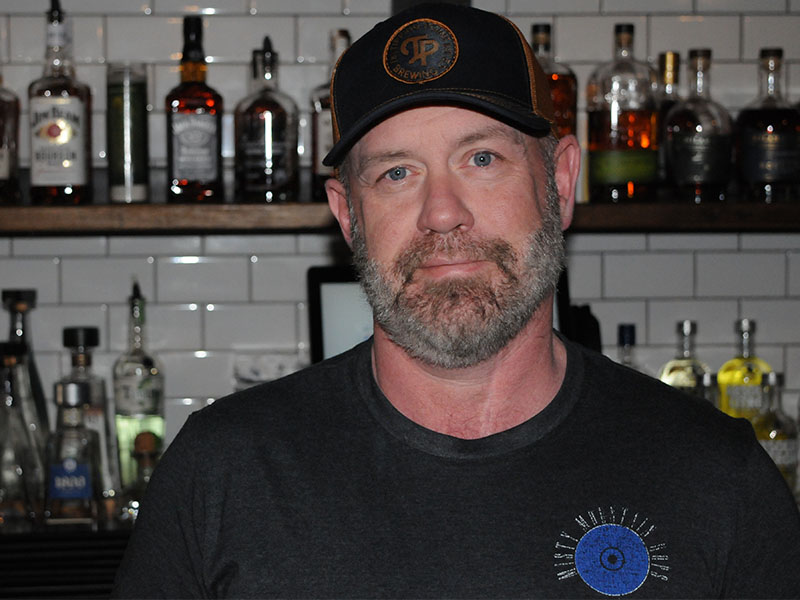
As co-owner of the Misty Mountain Hops bar, he can always recognize another veteran, he said.
“It’s a confidence walk,” he said. “Head held high, shoulders back,” he said. “Eyes out watching.”
They can recognize him too, he said.
“I’ve had people sit at my bar and say, ‘which branch?’”
Former Marines always “scoff” as if they were back in basic training and had just 20 minutes to finish a meal, he said.
Born also credits his enthusiasm for serving others to his time as a soldier.
After his time in the National Guard, Born has carried on the ethic of service he learned there. He calls his employees his “kids,” and does his best to help them reach their full potential.
“Anybody that works for me, I kind of adopt,” he said. “It’s a bad habit.”
Born’s “bad habit” has led him into doing things like letting an employee in a bad situation live with him, then encouraging the man to change his life for the better by joining the military.
“If I could help one person, just one, that’s enough to make a difference,” Born said.