

The 25th Annual Community Services Conference allowed the Fannin County community to learn more about the positive and negative aspects of social media and about the variety of community service organizations in the area.
The conference, held Wednesday, October 2, brought in four local panelist to discuss the theme “Social Media: The Good, The Bad and The Ugly” and awarded three Fannin County High School students with awards for the annual essay contest.
Georgia Mountains Health Chief Executive Officer Steven Miracle said around 100 students participated in the contest. He said, “Listening to these essays, having read several of them as we were reviewing them gives me such pride for the children in this community.”
Through their essays, students had to answer the question: “How does your social media presence improve the lives of those around you?”
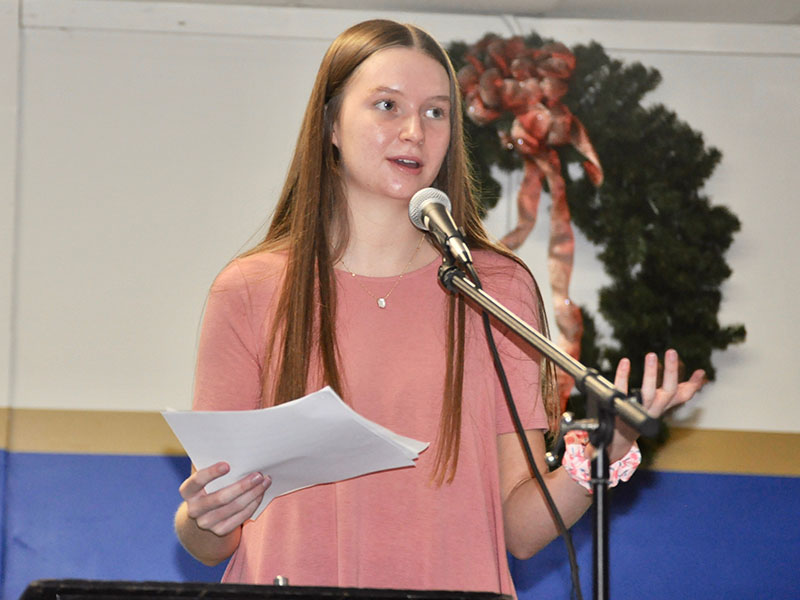
Tenth grade student Rachel Bruce received first place and read her essay to the crowd at the conference.
“Social media, like all things, can be used in either a positive or negative way,” she said. “It is entirely up to the user on what he or she decides to share or post on their social media platforms. A person can portray themselves in any way on the internet, and this can be beneficial or detrimental depending on the individual and how they express themselves online.
“While it is easy to have a negative, egotistical, and unfriendly presence online, I choose to be positive, realistic and thoughtful on my social media to improve the lives of those around me.”
Ninth grade student Alexandra Frabotta and 11th grade student Jaylin Ray received the Runners Up awards.
Reboot Mountain Executive Director Ryan St. Hillaire was one of the panelists to discuss the negative aspects of social media. He discussed the human need for “connection.”
“Media has a good side … it also has a dark side,” St. Hillaire said. “When all is said and done, understanding that we all, as humans, have an innate desire to connect with other people, let’s not replace real-life connection with artificial ones.
“As we bring these devises into our lives, let’s not allow them to take over and to replace the experiences that we should be having face-to-face with people. Let’s not allow them to make us into people that are fake. Let’s be genuine people with each other.”
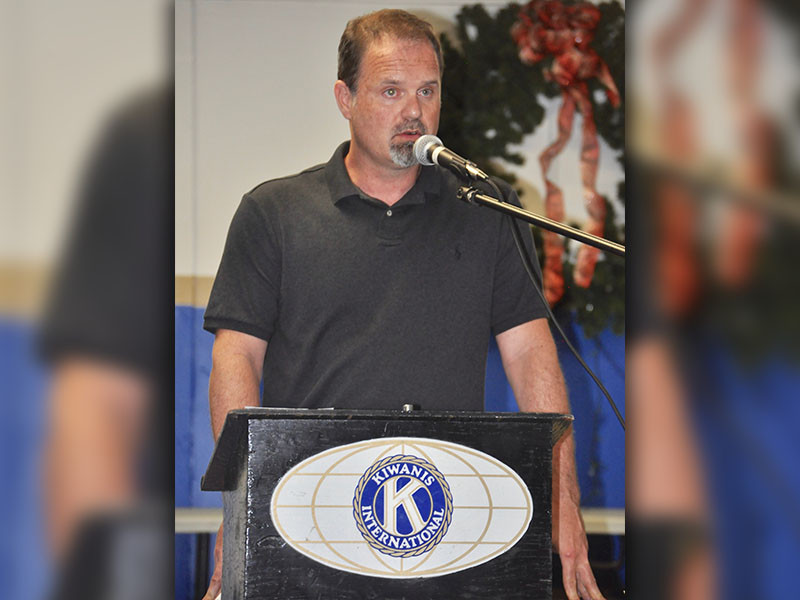
Georgia Mountains Health Clinical Psychologist Brad Carpenter talked about, among other things, how social media companies have manufactured addictive platforms.
“Early clinical evidence suggests that the same dopamine producing areas of the brain that are activated by opiate use are also activated when children are looking at their Instagram feed,” Carpenter said. “It’s scary. They found a way to activate the most primitive reward system in our brain.”
He discussed a lack of accountability online as opposed to face to face interactions.
Bruce mirrored this statement in her essay stating, “Many people hide behind their online profile to be rude to others. Unfortunately, more people are bullied and made fun of online than in person. Some people create accounts with the sole purpose of spreading hate.”
Carpenter also said he, and others in his field, have seen an increase in depression and anxiety over time, which he believed could be, in part, an effect of social media use.
“The anxiety rate and the depression rate among children, adolescence and adults is going up,” he said. “We’re very certain about that. It’s not a few studies, it’s tons. One of the most compelling theories, as you might imagine, is that social media is somehow responsible for that or in some way responsible.”
Blue Ridge Community Theater Production Manager Joey Nicolella showed those in attendance a variety of ways to use social media to market the theater and engage with its audience. He suggested building up a social media presence on one platform before moving on to the next.
“Building an online presence does take time,” Nicolella said. “It can be sort of frustrating to not see your numbers just soar up really quickly but it’s important to be persistent about it.”
He suggested using social media to support other non-profits stating, “It’s really effective because it exposes both of your products to each other’s audience. So it’s a really good way to expand your reach there.”
Habitat for Humanity Executive Director Chris Hall also discussed some of the positives of social media and how it is beneficial to him and his non-profit.
“Used correctly, social media can be used as a valuable tool for communication, information sharing and funding the mission,” Hall said.
He urged users to be cautious when engaging with others online stating, “We are as non-profits accountable to the community. We want to respond, not react to folks. You don’t want to get engaged in an argument online because it just makes you look bad.”
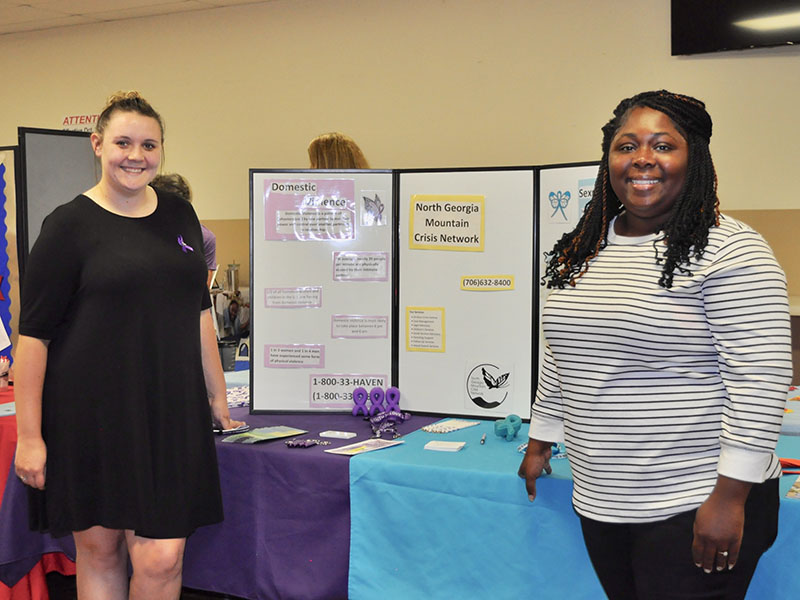
The 2019-2020 Fannin County Community Resource Guide was distributed and contains the hundreds of community services and volunteer opportunities offered in the community.
It can be viewed online at https://fanninga.resource.directory.