
Three-phase face lift progressing
The proverbial face lift that is Ducktown Basin Museum’s three-phase restoration and renovation project is at the end of phase two.
All that’s left is a little cleaning up and some finishing touches, which will be completed this week.
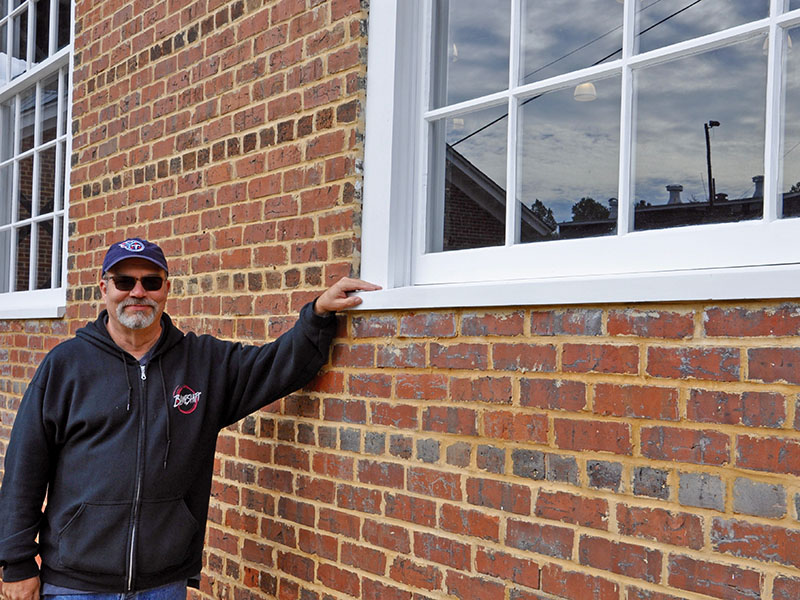
The “true restorations,” as Museum Director Ken Rush would call it, consist of new windows and doors, a fresh coat of paint and a few structural adjustments to the mining office (the museum), time office (geology lab), Bit House, two electrical towers, Boiler House and Hoist House.
He explained that photos from the World War II era were used to replicate the original state of the structures. The photos were scanned at high resolution in order to see specific details.
Paint colors were even mimicked, and although the photos are black and white, while making the restorations, the true paint colors were found beneath newer materials.
The project is not an attempt to make long lasting improvements, rather it is an attempt to restore the Burra Burra mining site to its original look, Rush said.
He explained that in the 1960s aluminum siding was placed atop the original siding of the mining office. All of the aluminum has now been removed, leaving the original boards exposed, with the exception of a few that were not repairable.
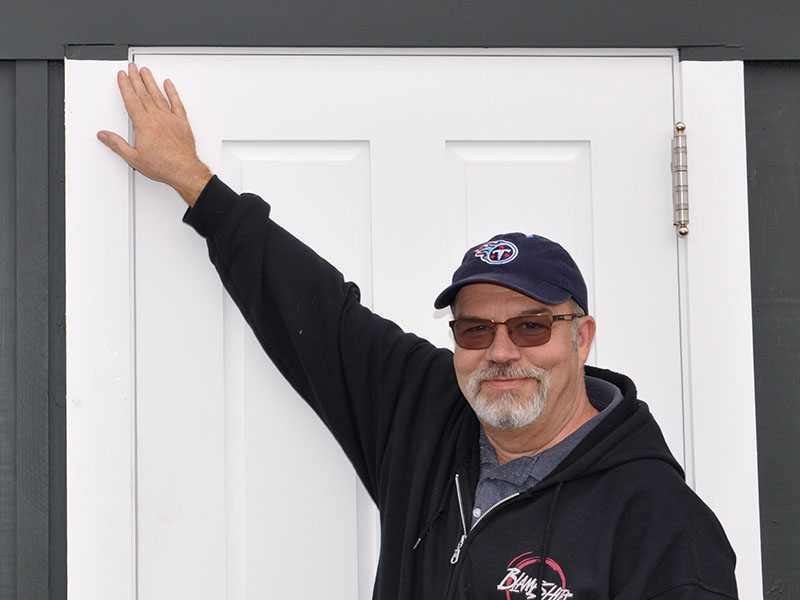
Custom mortise and tenon wooden windows were constructed to imitate what they would have initially looked like, as were the doors, and the rafters were opened back up where they had been hidden. Mortise and tenon are joints that connect two pieces together, rather than using nails or screws.
The time office experienced the same procedures.
The Bit House required a little structural help. A rail line once ran beside the building, and the line was used to move equipment around the site. It is thought that a piece of equipment hit the side of the building, causing the studs to snap and the house to lean.
The Hoist House and Boiler House, built in 1901, received new mortar around the bricks. Rush said the original mortar was made of lime and sand and could literally be rubbed off with a finger. Some replica windows and doors were also installed for those buildings.
As for the two electrical towers, they were stabilized and restored. One tower had to have a piece replaced where it was rusted. When the piece was put back on, it was hammered, to obtain a weathered look, and bolts were welded in, to look just like the other pieces.
The project is state funded being as the museum is a state historical site – officially called the Burra Burra State Historic Site, and phase two alone has called for over $2 million dollars worth of renovations.
Rush explained that there is “a lot of science behind” all the work that’s been done, and finding contractors who are able to complete some of the tasks, like the mortise and tenon windows, are far and few between. It is important to not only the museum, but also the state, that these restorations and repairs are completed as accurately as possible.
Phase one began in 2015, after a detailed list of repairs was formulated in 2010, and phase two began during spring of this year. Dates for the commencement of the final phase is not yet certain.
Feelings mixed as Ken Rush honored
“He is the museum,” said former Ducktown Basin Museum Board President Jim Sheffer. “He’s so valuable. He’ll be difficult, if not impossible, to replace.”
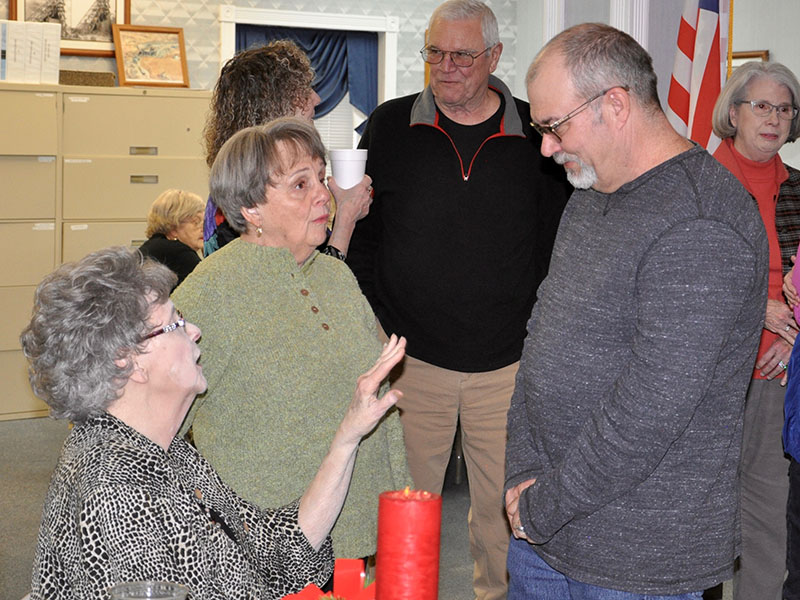
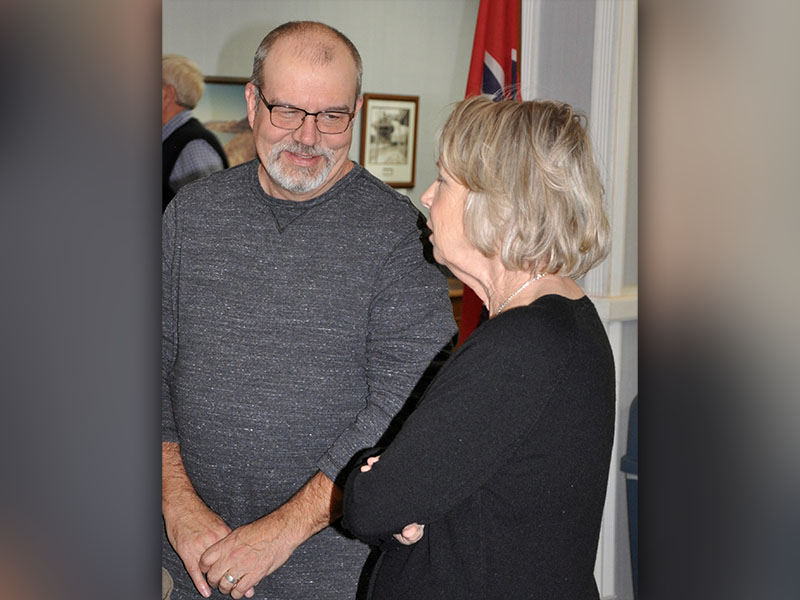
Mixed feelings of happy and sad filled the lobby of Glenn Springs Holdings in Ducktown, Tuesday, December 3, as friends and colleagues gathered to celebrate both the 30 years Museum Curator Ken Rush has given to the Basin as well as the future of his new journey.
Joyce Allen, museum guide, said of his departure, “He’s really a good person, and I wish him the best. I just hate to see him go.”
Rush said that he has enjoyed his time at the museum, but is now ready to begin a new chapter of his life. He plans to move to Lexington, Kentucky in the coming weeks where he will settle down with his new family.
Rush is the museum’s first hired curator, and that has been his life for the past 30 years. During his time as curator, he has developed close relationships with the community as well as the state of Tennessee. He is credited for spearheading the multi-million dollar, three-phase restoration project that recently wrapped up phase two.
Additionally, as liaison to the community, he was able to acquire an extreme amount of knowledge from various sources in order to provide the public with answers to the majority of their questions.
Marilyn MacNeill remarked, “He’s like family. It’s been emotional.”
She added that Glenn Springs Holdings gave the museum the property at its current location, and starting off, they had to ask members of the community for help paying the power bill. “Look at it today. That’s all Ken – his relationships with the state, the community.”
Museum Board President Leland Rymer said it is hard to let go of Rush since he has invested so much time in the museum, and no one will ever be able to replace Rush due to his in-depth understanding of the Burra Burra mines, the industry and time period.
“I didn’t think it would be as emotional for me, coming to this, as it is,” he said.
One of the museum founders Mary Louise Landrum recounted that she and a friend interviewed Rush for the position back in 1989. She said they knew he was the perfect fit out of all others. “It thrills me how many people refer to Ken all the time. You know, ‘Well I asked Ken about such and such, and he knew.’”
Harriet Frye, of the museum’s board of directors, said she is “thrilled” to see Rush following his heart, but, like most, she is saddened to see him leave.