
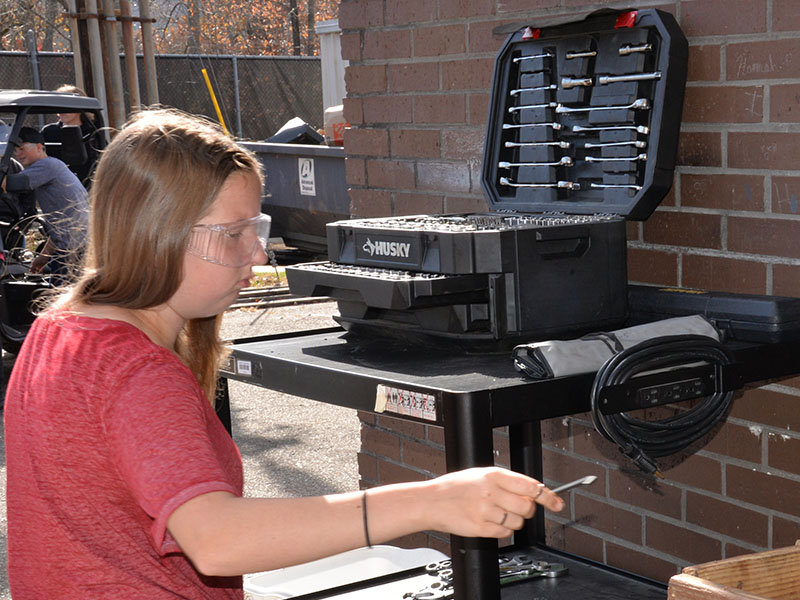
“I wish we had started it earlier. I would have loved to have taken all three classes.” Those were the words of Fannin County High School (FCHS) senior Cody Redlhammer as he talked about his experience in Automotive 1 and looked forward to next semester when he will take Automotive 2.
Because he is a senior, Cody won’t have the opportunity to take Automotive 3, which begins with the 2023-24 school year.
The Automotive Technology program is in its infancy at FCHS, having become a part of Career, Technical, and Agricultural Education (CTAE) last year.
Students were introduced through the Occupational Safety class in the second semester of the 2021-2022 school year, and 88 are currently enrolled in three Automotive 1 classes this semester. With 15 enrolled in the Automotive 2 class next semester, the program is already serving a total of 103 students.
Cody originally signed up because “I thought it would be fun.” The fun has turned into an experience where “I’ve really learned a lot. I definitely want to get into this,” he said.
Cody may have some mechanic skills in his blood. His grandfather, Charlie Redlhammer, is a well-known master mechanic in Blue Ridge.
Cody talks about entering the military after high school. His auto mechanics teacher, Daven Dilbeck, said the skills Cody is learning now will serve him well no matter what path he chooses.
Once students learn the basics of taking things apart and putting them back together to fix them, they can fix almost anything, Dilbeck said.
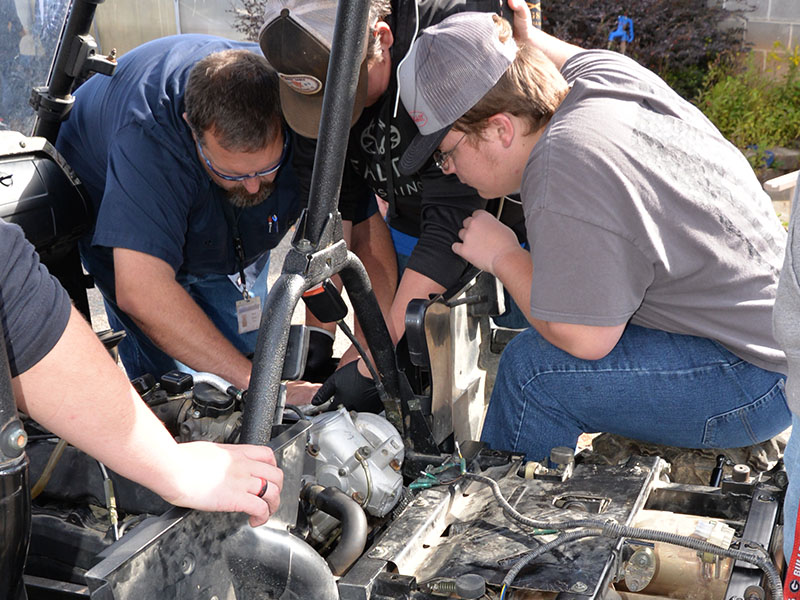
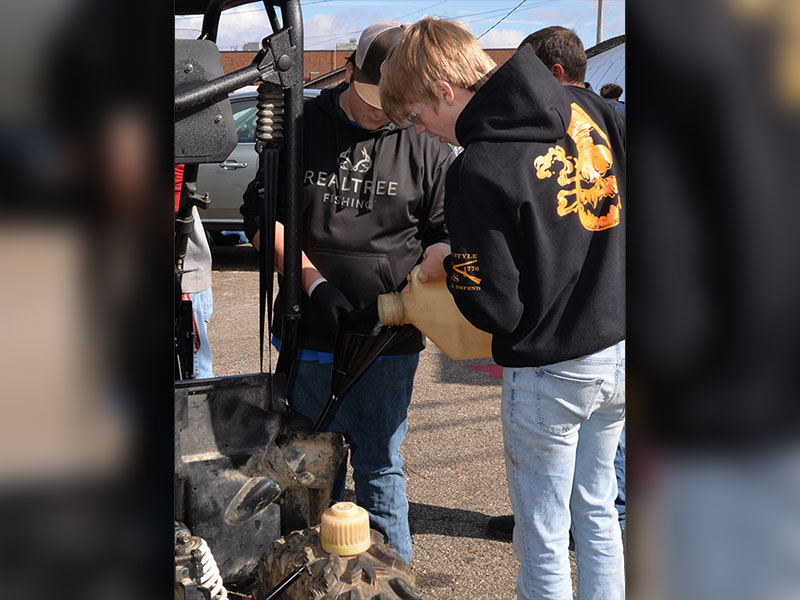
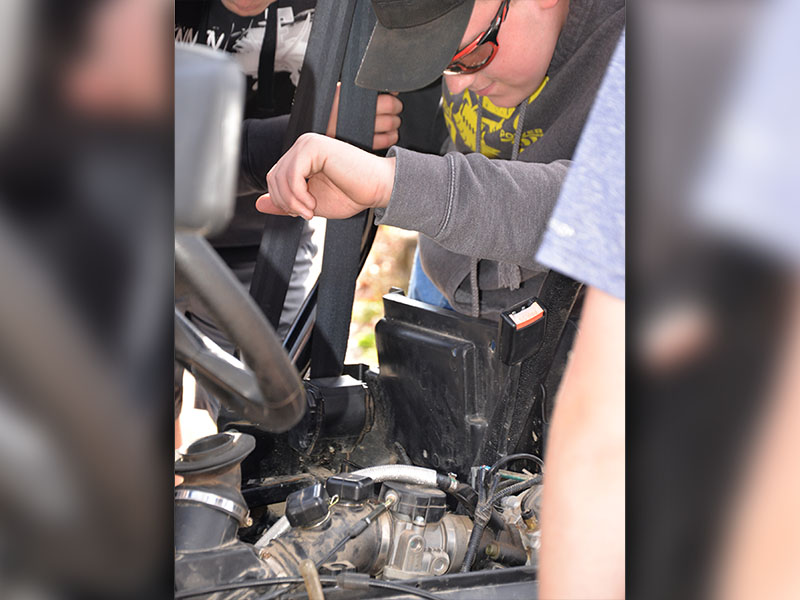
Cody, like all Dilbeck’s students, is getting hands on training.
“I like hands on more,” Cody says. Of Dilbeck’s style of teaching, Cody said, “He tells you and lets you work through it yourself.”
Cody, like all the students in the FCHS Automotive Technology classes, are learning from the ground up. “You’d be amazed how many people don’t know how to change a tire,” Cody said.
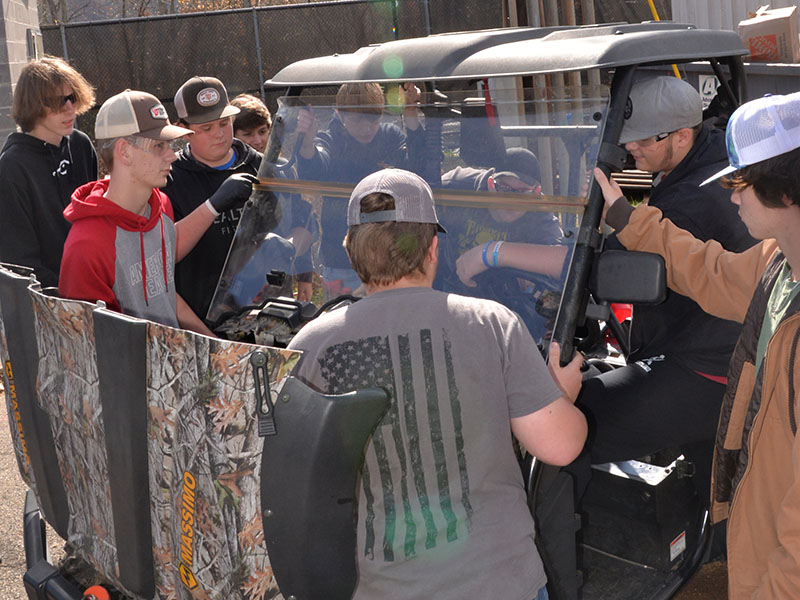
Dilbeck runs his classes the way mechanics run their shops. The students work in teams and are given projects to work through from beginning to end.
“The groups definitely help,” Cody said. The students work with each other to solve a common problem or complete a task instead of competing against each other.
“Real world experience really helps give them a direction,” Dilbeck explains, who brings 22 years as an automotive technician into the classroom. That experience began when he was about the same age as the young people he now teaches. As a senior at Copper Basin High School, he won the Tennessee Skills USA automotive competition in 1999.
David Henson, CTAE supervisor, said, “We hit a home run,” when Dilbeck came on board to teach the automotive courses. “He’s an auto enthusiast,” and the students are drawn to that, Henson said.
At the same time, Dilbeck is preparing them to be ready to enter the workforce. The students learn quality, deadlines and budgets in the automotive programs.
Dilbeck is basic in his approach to his Automotive 1 students. He said the very minimum he expects is to “get them somewhat independent out on the road.” He believes they should all be able to maintain their own vehicle.
Last week, students were learning how to install brakes. They learn to do for $50 what would cost $250 at a shop, Dilbeck said. He is looking forward to the Automotive 2 and 3 classes when the classes can get into “a little more meat” of auto mechanics.
The enthusiasm for the program runs deep at FCHS. “Kids ran into our automotive program,” Henson said.
Automotive is now offered as a Pathway, with next year’s Automotive 3 students being the first to complete the Pathway. Successful completion will leave a student with an Automotive Service Excellence (ASE) General Automotive Technology Certification.
The end-of-pathway assessment is the test for this certification, Henson said.
Students will be able to “walk out of here and walk into a job,” Henson said.
Like all the CTAE programs at the high school, Henson says the goal of the Automotive Technology program is to meet the needs of the students and community in a way that benefits both.
Henson looks forward to the planned construction of the new Health and Wellness facility as providing the space the Automotive, Construction, Engineering, and Welding programs need. The new facility will free up the CTAE building on the high school campus to be dedicated to these programs.
The chief academic officer for Fannin schools, Lucas Roof, credits the Special Purpose Local Option Sales Tax (SPLOST) for providing for the expansion of the facilities and the addition of programs including Automotive and Welding. “The dollars required to do these things come directly from SPLOST,” he said. “Programs like these are not possible without great teachers,” he added.
School system executive director and incoming school superintendent Shannon Miller agreed. “Everyone’s support of the SPLOST plays a tremendous role in the success of our schools and more importantly in the success of our students,” she said.