
GSuite called a game changer
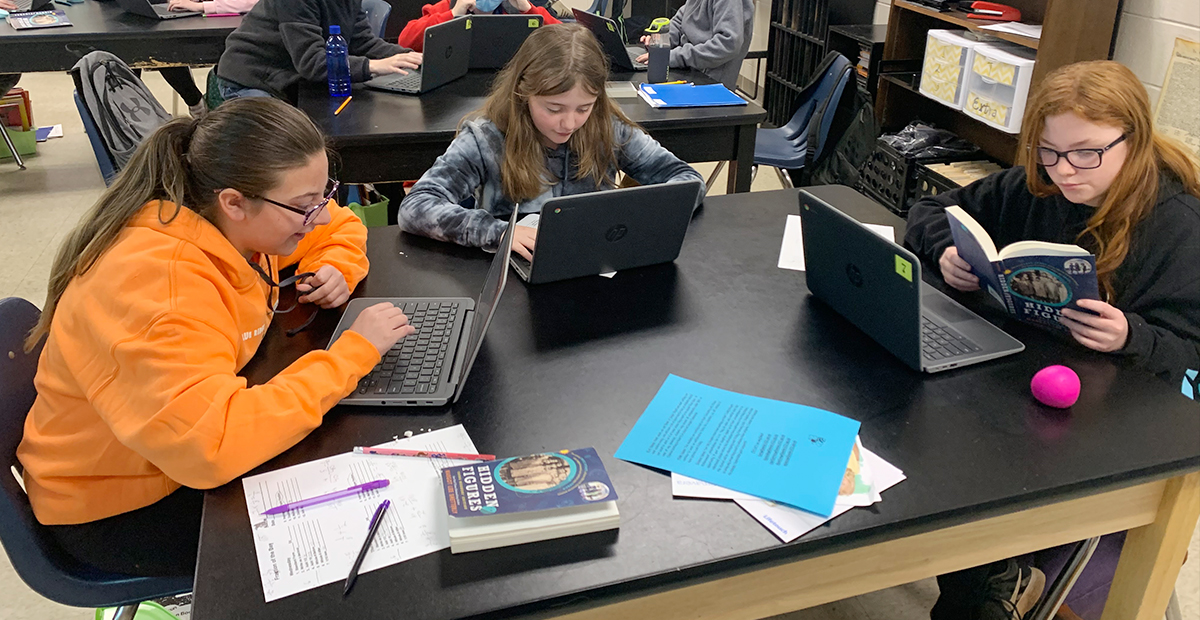
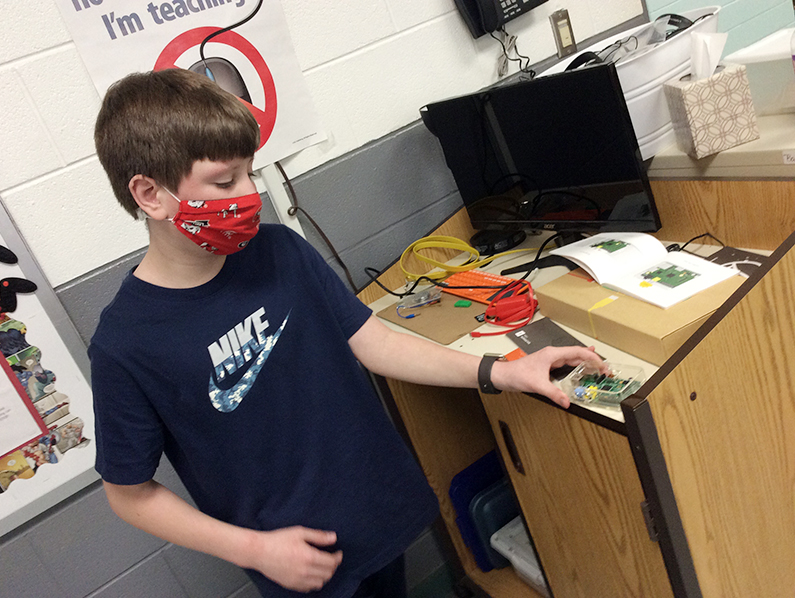
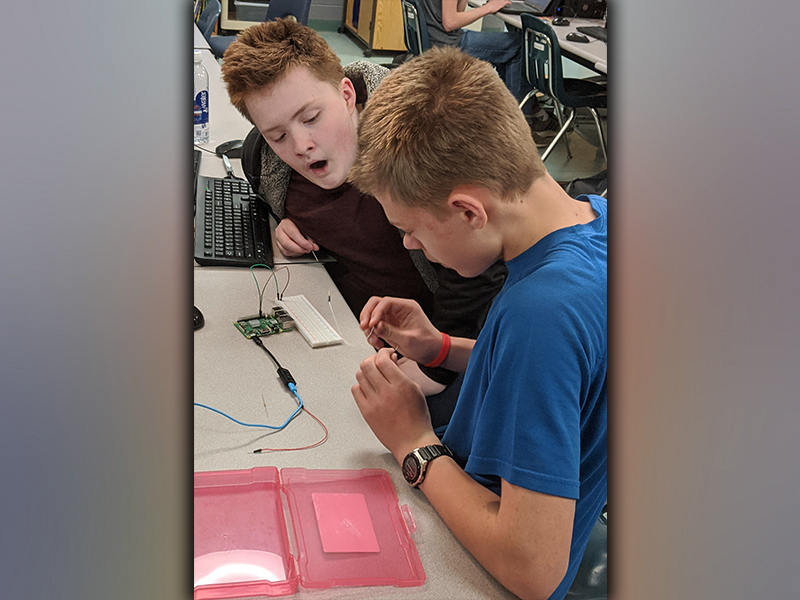
Fannin County School System students and teachers used district implemented technology to create 3,338 Google documents, 80 spreadsheets, and 434 presentations in just one day. They had also joined 22,000 individual Nearpod sessions and created 1,700 videos using screencastify in the last year.
“That’s huge,” School System Director of Instructional Technology Heather Finley said. “We’re definitely moving up on that creation scale across the district.”
For fifth grade teacher Tori Arp, the district’s implementation of G Suite for Education, which is basically comprised of Google Classroom, Google Docs, Google Sites, Google Slides, Google Sheets, Google Earth, Google Forms, and YouTube, has proven to be a “game changer,” during the COVID-19 pandemic along with other technology implementations made.
“The pandemic has hit us hard in the teaching world, and we are constantly adapting to the needs of our kiddos,” Arp, a West Fannin Elementary School teacher, said. “The district has made available resources and technology that help us to overcome the many obstacles faced by our current situation. Our district purchased one-to-one devices for us, which allows our students to continue learning whether in the classroom, or quarantined. The Chromebooks that we use enable our students to become comfortable with a digital classroom, while being supported in a traditional environment.”
While many of the technology implementations were made prior to the pandemic, these programs have allowed teachers and students to mold pre-pandemic education practices to become safer.
“We use a literacy program known as Bookworms, and part of the program relies upon partner reading and small group instruction,” Arp said. “These are clearly concerns with the current pandemic, so having the Chromebooks help us to more safely implement this instruction. I am able to record myself reading our Guided Reading passage each morning using the new Okiocams that the district purchased for us. Students that are absent, or working from home may then follow along, as if they’re in class.”
Schools district-wide are now using NearPod to turn traditional powerpoint presentations into an interactive learning experience as well, which has allowed students to experience learning in a whole new way.
“With the district implementation of NearPod, my students have been able to take a VR tour of the USS Arizona Memorial at Pearl Harbor, and virtually inspect the bus where Rosa Parks famously refused to give up her seat,” Arp said. “We are able to provide valuable experiences that our students might not typically get to see firsthand. Teaching Geography is much more engaging when we can drop ‘Pegman,’ and take a teacher guided tour of a new city with the class. With Google Earth we can actually map out the cattle trails from San Antonio to Abilene, and preview the road trip that our characters took in the novel we’re reading.”
Fannin County Middle School teacher Michelle Davis’s eighth grade classes have had doors opened to them through the use of technology that would not have opened without it.
“Students no longer have to sit and look at a worksheet,” Davis said. “Through the use of technology, students can discover the price of tickets at the Hershey Amusement Park in Pennsylvania. They can explore a 360 degree view of the park to see if they would like to add this location to their ‘Bucket List Of Places To Go.’
“Students can apply their knowledge of distance, rate and time to calculate how long it will take to fly to Pearl Harbor. At the same time, they are looking up the cost of flights, students are able to check out the current weather and even view the Memorial. Technology helps my students see the world outside the walls of Fannin County Middle School.”
Under the direction of Finley, the school district has made several infrastructure improvements including increasing connections to 10GB fiber between schools, increasing internet speed to 2.5GB, replacing and upgrading the wireless network in all buildings, segmenting the network for increased security and efficiency and more.
Many of these changes have resulted in school system employees finding the wireless network more reliable. Surveys conducted in 2018 and 2021 show an increase from 50.4% to 90% of employees who find the wireless network is reliable.
The district is also home to over 50 Google Level 1 Certified Teachers and eight Google Level 2 Certified Teachers. “If you’re not certified, you don’t know what an honor that is,” Finley said. “That takes an intense amount of studying, and then it’s a three-hour test. Many people fail it the first time. So for that many people, almost 60 people, to have that certification in our district makes me very proud.”
There are seven members of the staff who are currently working on Google Trainer Certification.
Teachers and district leadership are excited to see students establishing a digital presence at such a young age.
“We’re living in a digital world, and our students are establishing a digital presence now, even in elementary school,” Arp said. “Your digital footprint, just like your credit score, will follow you forever. With the integration of technology in our curriculum, we can teach them to be responsible online. Our district has given us resources to teach Digital Citizenship to our students, so that hopefully they will be creating a positive online presence.”
Finley recognizes that technology cannot replace teachers, and she strongly believes in the words of educator George Couros, “Technology will not replace great teachers, but technology in the hands of great teachers can be transformational.”
Finley said, “I believe that. I believe that’s why we provide devices and why we provide the training on how to use them.”