
LOOKING AT A VIBRANT LOCAL ECONOMY
Sponsored Content
Fannin Co. Development Authority
It is no secret that most of the world’s bourbon is distilled in Kentucky. Few people know, however, how much premium bourbon depends on a key contribution from Fannin County.
There are various steps required in producing world class bourbon, which, depending on the brand, can be aged for several years and even decades. And while each distiller must decide their preferred mixture of corn (at least 51 percent by law), rye, wheat and malted barley, there is another key ingredient to consider: the barrel where the blended spirits will age.
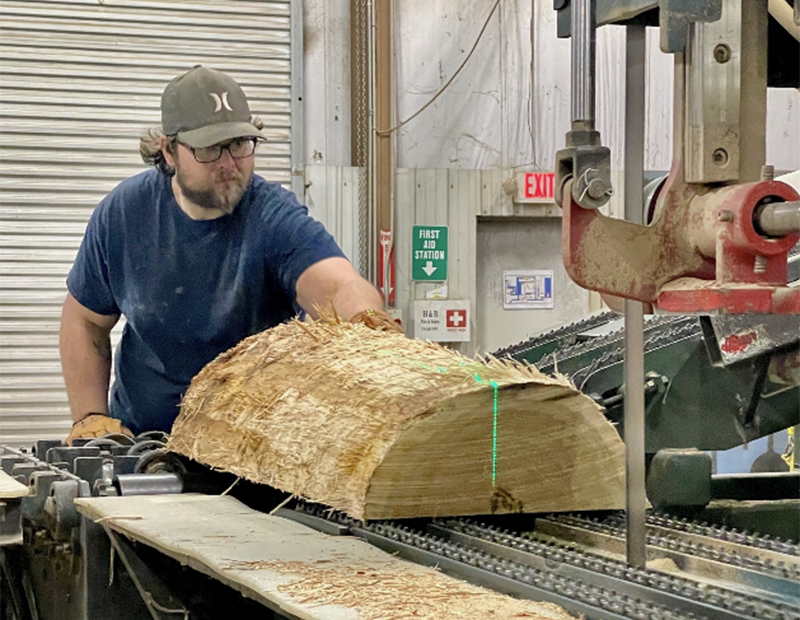
At Robinson Stave in Morganton, a dedicated workforce of 78 is united in its efforts to produce high quality, 38-inch white oak planks for staves and 24-inch white oak planks for heading, which will eventually be strapped together to create the perfect container for aging bourbon.
Robinson Stave sums it up this way: Behind great bourbon are great barrels. Behind our barrels are great people.
“This is a very tight knit group,” said David Patty, plant manager at the 27,500-square-foot facility in Morganton. “The team members help each other and look out for each other. It is very much a team environment.”
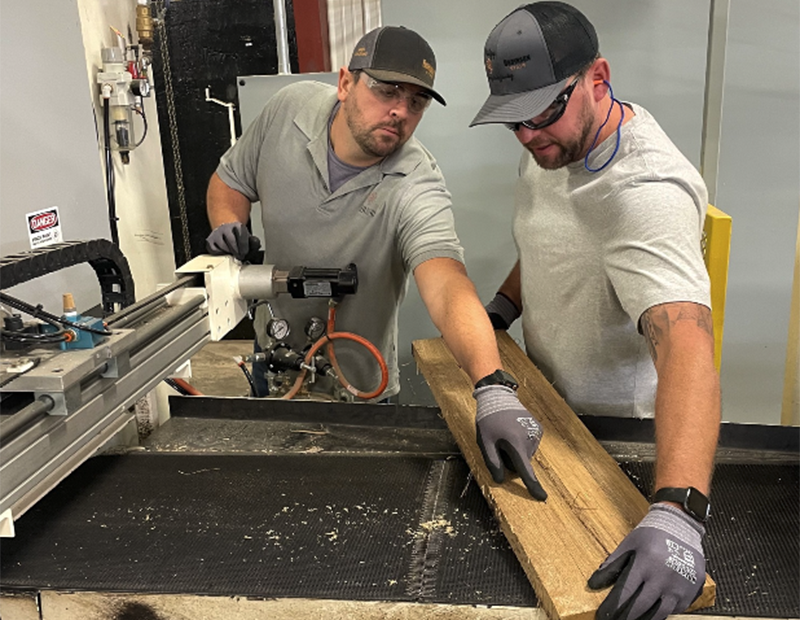
Working closely together is a necessity when the standards are so uncompromising. Workers at the Morganton plant cut tens of thousands of staves per day, and each one is carefully inspected for potential flaws. Each piece is cut to one-and-one-quarter inch thick and 38-inches in length, but the width varies from one-and-one-half inches to five-inches wide.
“Because of the variance in width, no two barrels are alike,” Patty said. “We inspect each piece for any large knots, rot, or other imperfections. And each piece is then stacked by hand.”
Though rare, sometimes the cut staves do not pass inspection and are rejected. But even the rejected pieces find a use. Robinson Stave makes sure there is no waste from the white oak it processes, including the bark.
The completed staves and heading are aged for a minimum of six months, then are bundled up and shipped to the company’s Cumberland Cooperage plant in East Bernstadt, Kentucky, where the staves are strapped together – no nails or glue – into large barrels that hold 53 gallons of bourbon.
Eventually, the staves cut in Fannin County wind up in barrels used to age a variety of Buffalo Trace bourbons, including Eagle Rare, W.L. Weller and E.H. Taylor.
“This process requires a great attention to detail,” Patty said. “But we are working together for a successful outcome.”